

"I hope your way of katazome will be brightly lit"
On the lost art of handmade books and becoming the next custodian

Crisp, razor-sharp edges mixed with fluid gradation. Along with its distinct, controlled colour palette, I became obsessed with kataezome.
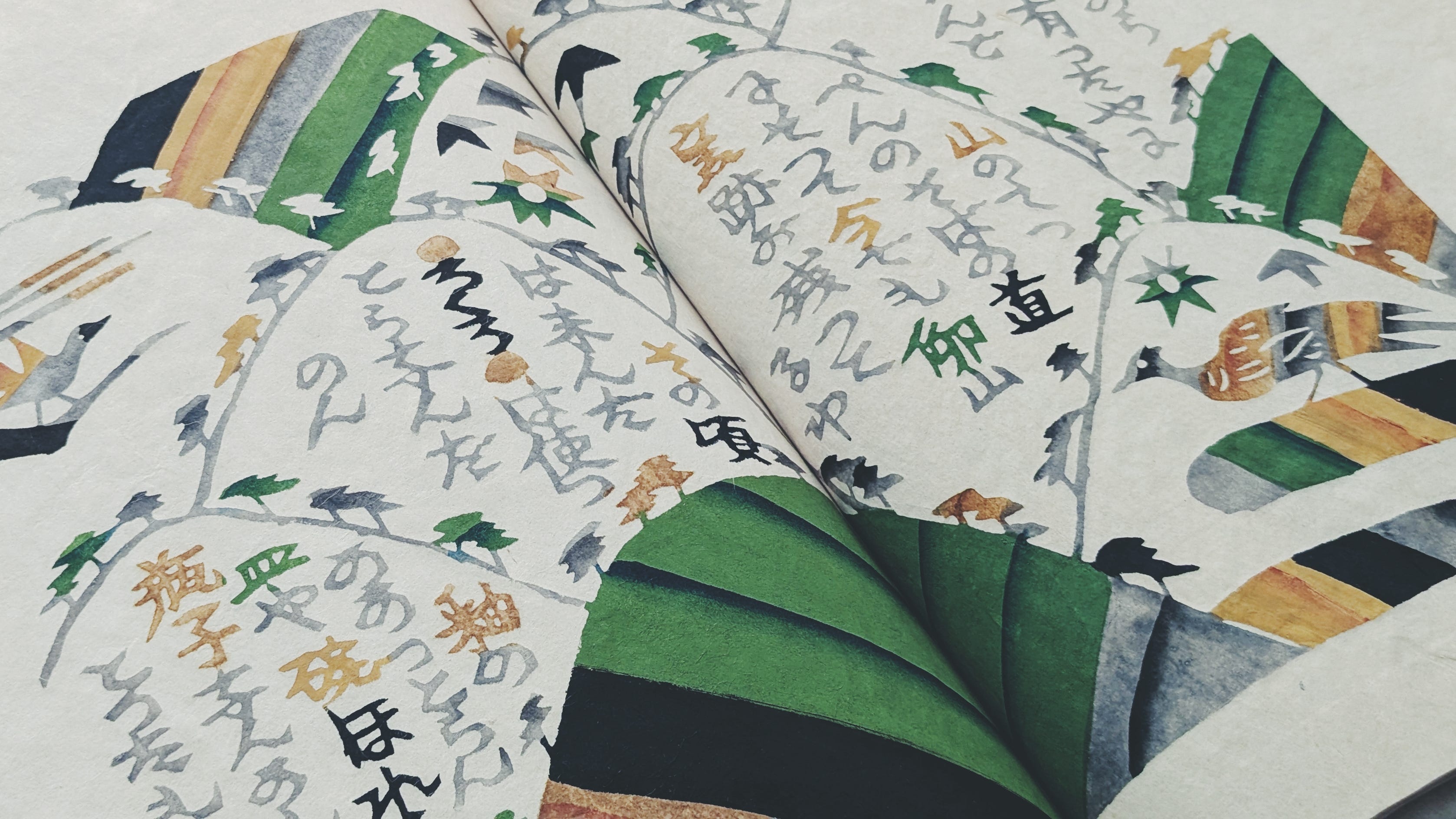
It happened quickly at the Japan Folk Crafts Museum (日本民藝館, also often called the Mingei Museum), just days before flying home from an extended trip in Japan. I had no idea who Keisuke Serizawa was, nor did I know anything about katazome (型染), traditional resist-paste stencil dyeing often used for textiles or kimonos, and its counterpart on paper, kataezome (型絵染).


A few days later, I was glad to be home. My partner and I were catching up — she had flown back earlier with the family while I stayed behind for a museum-hopping adventure around Kyoto and Tokyo. She’s well aware of how deep I could fall into obsessions and hobbies. She does occasionally wonder about any new obsession that I eagerly share with her.
“Most people visit museums, buy a postcard, and call it a day.
You went to Jimbocho after and bought a museum-worthy handcrafted book by a national treasure, along with craft tools and soon-to-be extinct persimmon paper?”
All of her doubts quickly faded away when she saw the Serizawa book that I brought back. It has quickly become one of our household heirloom items.
This is part two of last month’s essay on wagara and working with century-old woodblocks. I’ve also shared a brief account of my time at the Mingei Museum.


Exhibit 1: Keisuke Serizawa’s Katazome Shohin Shu Vol. 1 (型染小品集)
One of 100 copies. With 58 original katazome stencil-dyed designs by Keisuke Serizawa, tipped onto handmade paper. 230 by 270 mm. Orihon binding, original paper-covered boards with katazome title, housed in original cardboard case with printed title label. Unpaginated. Osaka: Moriguchi Tarō, Shōwa 29 [1954].After seeing a hand-made katazome story book on display at the Mingei Museum, I was enthralled. I tried my luck at Jimbocho 神保町, the legendary vintage bookshop area in Tokyo, featured in the exemplary Japanese cozy fiction genre, Days at the Morisaki Bookshop.
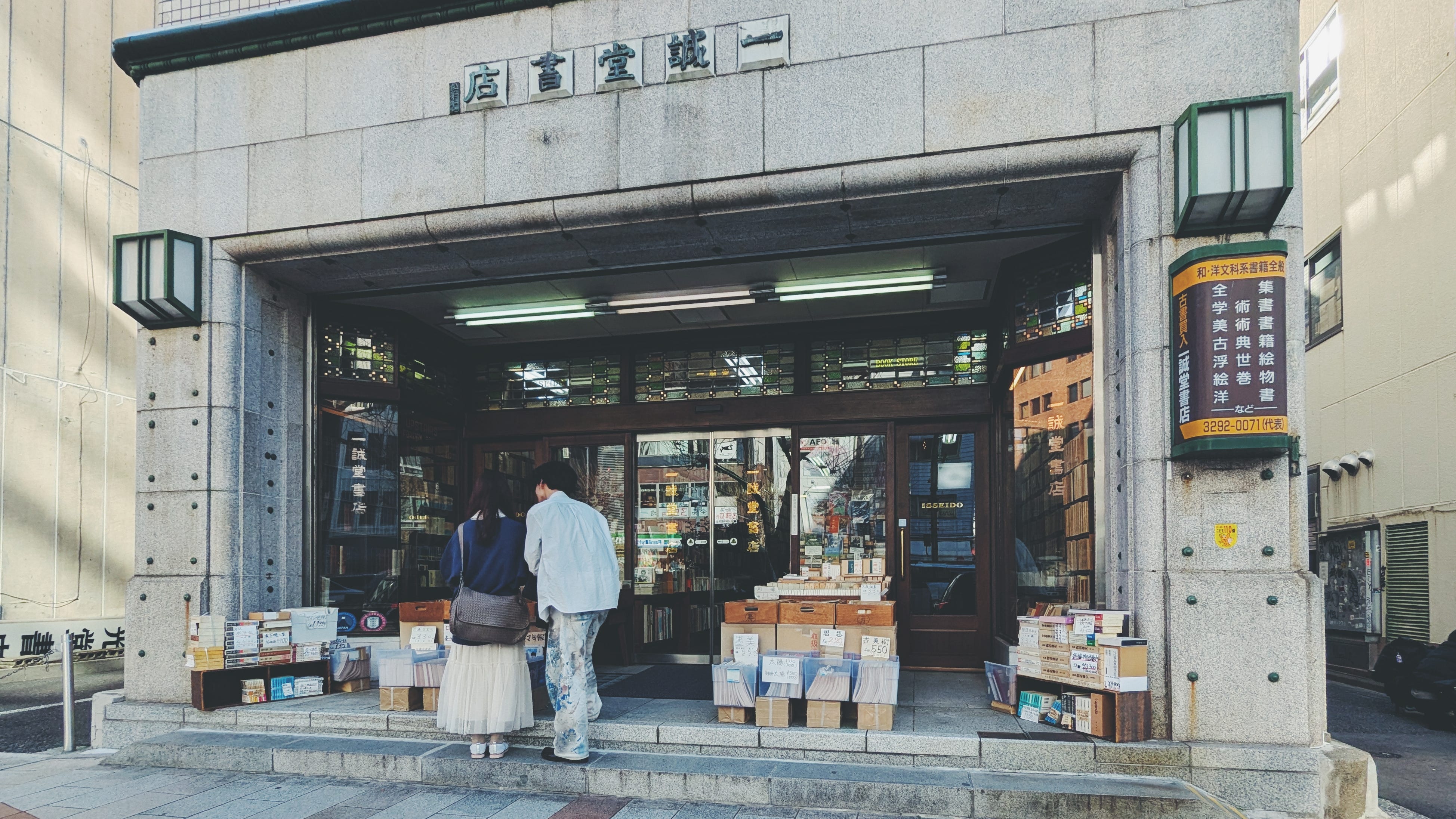
At Isseido Shoten, I had full rein to pore over the same kataezome art style that was behind glass at the Mingei Museum just the day before. The staff had put together their collection of kataezome books. I lost track of time in the majestic building. I was able to see the heavy pigment on the thin washi paper up close, the imperfections of the brush strokes over each print. At the time, I still didn’t know how these were made, and the contrast between the hard lines from stencils and the gradients with the use of brushes was still a mystery to me.


I later discovered that Serizawa was essentially the visual designer of the Mingei movement. Soetsu was Serizawa’s mentor. Ginza Takumi was the storefront to transform mingei from a philosophy to a more tangible means of getting beautiful, accessible, and anonymous crafts in the hands of everyday people.


A lot of Serizawa’s works were sold at Ginza Takumi, including his kataezome calendars. These calendars have been in production since 1946 until his death in 1984. Following his passing, the Promotion Calendar Society reproduced archival designs with his stencils until 2025. At the time of writing, a reduced desktop version is still available while vintage calendars pop up frequently on marketplaces.
Serizawa produced four of these kataezome collection books over the years 1954-1962, each ranging from 100 to 200 copies. He was designated a Living National Treasure in 1956 (2 years after the publication of this book) for his mastery of applying the katazome technique onto paper.
Looking at his prints, I get the feeling that he wasn’t a pure traditionalist; it’s been widely documented that he had absorbed influences from Okinawan bingata, craft pieces and textiles collected from around the world, and mingei philosophy through his mentorship with Yanagi Soetsu, and synthesized all of that into something distinctly his own. It is interesting to me that he didn’t replicate Edo-period patterns but chose to be forward-looking, designing book covers, calendars, shop wrapping paper, bank stationery, and book plates: all of which seem unlikely as art pieces at the time but as functional, contemporary, very commercial objects.
I found it easy to fall for his work. Clever, detailed and at times minimal. This makes a lot more sense when I later learned that his lifelong journey was about uncovering the universal essence of beauty.
No copies recorded in WorldCat.
How Kataezome Stencils are Made
“Stencils are cut from a handmade paper called shibugami (persimmon paper), made from several layers of thin white mulberry fibre paper, laminated with fermented persimmon juice (kakishibu), and smoked. The persimmon tannins preserve the paper just as tanning preserves leather.”1
A silk mesh is often layered on top. This holds all of the little islands and bridges together and makes the stencil strong enough to stand up to repeated use.


Exhibit 2: The Ex-Libris Collection of Kichiemon Okamura 岡村吉右衛門蔵書票集
Limited edition, copy no. 6 of 80, signed. With 39 original katazome ex-libris designs throughout. 200 x 255 mm. Orihon (accordion-fold) binding with printed title slip, original tatō wrapper and double slipcase. Tokyo: Gohachi Shobō, 1989.It has been a few weeks. I periodically look up Kichiemon Okamura to see if any of his private stencil story books show up on marketplaces and vintage book shops.
Information about him is scarce, at least in English. Here’s a brief bio:
Okamura Kichiemon 岡村吉右衛: 1916-2002. Born in Tottori prefecture. A teenage Okamura was moved by the words of Yanagi Soetsu, who was travelling around Japan advocating for the beauty of everyday, utilitarian items made by anonymous craftsmen (mingei). In 1933, Okamura was adopted into the workshop of Serizawa with the help of Soetsu and Shoya Yoshida. Okamura was said to have been captivated by kataezome. He spent years mastering the physical toll of cutting stencils by hand, mixing resist-paste, and eventually learning and applying his master’s fabric technique into his own signature paper print style, katazome hanga.
In my journey of learning more about kataezome, I’ve encountered numerous accounts of practitioners describing the life-changing moment when kataezome captivated them.
In the spirit of Serizawa, Okamura had produced a collection of small ex-libris kataezome works in 1989. As it’s a more recent production compared to his earlier storybooks in the 1950s, it was easier to procure a copy, which I am grateful for.


One copy recorded in WorldCat (International Research Center for Japanese Studies, Nichibunken, Kyoto)
Dye Resist-Paste
Dye resist-paste is made from equal parts sweet rice flour, rice bran and water. The bran, a byproduct of polished white rice finely milled just for dyeing, reduces the stickiness of the cooked rice flour. After steaming the raw dough, lime and glycerin are sometimes added to preserve it and to keep the dry paste from cracking.
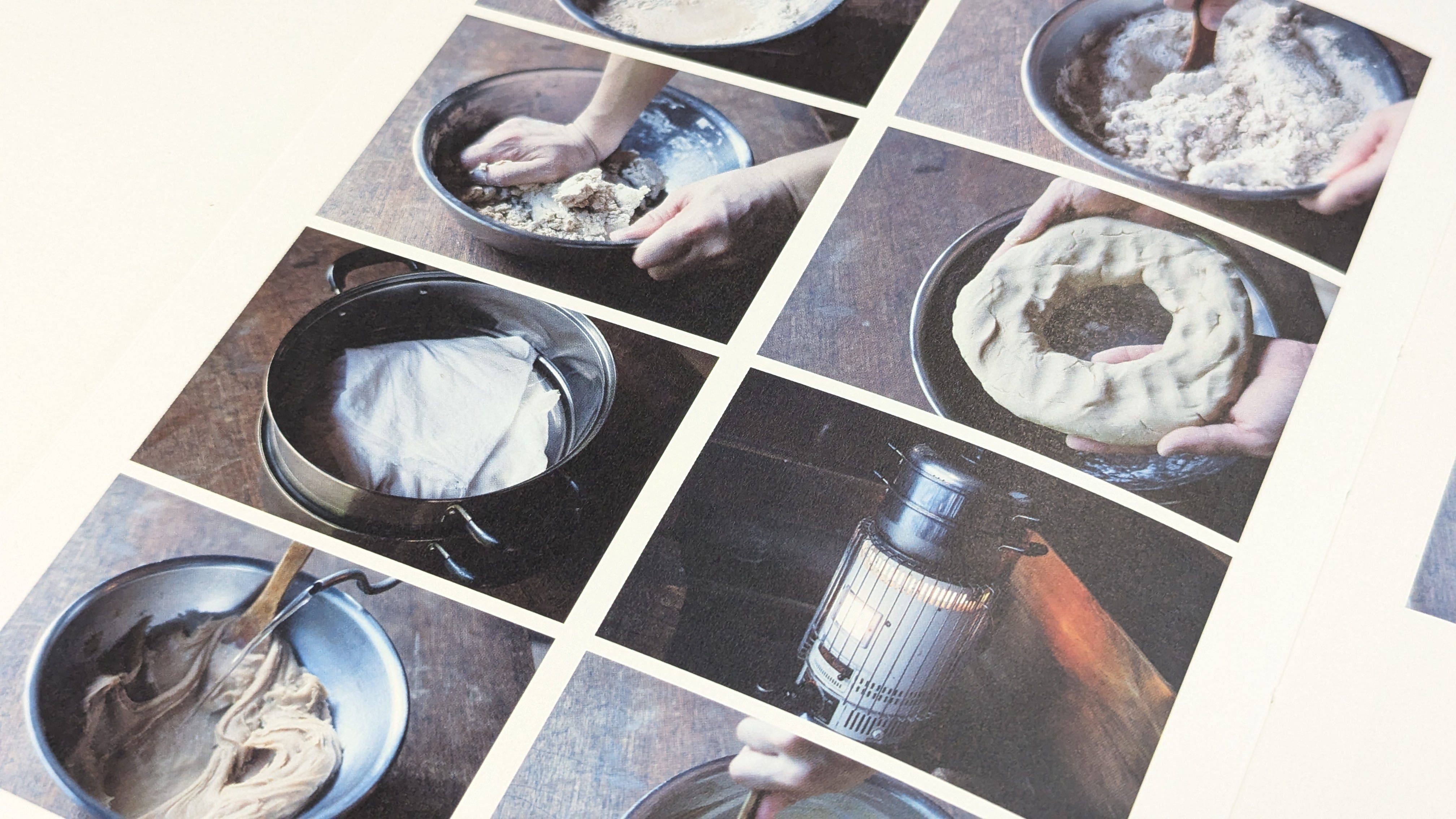
Exhibit 3: Pottery of Japan: Accounts of Ki-Zeto (Yellow Seto Ware) Kizeto Monogatari (黄瀬戸物語)
One of 100 copies, with Okamura Kichiemon’s presentation signature and dedication to Nagae Juhou sama (長江樹芳樣). Kizeto Monogatari (黄瀬戸物語) Pottery of Japan, Accounts of Ki-Zeto. As told by Kato Choko. Japanese binding, housed in original tatō. Kataezome throughout on Ki-Seto ceramics. 215 x 305 mm. Unpaginated. N.p., privately published, Shōwa 36 [1961]Every so often, I’d think back to the Okamura storybooks or, more aptly, shikabon (私家本) on display at the Mingei Museum. After all of these months, I was still charmed and poured over rare images of handmade books from past marketplace transactions.
In a world where there is little in between handcrafted one-off prints and mass-produced publications, these small production runs of 50 to 100 handmade books are full of charm that I rarely see today. The closest thing I can think of is a certain kind of zine — the ones that still have fingerprints or smudges on them.
They feel contradictory to me. The technique involves painting over stencils. Each print possesses both the imperfections and the uniqueness of brush work while replicating the precision of a stencil. From the subject matter, illustrations, stencil carving, and painting, these limited runs are scarce because of how labour-intensive they are. They feel like a private, yet personal object waiting to be shared and made from a labour of love.
I was not able to find any records of these private shikabon in any of Okamura’s bibliography. It is estimated that Okamura created dozens or several dozens of these shikabon. Professor Kimiko Yoshida has been on a 5-year research project, hoping to uncover the roots of Kichiemon Okamura’s world by studying these very same early private editions. I am attempting to reach out to Professor Yoshida, hoping to learn more about Okamura, his craft, whether anyone continued his legacy, and the whereabouts of the stencils that may have survived. I hope to report back if I hear from her.
At the Mingei Museum earlier this year, there were two of these private edition books on display behind lock and glass: 黄瀬戸物語 (Kizeto Monogatari 1961) and さいとろさしの唄 (Saitorosashi no uta, 1962).
Unable to find any in person at Jimbocho, I did end up finding Kizeto Monogatari in Nagoya, but couldn’t verify the condition. Through a series of translation mix-ups, for months, the possibilities of seeing these books again felt like they were hanging by a thread.
The package arrived looking like it had been thoroughly interrogated. Customs had torn through the meticulous wrapping and shoved everything back in without ceremony. I held my breath opening it. Sixty years old, one of a hundred (maybe even less now), an absolute labour of love. The craft object survived.
It’s still uncanny that these rare craft objects from a lifetime ago periodically pop up from personal collections, waiting for the next custodian.


It’s hard to describe the feeling of why I am drawn to Okamura’s work. It’s when I place the books together between teacher and student that I begin to notice subtle differences, or at least imagine them. Serizawa became famous. His work commands attention, prestige, and premium prices, which doesn’t quite align with the mingei philosophy, yet the universal appeal of his work feels almost effortless.


Okamura’s work feels private and personal. Layouts are more unconventional and free. I am surprised by the amount of text in Okamura’s works. Each character feels ready to march off the page, and I have to remind myself that they are meticulously hand-cut. Okamura remained lesser known. It was suggested that he would be awarded as a living national treasure, just like Serizawa, but it never came to be. The fact that Okamura focused much of his time on field work and away from fame perhaps kept him closer to the spirit of what both of them were after.
There is a mystery to turning kataezome, an already somewhat obscure technique, into a book printing medium, and it is infectious. I still have moments where I pinch myself as a reminder of my first encounter with one of these rare craft objects and becoming a custodian, for now.
One copy recorded in WorldCat (National Diet Library, Tokyo)
Double Stencilling
When I carved stamps on linoleum, I had to think in negative space and mirrored images since the lino block directly produces the print. Kataezome is a process that involves doubling of stencils. The first being the persimmon stencil paper, followed by the use of dye-resist paste painted on top of the stencil, acting as a second stencil once dried. This doubling means the mirroring cancels itself out.
If you are interested in learning more about the process, supplies and a wonderful katazome guide are available at Maiwa.
Still in Circulation, in the Spirit of Mingei
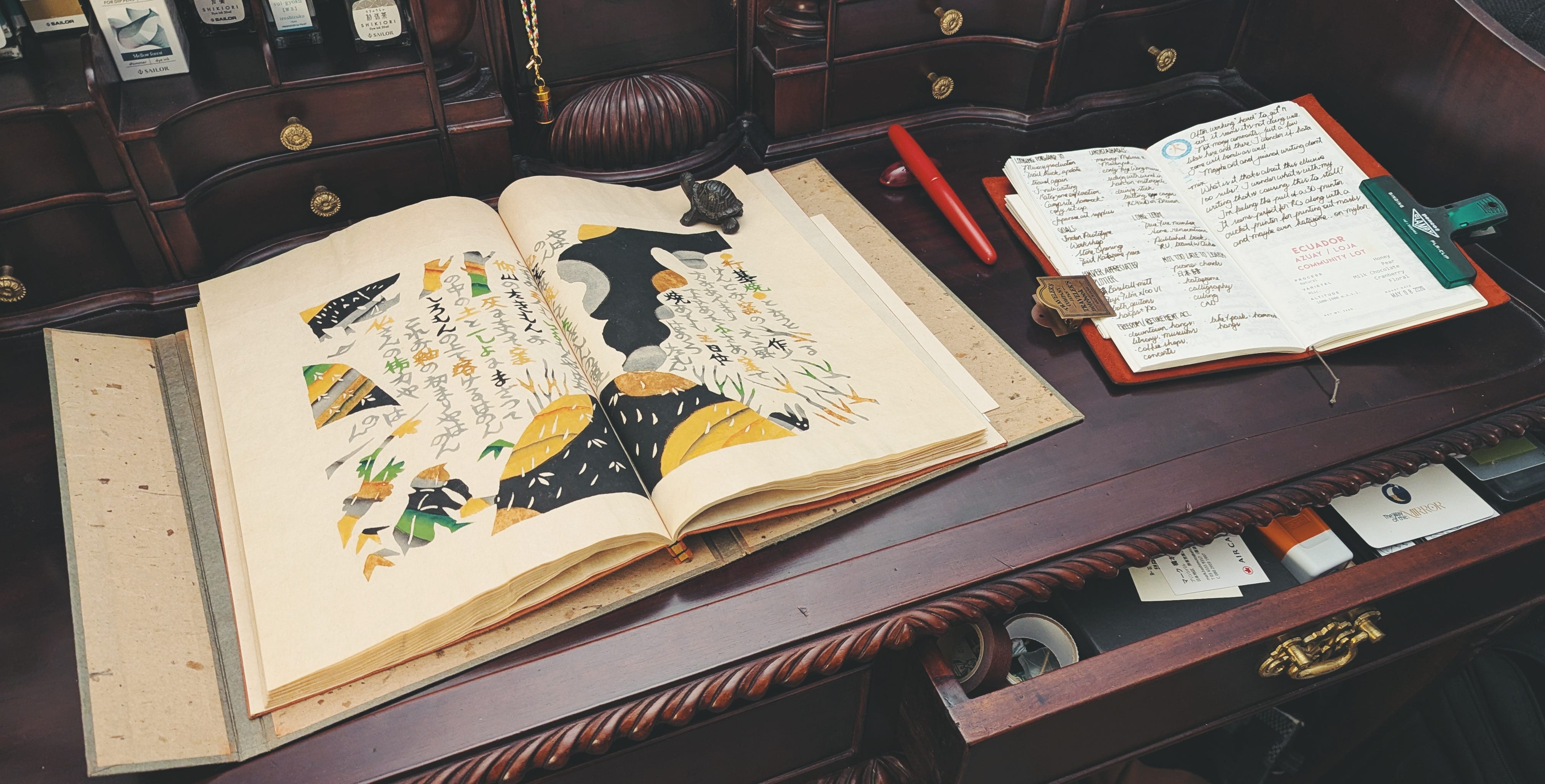
A teenager in Tottori heard Yanagi speak about the anonymous craftsman and never quite recovered. Almost a century later, I walked into the Mingei Museum on a Thursday in January, not knowing any of this. And now, one of Okamura’s handmade books sits on my writing desk, which I flip through on most mornings.
“I fear that the katazome technique will cease to exist in the near future due to various factors, such as global warming, the declining quality and availability of materials, the economy, and the changing character of the Japanese people. With this in mind, I have decided to share this traditional technique with the public.”
— Takayuki Ishii


Serizawa felt this urgency. Okamura most likely felt it too. I recognize it now.
With practitioners of kataezome in the dozens and supplies dwindling, I can’t imagine kataezome making a comeback the way woodblock prints, kintsugi, or sashiko have recently. The spirit of these objects lives on not through a single rockstar designer, but through anonymous custodians passing it on. In my hand is a book handcrafted by a man who was spellbound by Yanagi. It’s an artifact. A manifestation of mingei.
Think of your own craft for a moment, the thing you make because you can't not make it. Every journal entry, every painting, every song. Okamura made books by hand for people who recognized them for what they were. The cycle continues through whoever picks it up next.
In an upcoming trip to Japan, I hope to meet practitioners and learn as much as I can about the craft. I’ll keep a notebook by my side for when inspiration strikes.
In the meantime, I don’t want to hoard these rare craft objects purely for my own indulgence. If you are local, drop me a note. They deserve to be seen in person.
My gratitude to Dave at Mokuhankan, Taka-san of awonoyoh, and Yuko-san at Kyo Karakami Maruni, and the practitioners who shared their knowledge generously. In the spirit of katazome and woodblock printing, they deserve to be named.
✒
Thank you for reading. The Way of the Mirror is a free and reader-supported publication on the beauty of memory-making and journal writing. If you enjoy it, you can support my work with a paid subscription.
Wil
Miller, Karen. “Katazome: Japanese Stencil Dyeing.” American Quilter 25, no. 2 (March 2009): 28–30
I am wishing that in the near future I get to explore and experience this in Japan. Your post came at the right time for me. I am exploring bookmaking, and printmaking. By hand, of course. So thank you for sharing your story. I appreciate it a lot.
Whoa these are so beautiful. I'm glad you shared it with us! Sounds like a wonderful trip.