

The Beauty of Everyday Things
On time, craft, and objects as companions

Fellow memory-keeper, journal writer Chelsea Park and I were talking about our love for well-used objects and what they mean to us. We decided essays and reactions would serve our readers better than just chatting among ourselves — a small experiment in sharing. At least this way, I’m not writing into the void, but finding a companion on Substack.
I appreciate and enjoy using fountain pens. There is an aesthetic in my writing, and I am inspired to do better each day.
More importantly, there is the ritual. A slower, more intentional way of processing thoughts. The way it lays down a line of ink is often described as having character. The tactile moments that appeal to our senses and different combinations of inks, nibs, and paper yield subtle differences. It’s deeply visceral.
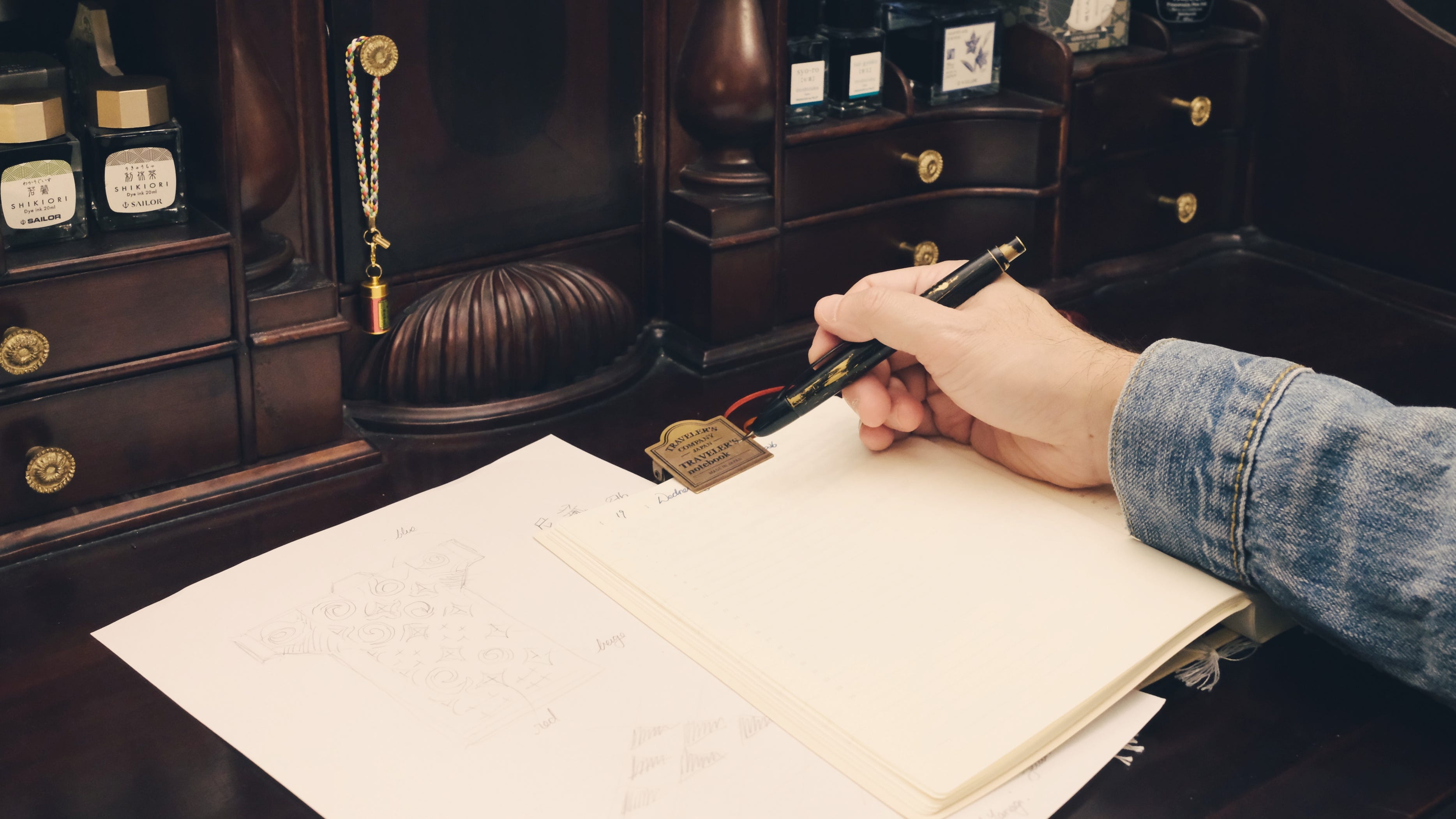
Despite all this, I am composing this essay with a pen of little significance.
It is neither rare nor particularly beautiful. It doesn’t photograph well, and unlike luxury items, it does not social signal or demand attention. It has been in use long enough that logos, branding and a good portion of the finish have worn away.
The Capless in a World of Convenience
With the adoption of the convenient ballpoint pen, fountain pen use was in decline in the 1950s and 1960s. First, the Bic Cristal, then the Parker Jotter with its distinctive click mechanism.
Pilot launched the innovative Capless fountain pen as a novel design centred around the same convenience of a retractable ballpoint pen — a workflow that hardly anyone thinks of today — extracting the writing instrument from a pocket, a press of the knock, and a regrip of the instrument before writing.
Fountain pens at the time were slow and ritualistic, requiring two hands: beginning and ending with the deliberate act of uncapping and capping.


A push of the knock on The Capless would expose the nib behind a trap door, hence its name, which was eventually renamed to the Vanishing Point in 1973. Instead of doubling down on heritage, history and the prestige of fountain pens, the design team at Pilot mimicked the principles of the ballpoint, a disruptor of its time that was about to make the fountain pen obsolete. Think of this as the last hurrah, just like how cast-iron pans were swapped for Teflon. Similarly, fountain pens never truly went away as they’re enjoying a resurgence, or discovery for some, depending on the writer’s age.
A Pen of No Significance
The Capless was launched to coincide with the 1964 Tokyo Olympics. It’s now 62 years old (in 2026).
My own particular Vanishing Point (VP) is a current-gen design from 1998. Most pens in the lineup have an enamel lacquer finish over brass with gold or silver trimmings. However, through circumstance or timing, I ended up with a matte PVD black powder-coated version from 2013. The problem with this particular version was that early batches were nowhere near as robust as the enamel lacquer version. At the time, customers raged on Pilot about scratches and demanded fixes and refunds with choice words and a flavour of fury that now feels almost misplaced.


Just like the timeless photography adage, “the best camera is the one that’s with you,” I carried the VP everywhere.
There were times when it slid off the table top and landed awkwardly with the nib exposed and pointing down. I may be on nib unit #3, but I’ve lost count.
There were times I had forgotten that it was clipped to my pants pocket and went through the wash. The slightly toothy nib has smoothed out after a few cycles.
It was the one object that I had with me and used more than anything else in life. It was maintained and cleaned regularly and lovingly. I must have emptied several bottles of ink with it.
But enough pen lore.
As I consider each line of this essay, I can look back at how much I’ve enjoyed and appreciated this unlikely flaw. I’ve learned to embrace the unintended lessons of fleeting nature, imperfection, and objects that accompany us through our lifetime.
用の美
用の美 / Yo no bi / beauty of use.
It’s 9 am in a quiet residential area in Tokyo.
I finished a light breakfast before packing my knapsack for a day of museum excursions. I paused for a moment before deciding to leave the VP behind, swapping it for woodcased pencils.
Just the day before, a museum staff member had almost pounced on me when she had noticed that I was wielding a pen-like writing instrument and not a museum-approved pencil, causing a scene in the otherwise tranquil environment.
The itinerary for the day is the Japan Folk Crafts Museum. After having visited a long list of museums, I began showing up without prior context. I found myself more engaged when I experienced the pieces with my senses — with an open mind, uncoloured by name seals, expectations, or hype.
Inside the cavernous but dimly lit rooms, one of the staff members observed that I was sketching and not finishing anytime soon. She walked up and offered a clipboard. I was grateful for her kindness. I felt redemption in knowing that I wasn’t doing anything inherently destructive or evil in my attempt to appreciate curated and prized objects. I can’t help but smile and accept the clipboard graciously while thinking back to a passage that I encountered in The Notebook by Roland Allen.
In one gallery, they actually had a notice which said, ‘No Sketching.’ How obnoxious! I said, ‘How do you think these things got on the walls if there was no sketching?’
Hockney’s telling point is that it is not enough merely to look at a work: if an artist wants to learn from it, they need to make their own record of it, and in doing so, come to fathom it better. This is how art lives and grows.


I was drawn to the imperfect weaves in the baskets, seemingly blurry patterns in textiles, nature-inspired motifs in indigenous garments, and the subtle flourish in pottery pieces and urushi lacquer ware. There was a lot of humility, warmth, a sense of tradition and community in these collections of ordinary, handmade objects. Some had plenty of patina from use. Many were also anonymous, with only the bare minimum text on each object label. They felt calm and sincere without ego.
In particular, I was entirely absorbed by a display of books by Keisuke Serizawa and his student Kichiemon Okamura, who adapted the tradition of resist paste and stencil dyeing from kimono fabric to paper. Equal parts printing from stencils and painting from the brushwork of pigments over pages in these handmade books. There was an exuberance in these playful gradients and colour transitions that appear to be unique to this medium.
It was at the museum shop that I finally made the obvious connection. The Japan Folk Crafts Museum: the very same establishment that Soetsu Yanagi had started, and also the originator of the Mingei movement. He is also the author of The Unknown Craftsman (and more recently, The Beauty of Everyday Things), a book that I had failed to fully comprehend in my 20s, which took subsequent rereads to appreciate.


Despite being really absorbed in the objects displayed, sketching away and losing track of time, I eventually gave in to hunger from missing lunch. I quickly returned the clipboard, put on my shoes, replaced the slippers at the entrance and made my way clumsily toward the nearest restaurant.
I had never experienced a museum this way before.
The objects on display were not entirely inaccessible and sealed behind glass. Many such objects are circulating in the world at this very moment. I could leave the museum, walk into a second-hand shop and recognize the same objects in the flesh — not as mini replica souvenirs or picture postcards, but the very objects themselves, unelevated, and in circulation.


Jimbocho, the used bookstore district in Tokyo, made this possible for me. The Serizawa and Kichiemon kataezome books I had just seen in a curated context were there. Handled, worn and waiting for their next custodian.


When I got home, I was putting my notebooks and sketching supplies away. The VP rested, exactly where I had left it.
I was grateful for the day’s excursion; it felt especially bountiful. Being reacquainted with Soetsu’s perspective on beauty made me realize that there was a name to my appreciation for well-used and appreciated tools and objects.
Soetsu’s beauty arises naturally when objects are used sincerely over time, just like sado 茶道, tea masters from earlier generations, deeply contemplating and appreciating their vessels and utensils between sips of tea.
The term mingei was coined roughly a century ago, as Soetsu Yanagi worried that traditional handicrafts might vanish. Industrialization has indeed made such objects rarer and difficult to find, and their honest and humble craftsmanship all the more precious. Despite the VP being a modern writing instrument and not entirely handcrafted, I feel as though I caught a small glimpse of this particular flavour of beauty through use, care, and appreciation.
Objects as Companions
It wasn’t long ago that we were told we would be happier spending on experiences rather than objects. I’ve always wondered about this false certainty. What about the objects that, through use and time, behave more like experiences?
I’ve spent years circling between hobbies: photography, music, craft, and journaling. I can easily get lost in objects and the myriad options rather than the activity itself. Each hobby has rabbit holes, infinitely deep when choices and combinations compound.
It feels like a rarity, and I consider myself lucky when I am able to enjoy an activity without being pulled into monstrous hauls and accumulation.
I understand that my appreciation for patina and longevity is not good for business. It stems from a fascination with products and companies that have endured for decades and centuries1.
I once heard that Fender’s greatest competitor is not other guitar makers, but it’s their own vintage instruments resurfacing decades later in the used market.
Musical instruments crafted decades ago are still being played, aging gracefully, and accumulating stories, while the music they helped create is cherished across generations. This reminder isn’t a financial one but temporal.
Beauty, mastery, and joy accumulate slowly. Time, care, and repetition reveal in a way that speed and novelty cannot. This is the long view that I’ve come to cherish and savour.
I rarely find my heroes fixated on objects or tools. Murakami writes about jogging, not his Mizuno runners. Hokusai never memorialized his brushes or pigments. Serizawa didn’t dwell on cutting knives or persimmon paper. So why am I dedicating so much to a humble fountain pen?
I began this piece believing that I would arrive at some kind of meaning in a particular object. Instead, I learned to notice the beauty of everyday, ordinary things, especially the ones that stay alongside us and are in constant use.
This noticing has helped me find joy in doing, simply being, and appreciating what’s already in front of me, instead of pining for more.
These objects age gracefully, often becoming a totem or symbol for shared memories, much like companions.
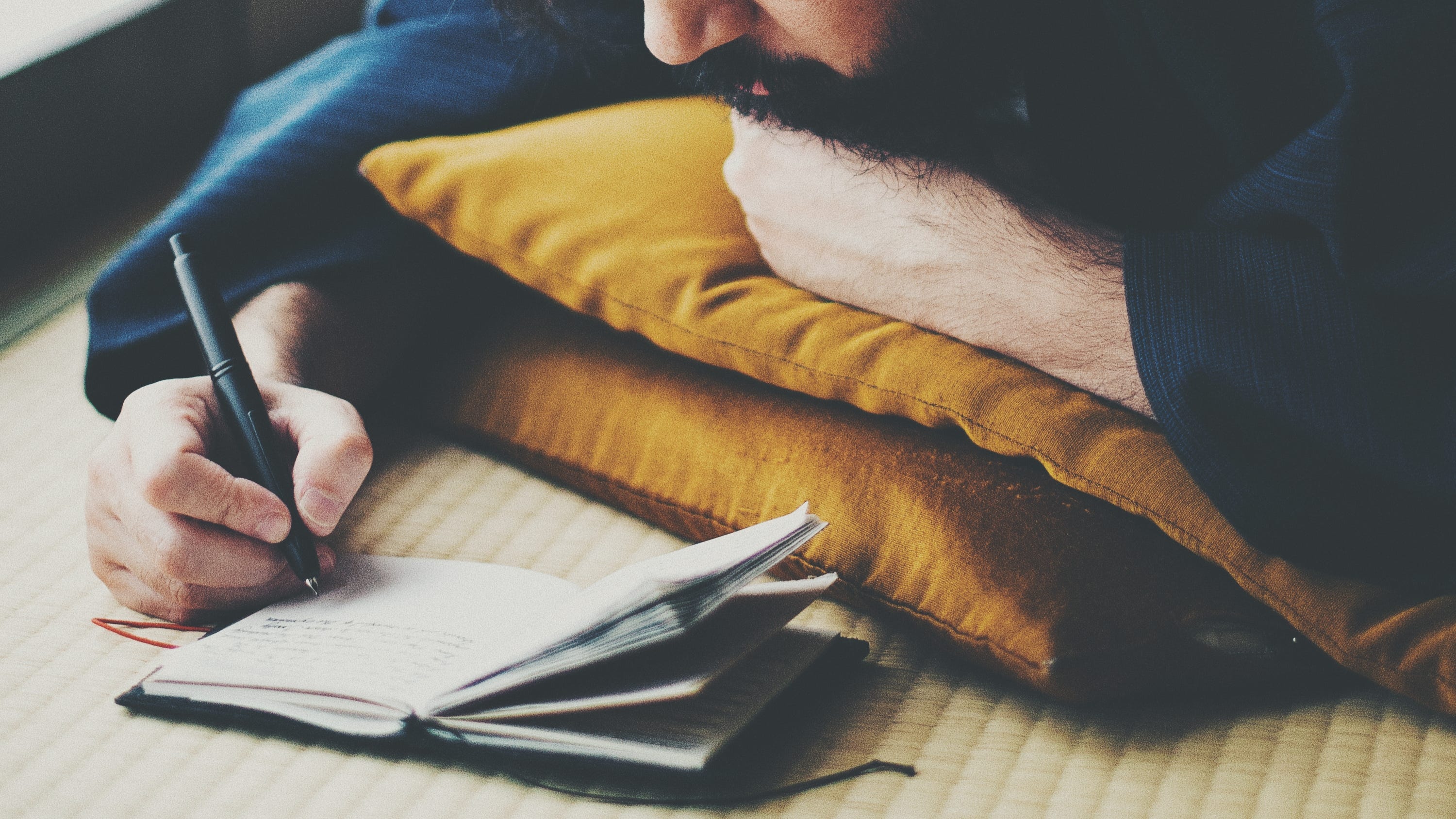
The VP is familiar, predictable, and it’s one of a kind. It reminds me of the moments it had witnessed, from once-in-a-lifetime events to the ordinary. This sense of beauty is personal. No one else has the experience to interpret the language in the form of patina, blemishes, and scuffs.
There is no need to convince anyone else that this object is, in fact, not only beautiful but glorious.
I no longer believe objects and experiences were ever separate. Time, care, and creative acts are doing the work.
✒︎
An Afterword from Chelsea
Though the Vanishing Point’s coating was considered faulty at the time of release, the way the pen looks now can’t ever be reproduced. It’s truly unique, layered with Wil’s life experience and more than a decade of being used consistently. The story makes me reconsider the imperfections in the appearances of what we use each day and to welcome the first signs of patina with gratitude. It is a gift we’re able to use such beautiful things in our everyday lives.
I also learn about completely new topics through Wil’s writing—I had no idea only specifically approved pencils were allowed at certain museums in Japan, or that what you see in an exhibit can then be found in vintage specialty areas in the same city. The way his museum and Jimbocho visits converge into a greater appreciation for what he already has is both satisfying and inspiring. The pen case I chose to write about is just a little over a year old, and I can only imagine what it will look like in a decade. I’m grateful we chose to share these stories in more depth because we all got to understand more of Wil’s philosophy and what makes up The Way of the Mirror.
To read Chelsea’s piece on her object, please make your way to Words in the Margins.

Thank you for reading. If you enjoyed this, I’ll be sharing more journal-inspired essays in the weeks ahead.
Wil
One of my favorite design books is The design of everyday things and I'm wondering if there is a relationship between The beauty of everyday things and this book.
I find it interesting that there are such things as approved pencils for museums. And I can't even imagine what would lead to a museum rule such as no sketching.
Reading this, I'm glad fountain pens managed tu survived the convenience era, let' hope jobs survive the AI convenience era too.
I do hope one day I'm able to figure out how to make fountain pens work for my own routines and practice. For now, I can't commit to them and risk the ink drying on them and ruining the pen.
Thank you again for the opportunity to collaborate, Wil! I'm grateful we got to share our stories, and getting to read yours in advance was definitely a treat.