

Techo Kaigi, Part 1: The Journal at the Center of My Universe
My Journal, a Pensieve in disguise — the first in an ongoing series of reflective "notebook meetings"

Writing is an autotelic experience, something worth doing for its own sake. Not only is the tactile feeling satisfying, but the simple act of wielding a humble wood-cased pencil, shaping your own particular flavour of cursive, may embody the "high-quality leisure"1 that Cal Newport suggests. As long as you are active, deeply engaged, and applying your craft—even if it's a daily task list—you may venture into the new day ahead, feeling restored and enriched.
Celebrate that task list, make it one for the ages.
It was always my intention to share more about how I am using the wonderful notebooks, stationery and tools that have graced my writing desk. Anyone familiar with The Way of the Mirror may recognize that this is not about the covetousness this hobby might seem to thrive on. It's much more about renewing our appreciation for the things already present in our lives, sharing ideas, and helping spread the sense of contentment through improved practices.
A techo kaigi (手帳会議) is a "meeting" one has with their notebooks and planners. It reminds me of a retrospective in my previous life as a product designer, where teams reflect on what went well, what didn't, and what can be improved in future sprints. It's a way to bring a little zest back into familiar rituals.
There may be quite a bit of stationery nerdism here. Fear not, I've peppered fascinating stationery lore and anecdotes that muggles could also enjoy.
My journal universe consists of 4 notebooks


The Journal is the center of the universe. Everything starts and ends here. Even the concept behind The Way of the Mirror, the playful logo with hidden meaning, and my obsession with reflection center around this very notebook and practice. Template-based, daily morning and evening sessions. Optional long form content, doodles, ephemera. 👉 I'll be focusing on this notebook in this post.
System techo (システム手帳): Daily carry wallet and rings pocket notebook: bujo-style (bullet journal) calendar, logs, expenses, trackers, collections and physical ephemera.
Traveler's Notebook: Notebook for experiences, day-trips, weekend adventures, travel, and monthly highlights.
Work Planner: A catch-all notebook/planner for work and Way of the Mirror.
The Journal: Hobonichi A5 and Lamy 2000
I begin the day at my writing desk, where my most essential journal, pen and stamps await. These pages ground me, clear away the fog, and help me move through the day with clarity, gratitude, and purpose—much like the steadying effects of meditation or breathwork.
The Stationery:
Hobonichi (ほぼ日) A5 Notebook


This notebook comes from a small personal stash of pre-2019 Tomoe River Paper (TRP), produced on Tomegawa's famed Machine #7. Supposedly, it highlights the desirable qualities in fountain pen inks such as saturation, shade, sheen, and shimmer, without feathering or bleed-through. In 2021, Tomoegawa sold off its paper-making business, and the original stock is no longer in production. Notebook makers with old stock are often sought after.


Whether it’s 'endgame mentality,' 'gear chasing,' or the optimization-obsessed tendencies in many hobbyist cultures, we end up diminishing our ability to appreciate non-hyped possessions for what they are. Scarcity aside, I am enjoying what remains of the A5 notebooks just as much as I enjoy paper from other fountain pen-friendly brands.2
Rolls-Royce of Chalk: A Hagoromo Tangent
This reminds me of an endearing story of a Henokien-style, family-owned business that has been passed down for generations but was unable to find a willing successor. Hagoromo Bungu (羽衣文具), the maker of the Hagoromo Fulltouch, famously known as the "Rolls-Royce of chalk," announced in 2015 that it would cease production. Mathematicians and professors around the world went into full Doomsday mode to stockpile it.
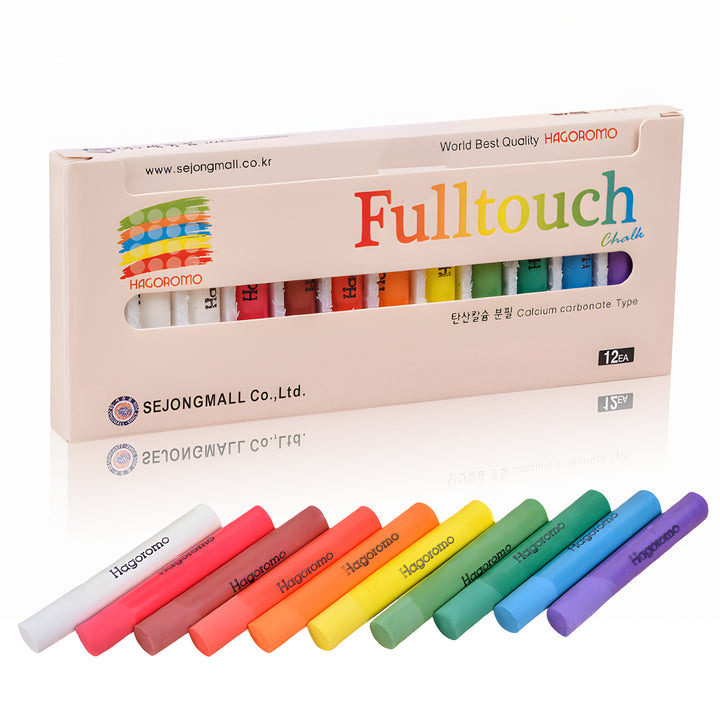
Soon after, South Korean cram-school teacher Shin Hyung Seok (신형석) purchased the original recipe, machinery, brand rights, and began producing indistinguishably smooth chalk by 2016. Academia and NASA engineers could breathe easy once again. Perhaps I may not be so alone in feeling particular about the tools that we use.
LAMY 2000


The LAMY 2000 is a study in quiet simplicity, where form follows function, a characteristic often found in the Bauhaus design of its era. Stealthy hooded nib, understated clean lines, subtle textured surfaces over contrasting materials, and an almost camouflaged but fully functional ink window. Unlike most fountain pens with a screw cap, the LAMY 2000 features a friction-fit capping mechanism, offering a satisfying tactile snap to bookend each writing session.
This is my second LAMY 2000. The first one was sold off at a local pen meet after a rather merciless Marie Kondo-style session of "tidying" up. At the time, I adopted a minimalist mindset where a collection of any sort felt overindulgent and wasteful. What I didn't account for was nostalgia, and how a possession could spark joy at different moments throughout our lives. Years later, I missed it dearly and felt compelled to bring it back.
The current LAMY 2000 is fitted with a broad nib. On a calliper reading, the actual width of the nib is a garden hose variety at 1.1mm. It writes beautifully with just about every ink, no matter how finicky or misbehaving it may be.
How I am using it
I spent years writing in free form and long form as I felt disconnected from daily gratitude templates. Other prompts were hit or miss, depending on the gap in life stage between the author's context and my own. It wasn't until I encountered Leticia Britos Cavagnaro's work that a more streamlined template finally clicked with me. It transformed my practice. Her design-centred and accessible approach to reflection appealed to my sense of curiosity. It helped me feel grounded in the often nebulous space of journaling for meaning.


Similar to the template from Experiments in Reflection, I write a few sentences on each of the following:
Gratitude: Both big picture and little things that make life worth living. The key is pausing just long enough to uncover and embody the appreciation, rather than rehashing the same script.
Intention: One thing I want to dedicate my time to for the day, whether it's an outcome or approach.
First Step: An action to help me achieve my intention.
I've since made the following additions:
Distraction: I sometimes use this space to set aside fleeting interests and curiosities, returning to them later. The novelty is often faded by the time I sit down to revisit them.
Card Pull: Interpreting a single tarot card helps me reframe the context for the day ahead or highlight potential blind spots.
Depending on what's lined up for the day or how I am feeling, I may continue with a long form entry, doodles, sketches, and attach whatever ephemera I have collected before closing the notebook.
In the evenings, I wind down with another brief session at the writing desk. These quiet moments of contemplation are savoured. Continuing with the template suggested in Experiments in Reflection, entries are pithy: often with questions percolating or a short line capturing the general mood I am in. They frequently serve as a starting point in the next day's entries.
What's working well:
This notebook is the gravitational center of my journal practice. Ideas worth revisiting earn a dot sticker or a sweep with Mildliner. Pages that are more fleeting or trivial, such as grocery lists, may be torn out and placed in the system techo.
I am pleased with this blend of a structured template and the flexibility for long form or artful content. It solves a few problems that I was encountering:
Missed days (which is absolutely okay) when I wasn't sure what I wanted to dedicate the entry to.
On busier days, a short entry is better than none. The template lets me capture something quickly, yet each note remains a joy to revisit, anchoring me to the headspace and details of the moment for years to come.
Every month or so, when I create a highlight entry in a Traveler's Notebook, it makes scanning for highlights (or lowlights) much easier.
I feel utterly free to capture whatever I want, however I want. Even the watercolour pages have their charm, crinkles and all. Since the amount I write varies, a plain blank notebook feels liberating. I am content with this format and don't foresee changes anytime soon.
DIY: Creation over consumption


Like every industry, stationers are happiest when we spend. Since recognizing this unsustainable truth, I've opted to create my own small, hard-earned works of art and accessories through DIY, crafting, design, drawing, painting, and carving. I have a confession—and this is by no means a humble brag:
I feel like a hack, overwhelmed with uncertainty each time I have a pencil in hand, about to commit to a drawing. Imagine the sheer joy of encountering long, forgotten pages, surprised by my own hand in them. There's a rich sense of fulfilment in pages shaped through moments of creativity: every imperfect mark, choice of colour, and texture reflects a lived experience and often, a struggle.
Even when stamps, washi tape, or other ready-made tools play a role, it's the act of shaping them into something deeply personal that makes these pages truly endearing.
The Way of the Mirror is a passion project that brings together journal writers. I value transparency and journaling nerdism, from the tools I use to the steps in my writing process3. If this reflection sparked a moment of inspiration or introspection, consider supporting this work by subscribing. It truly means more than you know. Thank you for reading.
Wil
Writing Exercise:
In every post, I include context, references, and a writing exercise. I am doing this to help address one of the top pain points of journal writing: "What should I write about?"4
Awareness
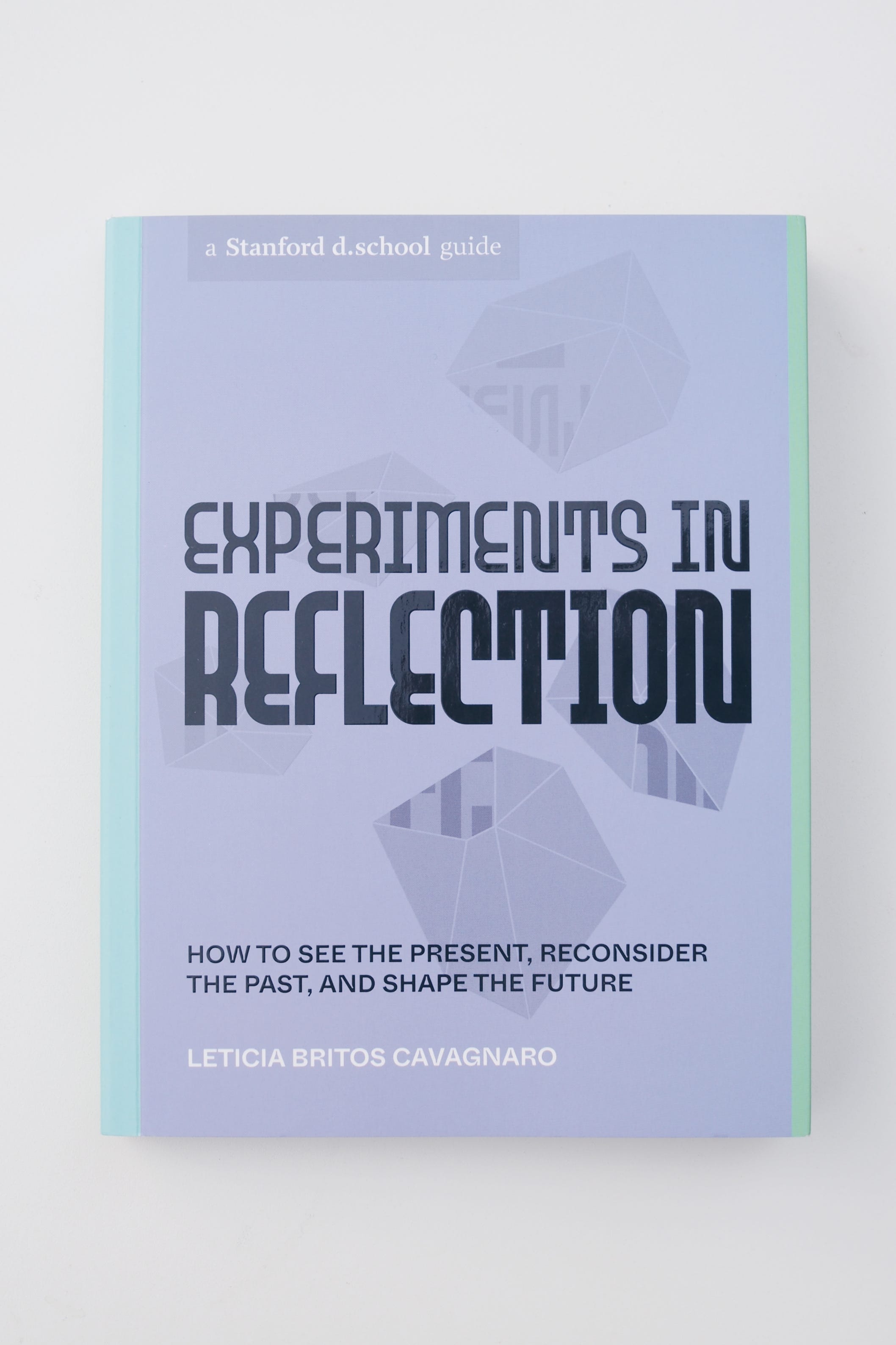
In Experiments in Reflection, Leticia Britos Cavagnaro describes daily writing as a kind of pensieve, a basin where one can pour out thoughts and return to examine them later. The metaphor, borrowed from Harry Potter (first noted by Jenny Moon), perfectly captures the role of a journal: "one simply siphons the excess thoughts from one's mind, pours them into the basin, and examines them at one's leisure."5
Her take on short prompts and pensieve templates opened my eyes to a new way of approaching journaling. For years, I struggled with prompts that felt distant, while long-form explorations of themes felt nebulous. Experiments in Reflection helped me create personalized jumping-off points based on my own context and curiosities, one step at a time.
Hypothesis
Suppose we design our own daily journaling template around themes that genuinely spark our curiosity. In that case, we are more likely to sustain the practice. Our entries may yield meaning, clearer insights, and greater contentment.
Method
With your journal and writing instrument at the ready:
Begin by browsing this broad list of popular journaling themes:
Self & Growth: gratitude, intentions, goals, future self, regrets, insecurities, challenges, wins, lessons
Well-being and Mind: health, well-being, mood, distractions, mindfulness, sleep
Connections and Events: relationships, appreciating others, events
Creativity and Expression: creativity, dreams, lists, projects, ideas, tarot card(s) drawn
From this list, highlight the ones you know you enjoy writing about consistently.
Cross out any that do not resonate with you or the ones you write about but rarely learn from.
Look again: are there themes you've never tried but feel curious to explore? Add your own.
Re-order your chosen themes into a daily flow that feels natural to you. Depending on the number of themes, you may wish to split them between morning and evening sessions, aligning with how you structure your day.
Write your next entry using this personalized structure. You've now created your own template or pensieve: one that reflects your voice in this moment in time.
Assessment & Insights
This exercise isn't something you need to repeat daily. It's a one-time experiment that helps you shape the container for your ongoing practice.
From here, a simple cycle can unfold: the daily structured entry with or without long form; the act of re-reading to cull and compare; and the synthesis of insights or hypotheses. By intentionally revisiting the same themes over time, we may notice subtle, hard-earned nuggets of understanding that are otherwise lost in the busyness of day-to-day life.
Cal Newport, Digital Minimalism: Choosing a Focused Life in a Noisy World (New York: Portfolio, 2019), 166.
Design Phil (Midori, Traveler’s, Plotter), Yamamoto, Life, to name a few.
Ideation: A Blackwing Pearl with 2025 Hobonichi HON · Initial Draft: Joplin · Editing: Grammarly · Photos: Pixel 7 and Olympus OM-D E-M5 Mark II, M.ZUIKO 25MM F1.8, VSCO · All books mentioned were accessed from my local and personal library
A daily, recurring topic that surfaces on the subreddit of r/Journaling.
J.K. Rowling, Harry Potter and the Goblet of Fire (New York: Scholastic, 2000), 581.