

Fleeting Flavours
On shichimi 七味, subtlety, and the awakening of our senses

My first experience with craft shichimi
There was a time when I’d sprinkle shichimi onto soba or ramen at restaurants without a second thought.
Everything changed on the evening I discovered my first craft shichimi. My autopilot sprinkling came to a halt at a neighbourhood izakaya: tatami floors, low tables, clinking chilled beer glasses, and boisterous after-hours patrons enveloped me. An unlikely place to notice the subtlety of shichimi.


On the tables were small aluminum canisters, each a miniature study of traditional design: A limited complementary colour palette, simple hanafuda scroll-like illustrations, and an eye-catching bold kamon family crest with plenty of brush-inspired typography.
I shook a smidgen onto my palm, breathed in the aroma, and let it settle onto agedashi tofu, ochazuke, and yakitori skewers. The ginger and fruit peel hit first, followed by the warmth of the peppers, with a lingering sesame and shiso finish.
When fascinations become identity
This craft shichimi discovery was only a few years ago. Having brought back many fun and interesting containers of the understated condiment to family and friends as souvenirs, I have slowly formed an accidental association with shichimi. Over time, people around me began to believe that I was a shichimi connoisseur.
When friends and family travel to Japan, they often bring back these small cans as souvenirs. It’s becoming a bit of an exchange, a shichimi club if you will. There seems to be a growing collection, always ready to be sampled at our dinner table.
I am glad shichimi is relatively harmless, even endearing to some. What happens when the fascination changes (pardon the pun) to something less savoury and the story shifts? Does my identity shift along with it? What if the signal or association becomes stronger than my original fascination?
Once I noticed this, I realized the same with notebooks, stationery and more recently, woodcased pencils. Many of these are topics that I have written about right here on the Way of the Mirror. Loved ones have been saving their rare finds from long-forgotten pencil jars and drawers, waiting for our next encounter.

The Craft of Seven Flavours
Shichimi is a simple product. It’s a spice blend of 7 ingredients that has largely remained the same since its inception in the 1600s.
Its main component is coarsely ground red chilli pepper (tōgarashi), into which are added any six of the following: roasted chilli pepper, sanshō, hemp seeds, black sesame seeds, white sesame seeds, chimpi (dried tangerine peel), green shiso (perilla), purple shiso, poppy seeds, nori seaweed, rapeseeds, and ginger. Recent blend variations incorporate dried yuzu peel and powdered wasabi, as well as ‘non-traditional’ ingredients such as garlic, basil, oregano, cloves, and cumin, among others.1
There are three main producers. Like other industries in Japan, each region has its own unique preferences and nuances based on climate, culture, history or what’s naturally available.
Yagenbori やげん堀: Tokyo, established in 1625
Credited as the originator of shichimi. Edo period herbalist roots blending bold heat from spices for health and flavour.
Shichimiya Honpo 七味家本舗: Kyoto, established in 1655
Tea shop origins with an emphasis on aroma, nuanced fragrance, and mild heat.
Yawataya Isogoro 八幡屋礒五郎: Nagano, established in 1736
Merchant history with access to local ingredients. Balanced with a hint of ginger, bridging spicy and aromatic flavours.
These shichimi producers are considered shinise (老舗): family-owned businesses focused on a single product measured in centuries, not decades. They are deeply engrossing to me2 as they operate by aligning their choices toward the next hundred years, how they fit into their community, and preserving knowledge through generations. Their work is quiet, meticulous, and invisible. Yet, they deserve as much, if not more, attention than the sprawling conglomerates whose decisions are dictated by short-term gains.
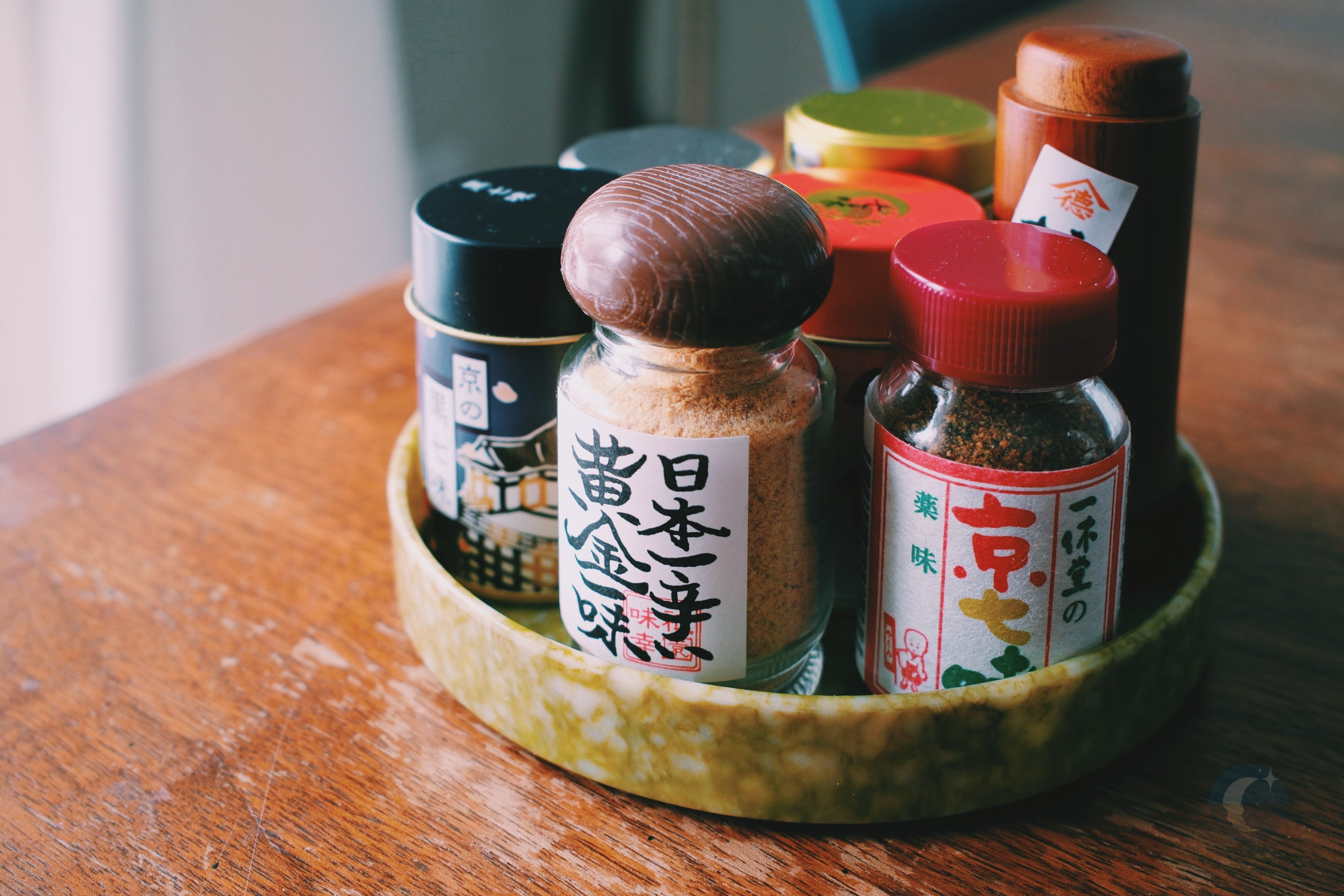
If one is willing to look, there are many smaller shops and regional blends, often tied to nearby temples or specialty food stores where they make shichimi in small batches based on local preferences, often blending shichimi on the spot.
And this is where the fun begins, or at least at meal times.
Different meals call for different flavours. Sure, there are general culinary rules for pairings: lighter spices for lighter dishes, zesty flavours for salads, or roasted peppers for rich, savoury foods. Meal times have become a moment for experimentation for us.


Most things in life are loud and make themselves known. Shichimi is subtle; a careful tap may disappear undetected or alter it ever so slightly. Subtlety is rare these days. It’s worth noticing while it’s still around.
Attending to our senses, with notebook in hand
Our journals often become a place for our fascinations to take root. Custodian-like notes, lovingly prepared on process, swatches, pairings, and sessions. My shichimi entries could easily be exchanged for your observations on coffee, recent reads, inks, exercise, spending, or the slow work of paying attention to your body.
Oftentimes, we forego premade templates and go deep into our own rabbit holes on how best to capture the subtleties of these habits and indulgences, rich with illustrations, notes on minute tweaks, and our prized insights that straddle between art and science.
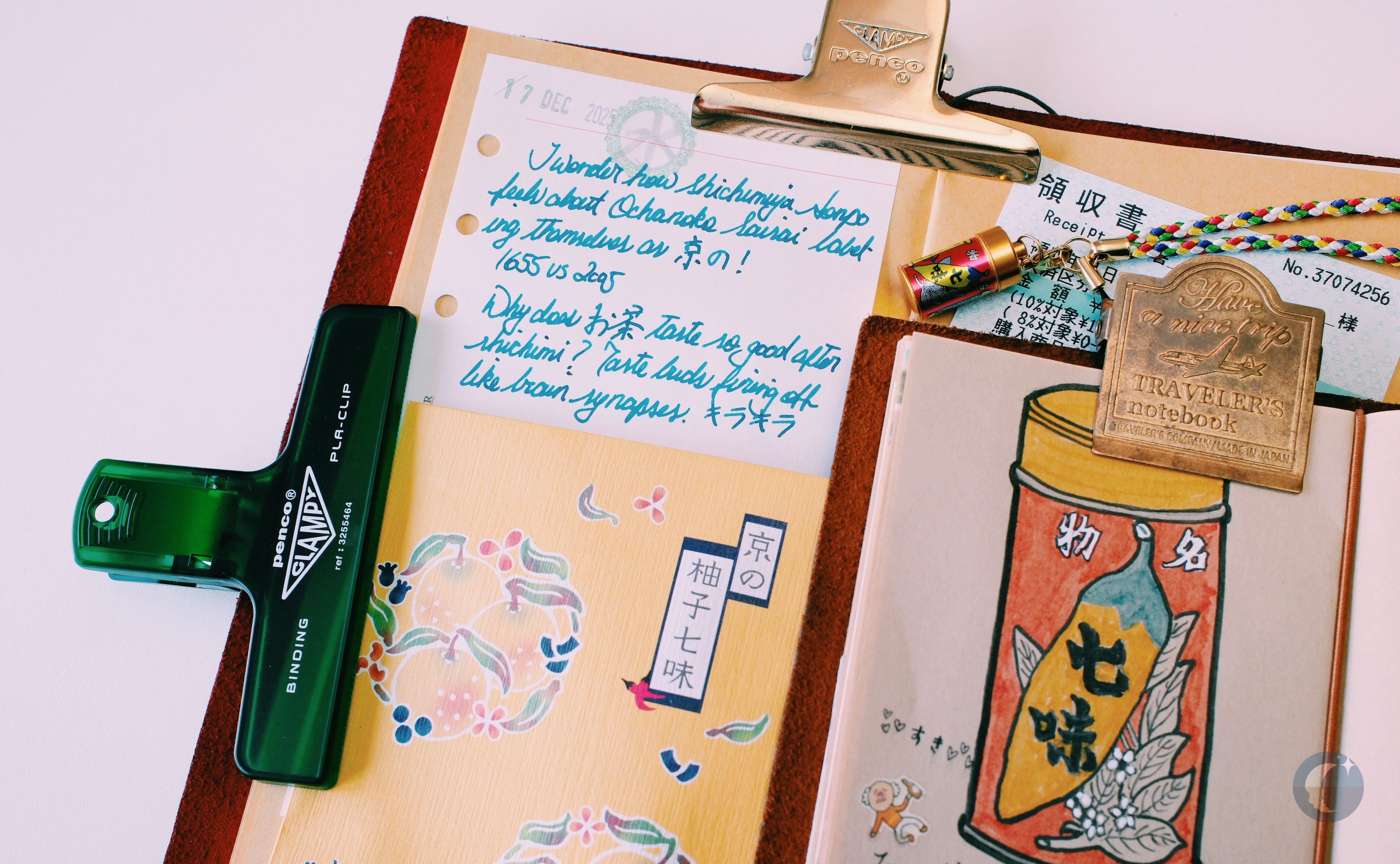
As I flip through my journals while writing this, I noticed how shichimi is fleeting. These pages remind me that delicate flavours change quickly from the moment they land on the plate. Like all spices, it’s ephemeral as the blend gradually loses flavour over time.
It’s easy for us to live through life on autopilot. Our brains like to categorize things into neat buckets. For me, shichimi has done the opposite.
Tasting the delicate flavours of shichimi in every mouthful has reminded me to observe and experience.
Like seeing the details in lines, values, and textures while sketching, I notice things around me for what they are instead of dismissing them merely as an idea so that my brain can move on.
Once I am alerted to this mode of being, I refuse to give in to ideas and labels, whether it’s a bowl of budget Hakata ramen or a cup of high-end geisha pour-over. Don’t let brand, price or other signals colour and dictate how much we should enjoy a dish.
Try it for yourself, close your eyes, set aside preconceptions and let your senses awaken. Otherwise, it’d be a shame that so much of our lives passes by unregistered.
The Exhibit
I don’t generally do well with collections. It’s an unnecessary stressor. I believe this stems from an underlying ennui of rampant consumerism that I sometimes feel helpless about. Somehow, these small cans of culinary wonder escape all this. Maybe it’s because I don’t take shichimi too seriously and they empty rather quickly.
Notice the typography, overt choices in packaging and design, use of wagara (patterns), balance or lack of, materials used and usability. Even in this small sample, a study of shichimi in itself could be seen as a masterclass in product design.
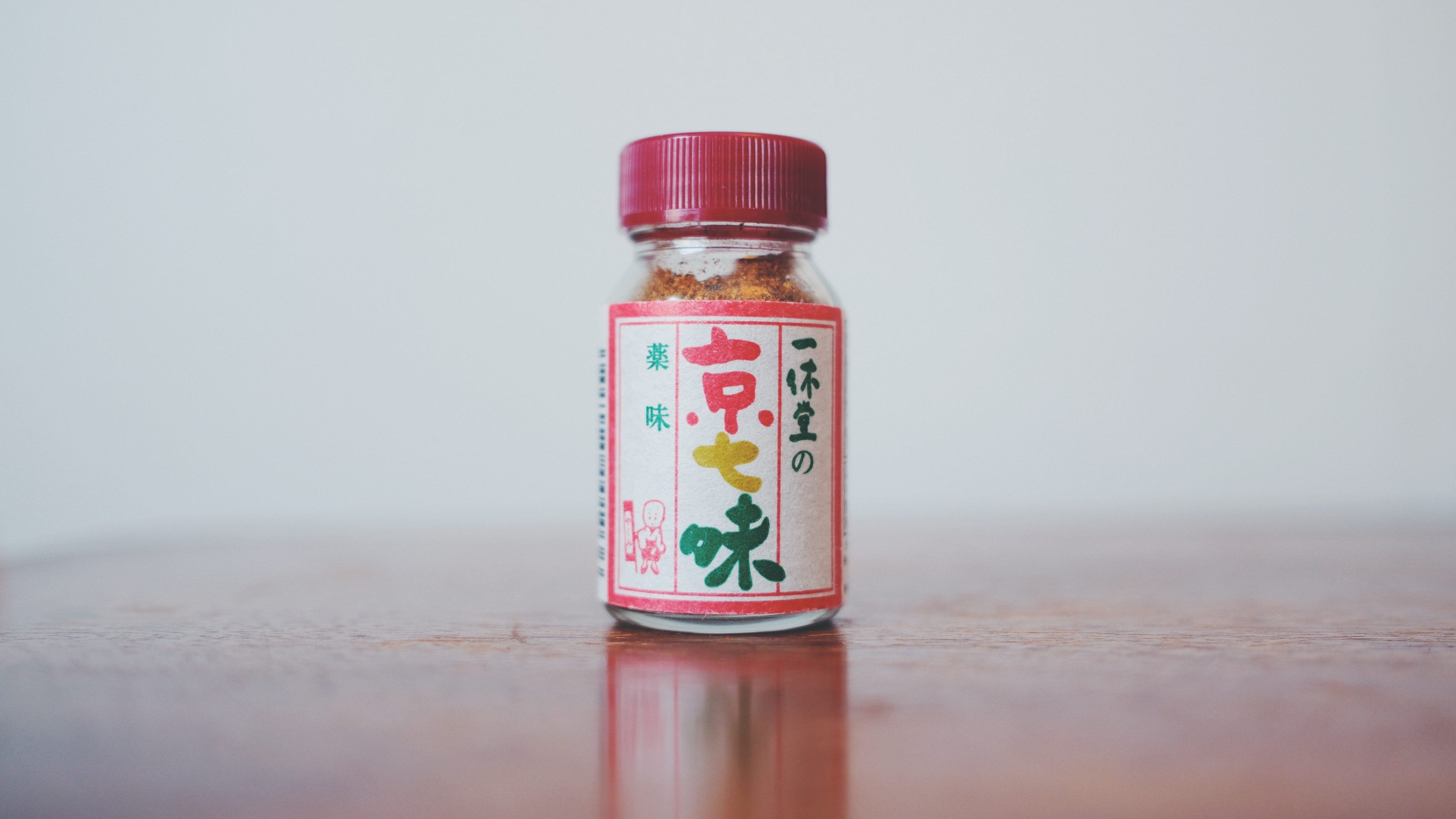
Textured washi label with a palette bursting with nostalgic Showa vibes and complementary playful typography. Aromatic flavours subdued.
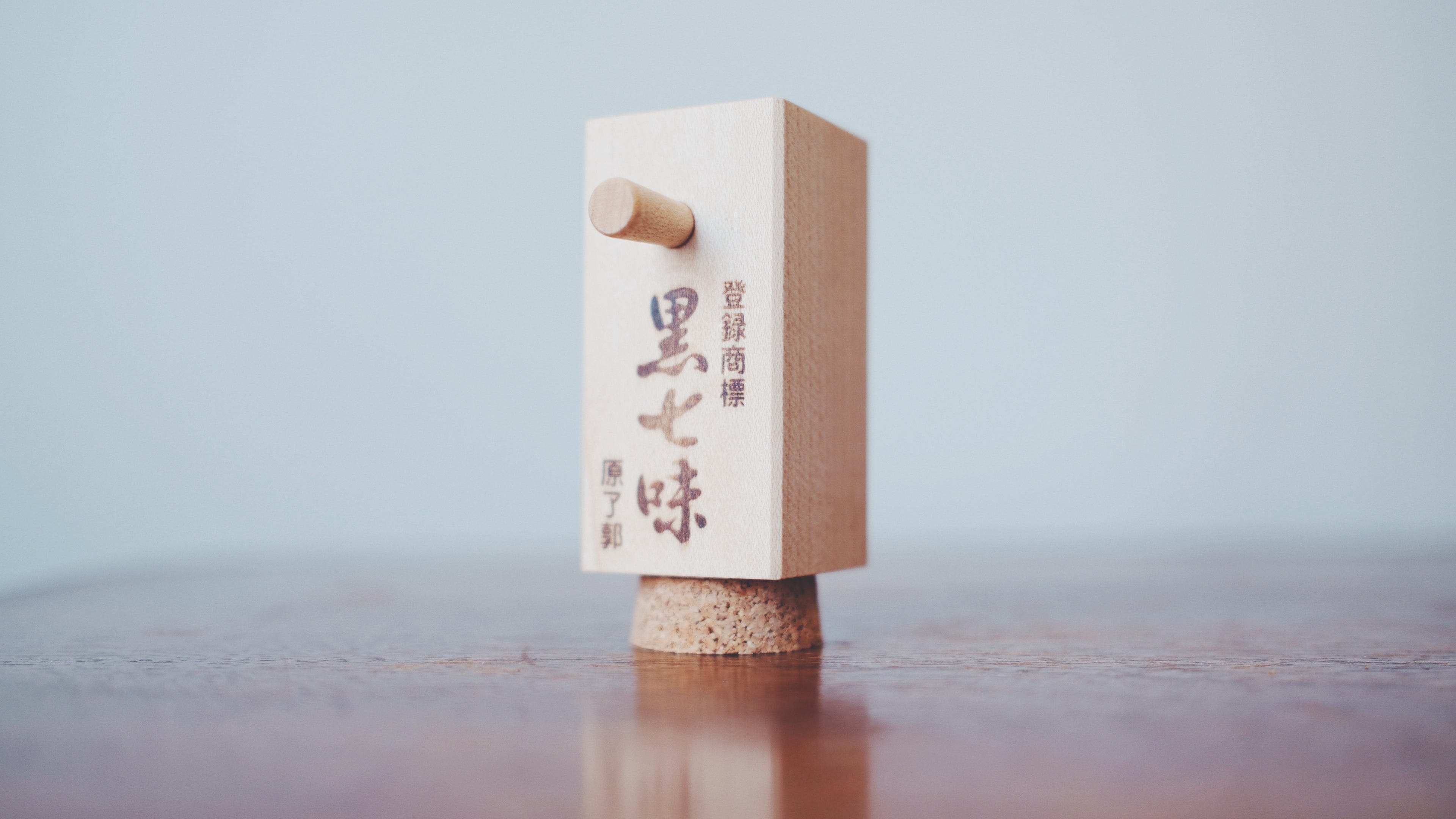
Contrarian approach with square shape but not quite sharp corners. Understated hot iron on wood. Juxtaposing dark colours with a yuzu zest.
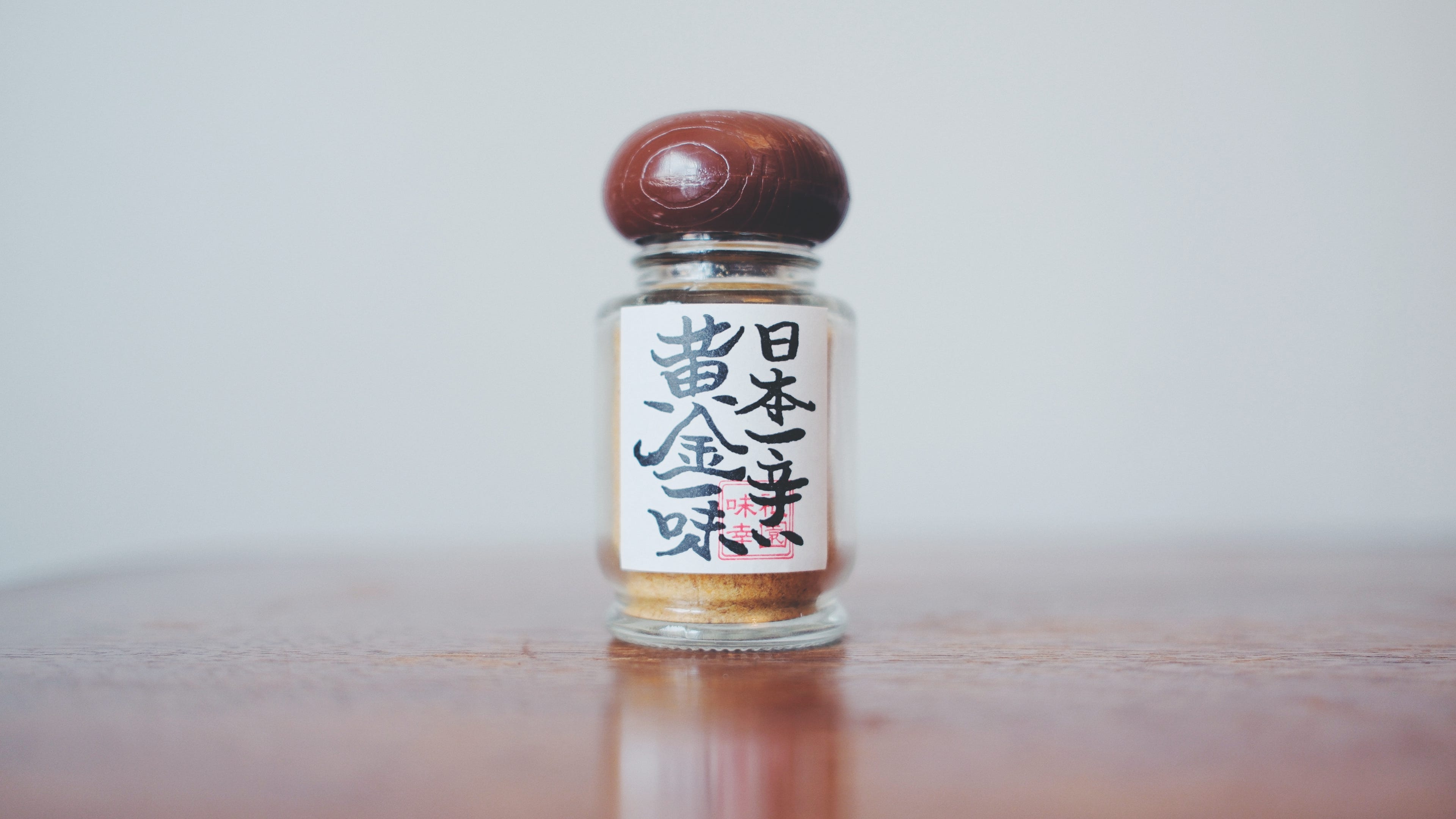
Tasteful calligraphy with vermilion seal motif. This would have been 10/10 if it weren’t for the imitation wood texture on plastic. Plenty of heat, surprisingly granular ichimi.
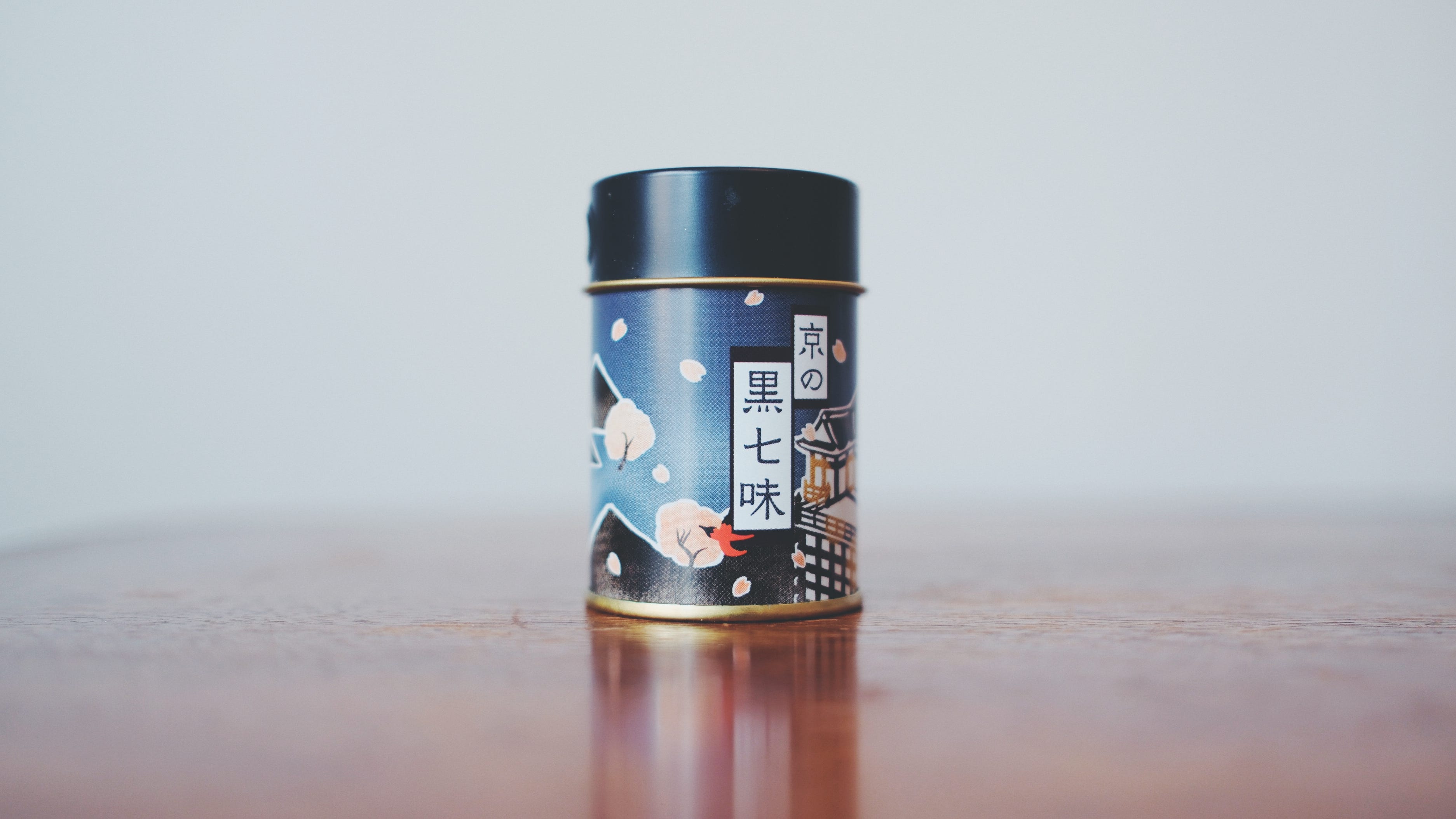
Try as I may and not let this design colour my expectations, placing this beside my dish, and I already feel hints of Kyoto.
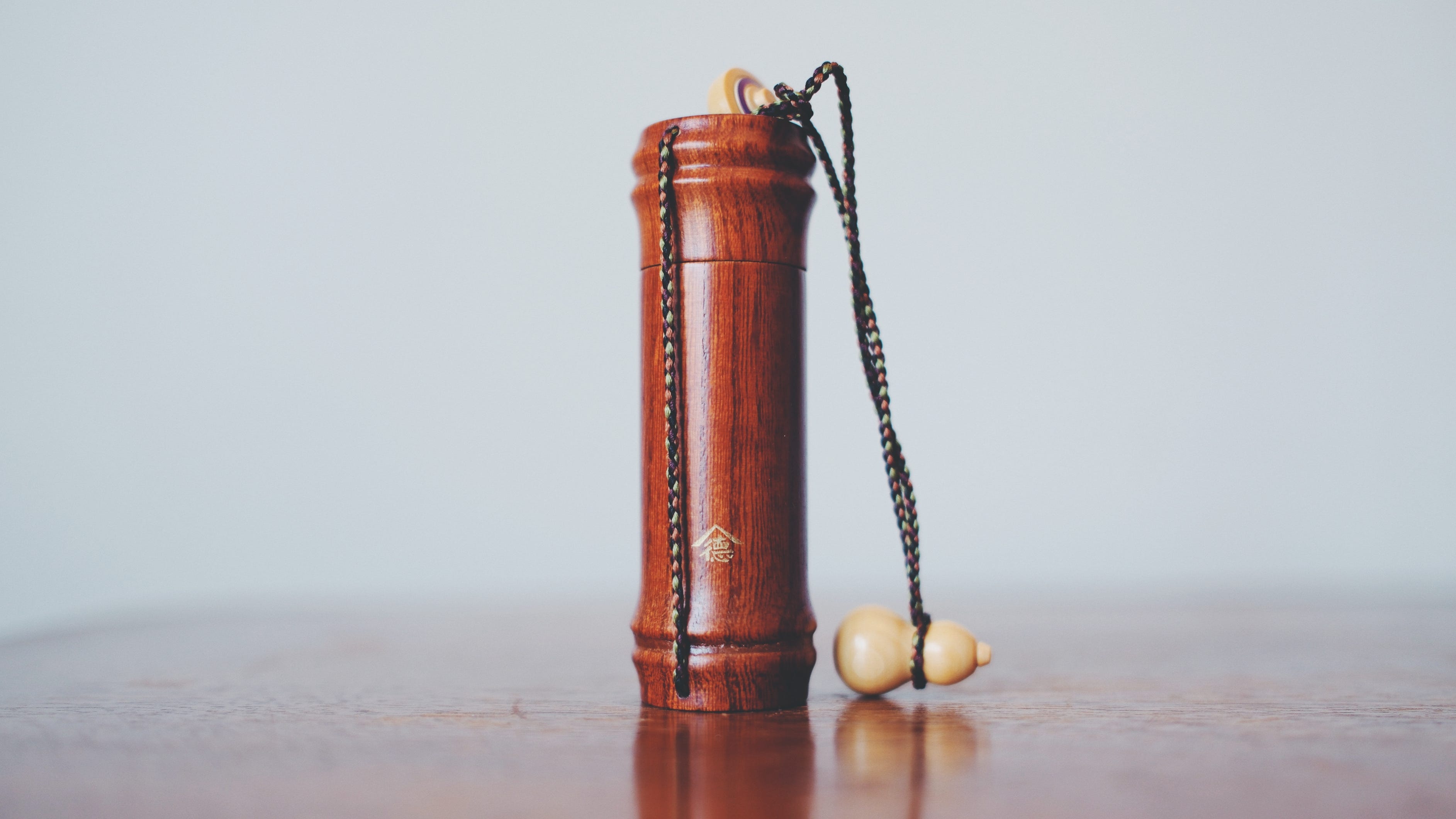
Portable shichimi container with a rare inro-inspired dual-string closure. And yessir, I EDC shichimi.
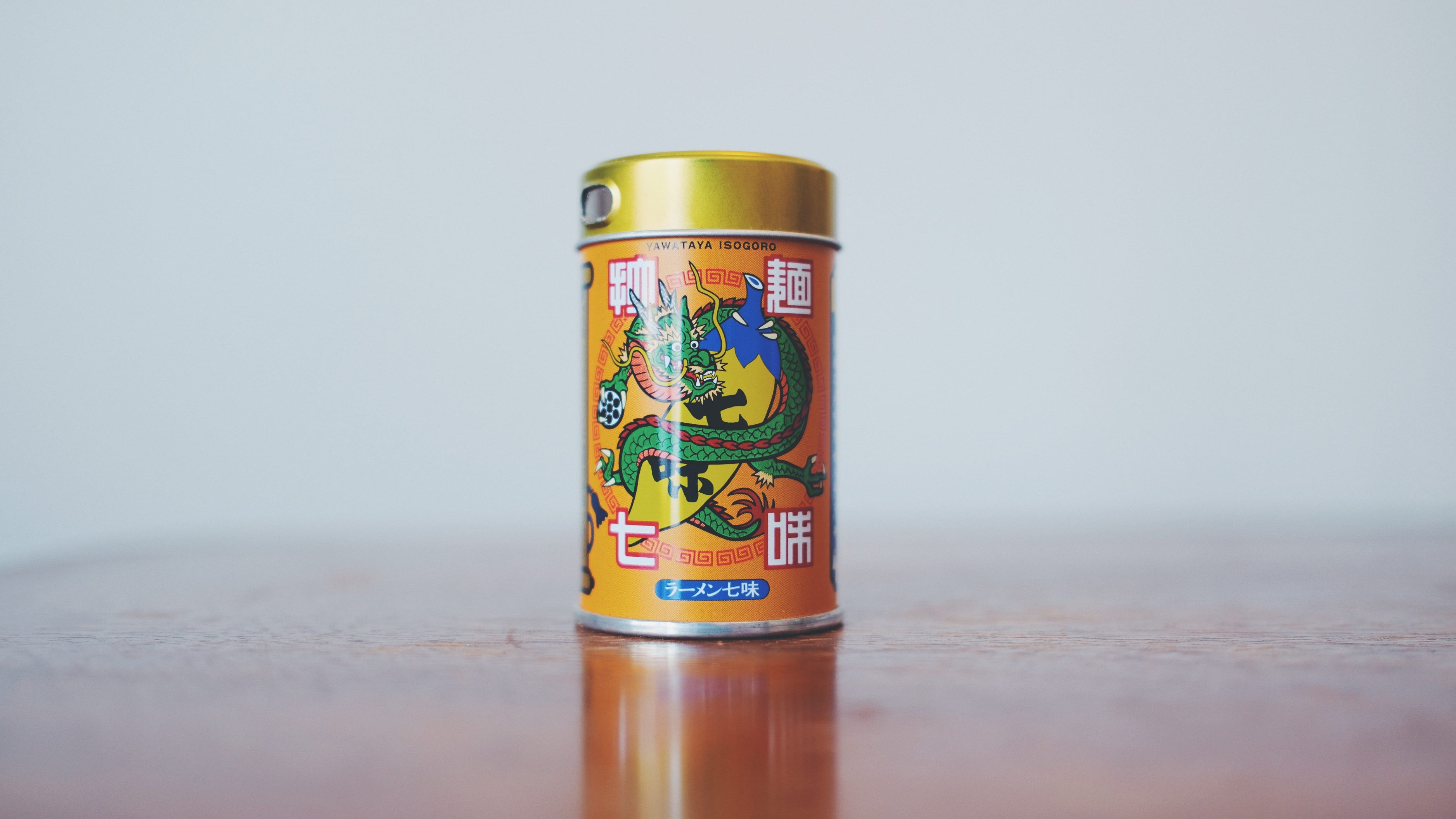
Ramen shichimi from Yawataya Isogoro: White pepper dominance, memories of mother’s char siu ramen from youth.
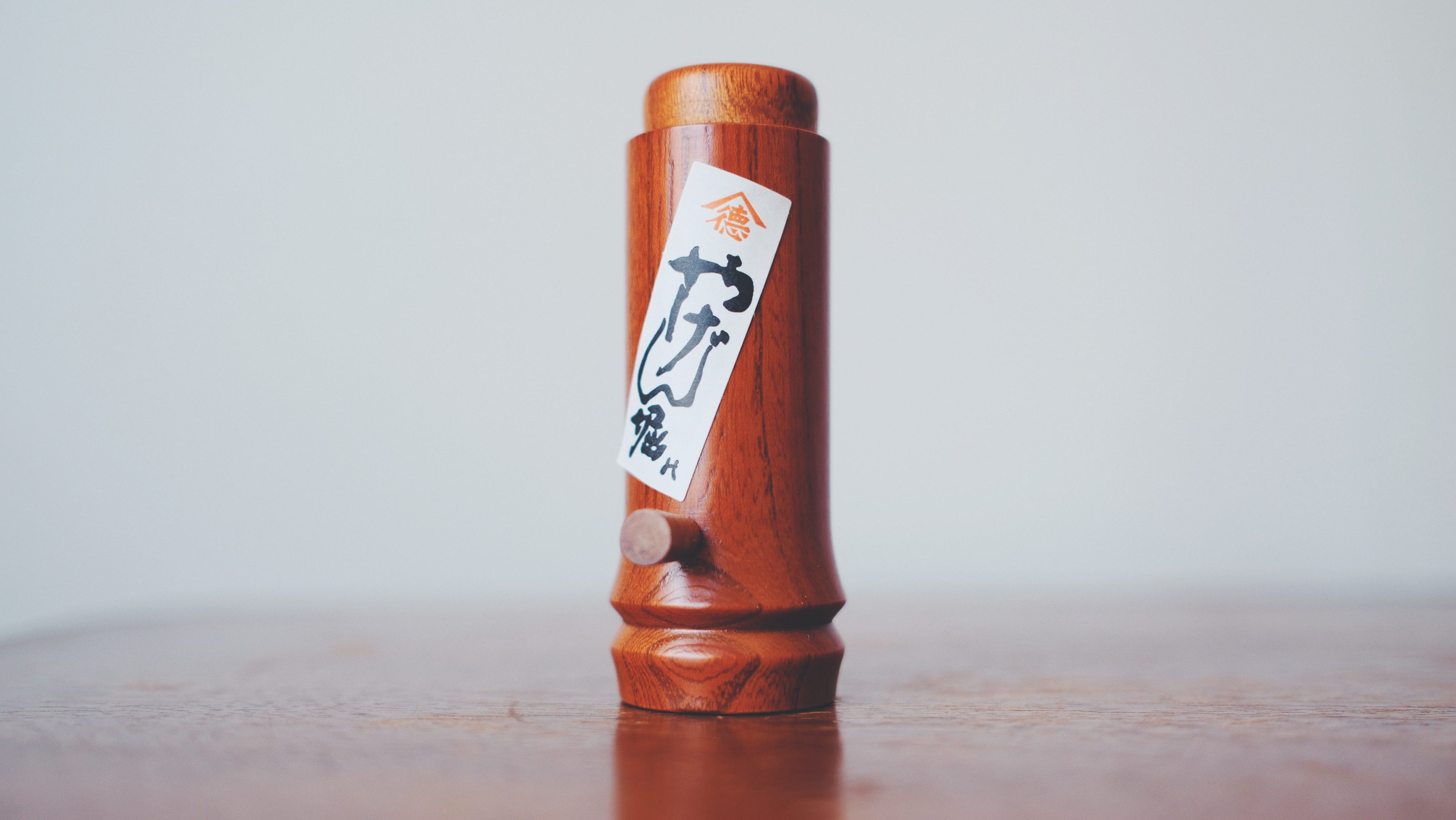
Yagenbori やげん堀 : The OG of shichimi with a classic and confident calligraphy slip design.
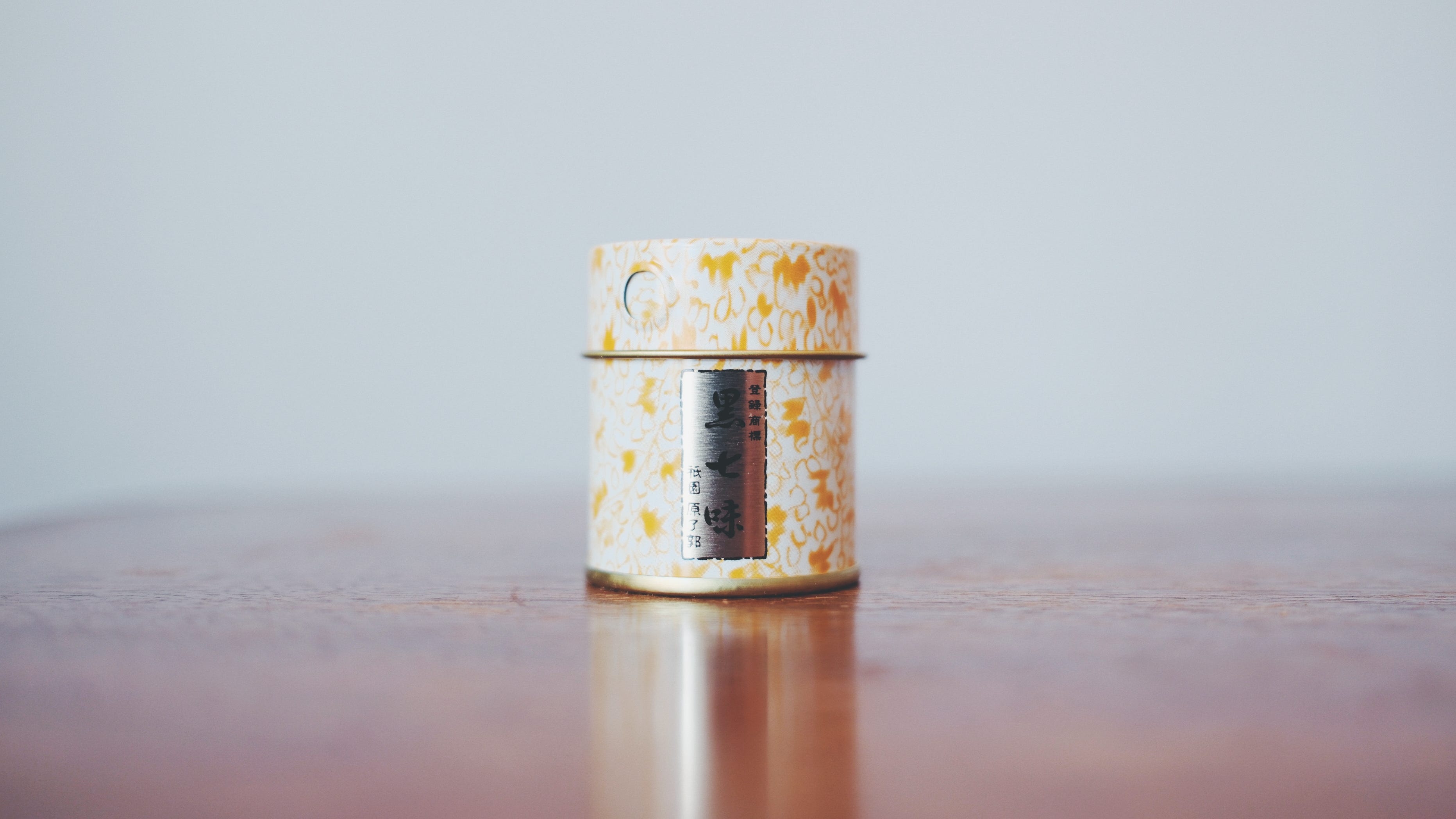
Minimalist labelling on wagara. Another confident flex by Hararyokaku 原了郭.
Ephemeral Flavours, Lasting Memories
I recently shared a quiet note about a prompt that I’ve been thinking about when I was overindulging on museums.
If there were a museum display of the items of our lives, what would they be? What would it say about us and our way of life?
Aside from the timeless heirloom bits that I often write about, I suspect some of the shichimi containers could be a part of a display when I am not around. A flashback.
We were dining at a casual Chinese restaurant, and I was closing a container of new-to-me shichimi. I was eagerly anticipating that first taste and poured some onto the palms of my hand and handled the delicate…
Not that there would ever be an exhibit on the lives of an average person such as myself. What I hope to uncover with my prompt is that maybe my children may think back to the time when I foolishly got shichimi in my eyes because I was a little too excited to try out a new blend.
Years or decades later, would my kids remember my eye-watering moment when they come across this shichimi holder?


To my readers who journal, what small fascinations in your life deserve a bit of quiet observation and attention? If someone curated your life into an exhibit, what objects or memories might surprise you?
✒︎
It’s been a while since my last post. Feeling a little rusty writing this, but I’m grateful to be back, heart full with lots to wonder about.
Thank you for reading. If you enjoyed this, I’ll be sharing more journal-inspired essays in the weeks ahead.
Wil
Voltaire Cang, “Taste, Aroma, and the Cultural Significance of Shichimi in Japan,” Oxford Symposium on Food and Cookery, 2020, https://www.oxfordsymposium.org.uk/wp-content/uploads/2020/06/Cang.pdf.
Having spent most of my working life in global conglomerates, and as a former UX professional whose role centred on the people using our products, I often felt a quiet dissonance in companies that spoke loudly about people, customers, and the planet, while decisions were ultimately driven by quarterly results and shareholder value.
By contrast, the idea of aligning every facet of a business toward longevity and the next hundred years feels truly like a breath of fresh air.
Such a delightful post! Now I want to try more shichimi and really pay attention to the flavours. Thank you for sharing.