

One Pen, One Ink
A Zen-Inspired Lesson in Enough from a Curious Gentleman and His Fountain Pen

It was around the year 2000, shortly after the dotcom bubble burst. Many of us breathed a sigh of relief that our world didn't end as a result of the Y2K bug. As a recent grad, I was working as a project manager, straddling the duties of a producer at a small agency that employed about 30 people.
It was at this small shop that I first encountered another fountain pen user in the wild. Considering that fountain pens, a 19th-century invention, never fully recovered their place in the daily life of the masses after the rise of the more convenient and less messy ballpoint—it was genuinely unlikely that anyone would go out of their way to pick out, ink up, maintain, and regularly put an archaic writing instrument to use. It would have been like hearing the clack of a manual typewriter at a neighbourhood coffee shop or receiving a handwritten letter in the post from a friend, a spark from dying embers long ago.
I was in a meeting in the private boardroom of our President, our fountain pen enthusiast and protagonist. These were the early days when I had just started at the company. One of the first observations I made was that our President had an old-school charm. He was quick to smile and preferred the ways of tradition and rituals.
Throughout the meeting, his fountain pen of choice would always be in his hand, whether he held it mindfully as he listened intently or if he was silently making suggestions with broad strokes in the airy margins of a copy deck. If he was wandering the hallways of the office, I was certain that his pen was tucked away neatly in his shirt pocket.
His pen of choice was a Parker Duofold in the Centennial size. It was in a Maroon Marble finish with gold trimmings, probably from the Mk I run that started in 1987. Even though the pen would have been at most 12-15 years young, seeing a modern Duofold in the wild is a rarity when the fountain pen industry was near its nadir around this time.
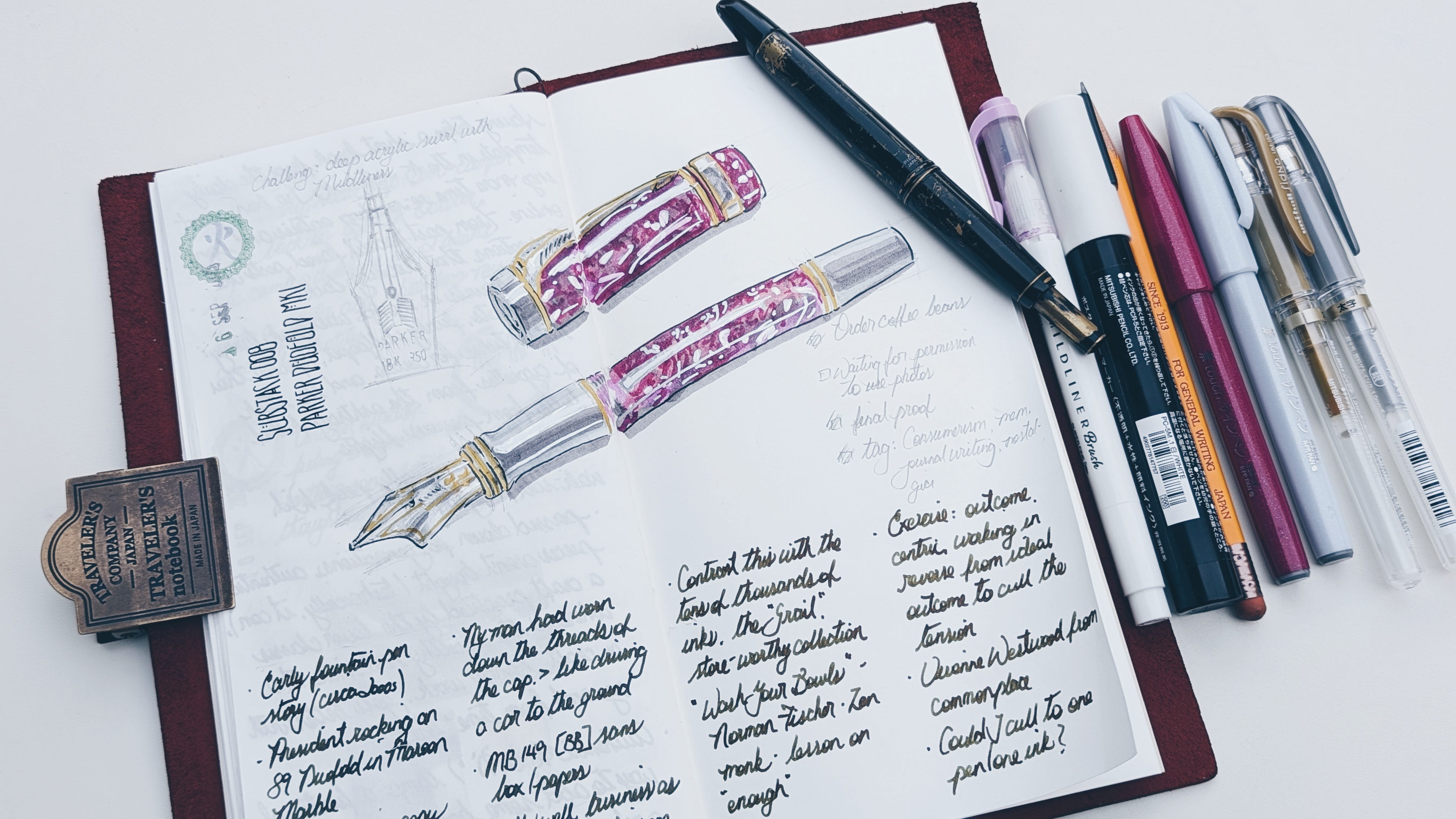
Over the course of my time at this small agency, I had gone through the motions of many enthusiasts of any hobby: participating in shows, living vicariously through others' forum posts, and exploring products and accessories both broad and deep. Meanwhile, our President was not only content but also faithful to his one and only Duofold. Rocking it daily with elation, as if it's a new pen day1 every day.
Throughout my tenure at this small agency, the President and I rarely talked about pens. There was almost a silent acknowledgement of each other's presence as a fountain pen user. Maybe I didn’t ask, fearing I’d spoil the magic of it all. At long last, in a prolonged meeting after hours between the two of us, we finished revising a script, and it felt like the right moment to inquire about his Duofold.


1989 Parker Duofold International in Red Marble. Photo by ProtoPens.
Upon the mention of his beloved pen, he quietly handed it to me2. Unlike other fountain pen enthusiasts, where the exchange of context, stories, and inks is par for the course, he showed hardly any interest in the pen that I was using. If my memory serves me, it may have been a period-correct OMAS Paragon, no slouch in the pen flex department, but I digress.
I quietly examined the iconic Duofold, uncapped it for a closer examination of the two-tone arrow point decoration on the nib. Whether it's accidental or by design, the auditory experience of capping and uncapping the Duofold is quite pleasing. I considered asking if I could try writing with it, but thought better of it. With another satisfying sound, I capped it and promptly returned the Duofold as carefully as I could.
Near the end of my time at the agency, I had one other fountain pen encounter with our President. In another round of copy edits in his boardroom, I was surprised to see that instead of the deep, rich maroon swirls of the Duofold, he was writing with an oversized black torpedo-shaped fountain pen with a broad or even double-broad nib. Fearing the worst, I asked him about his Duofold. With a poignant expression, he told me he had worn down the threads from use to the point that the cap would work its way loose and uncapped itself in his shirt pocket. After finally having had enough with ink-stained shirts and fingers, he drove out to a Montblanc boutique one afternoon and picked out a 149 without box or papers and wore it in his shirt pocket.
“Wash Your Bowls”
A few years later, I discovered one of my favourite essays Wash Your Bowls3 by Norman Fischer. He recalls a famous Zen story where a monk, eager for profound instruction, is told simply to wash his bowls. That is the teaching. The wisdom lies in the ordinary act itself, carried out with full attention.
Fischer explains that Zen practice is about taking the most ordinary object and making it magnificent simply by caring for it with full attention.
Once I understood the insight, I began to see it everywhere. In my almost-mythical recollection of the President and his single pen of choice, he embodies the heart of Wash Your Bowls.
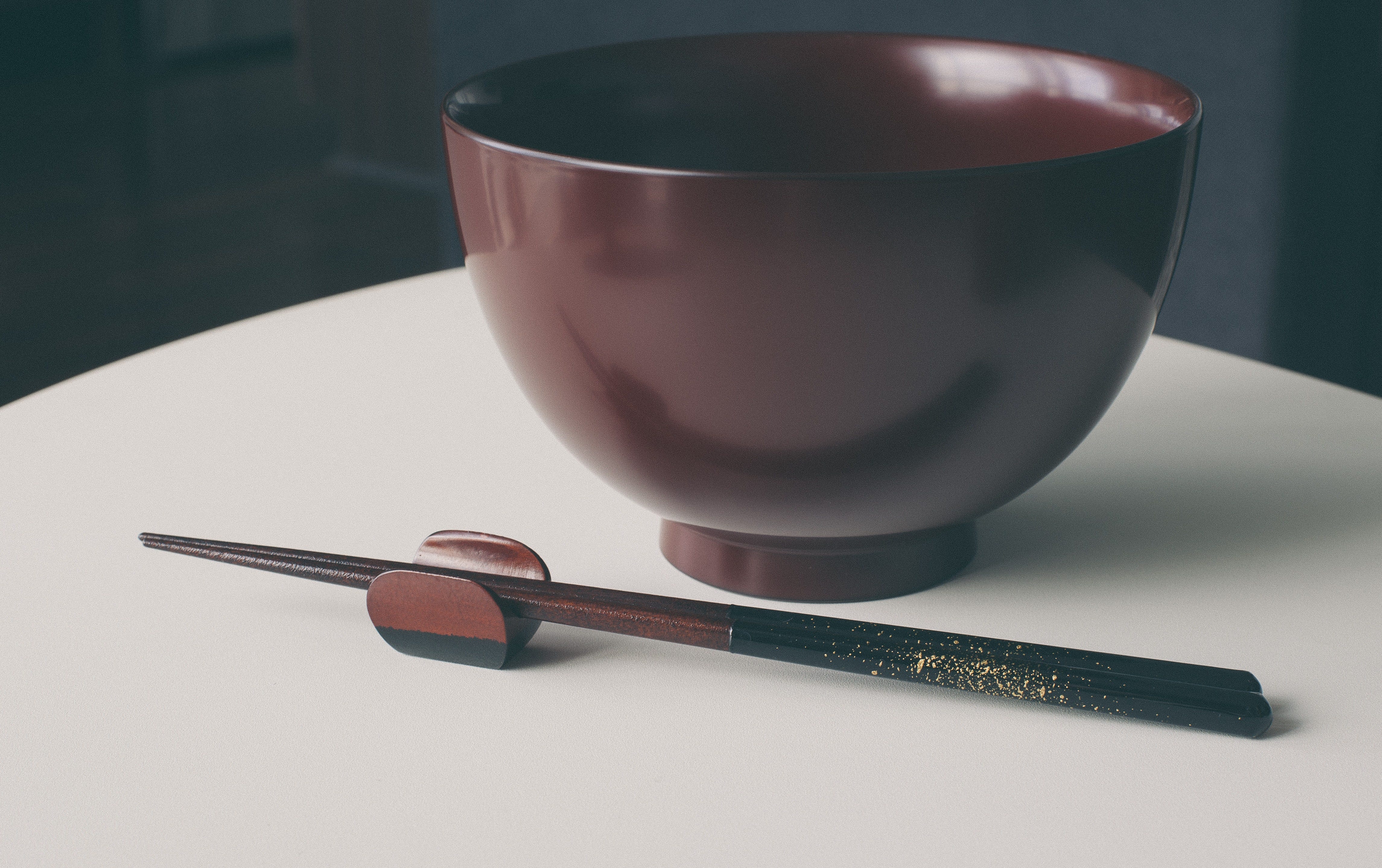
He wasn’t choosing from a collection of pens each morning, swatching inks, nor deliberating on the next purchase the way the rest of us were. Just one pen, one ink, and the simple act of writing. Through devotion, his Duofold became the monk’s bowl, ordinary yet made sacred by use, worn down until the threads gave out.
It feels like a Zen koan4: that a refusal of excess, a quiet austerity, can open instead onto contentment, sufficiency, even abundance.
An Epilogue on my Pen Collection
What the President of the small agency had shown me, without ever intending to, was a perfectly Zen way to live with a hobby. At the very start of my pen journey, the teaching was right there, in its glorious simplicity, and I had missed it. Instead, I let attachment creep in. I kept grasping at more pens, and inks. Like a hungry ghost, I searched for satisfaction in variety, never noticing the lesson of enough already at hand.
Since this realization, I have sold off most of the collection along with the pen chests. I mistakenly believed my goal was to be like the President: one pen, one ink. But in chasing that ideal when minimalism briefly took hold of me, I overcorrected, and I had to walk myself back from its ledge. In time, through reflection and journaling, I found a more balanced way to enjoy the hobby.
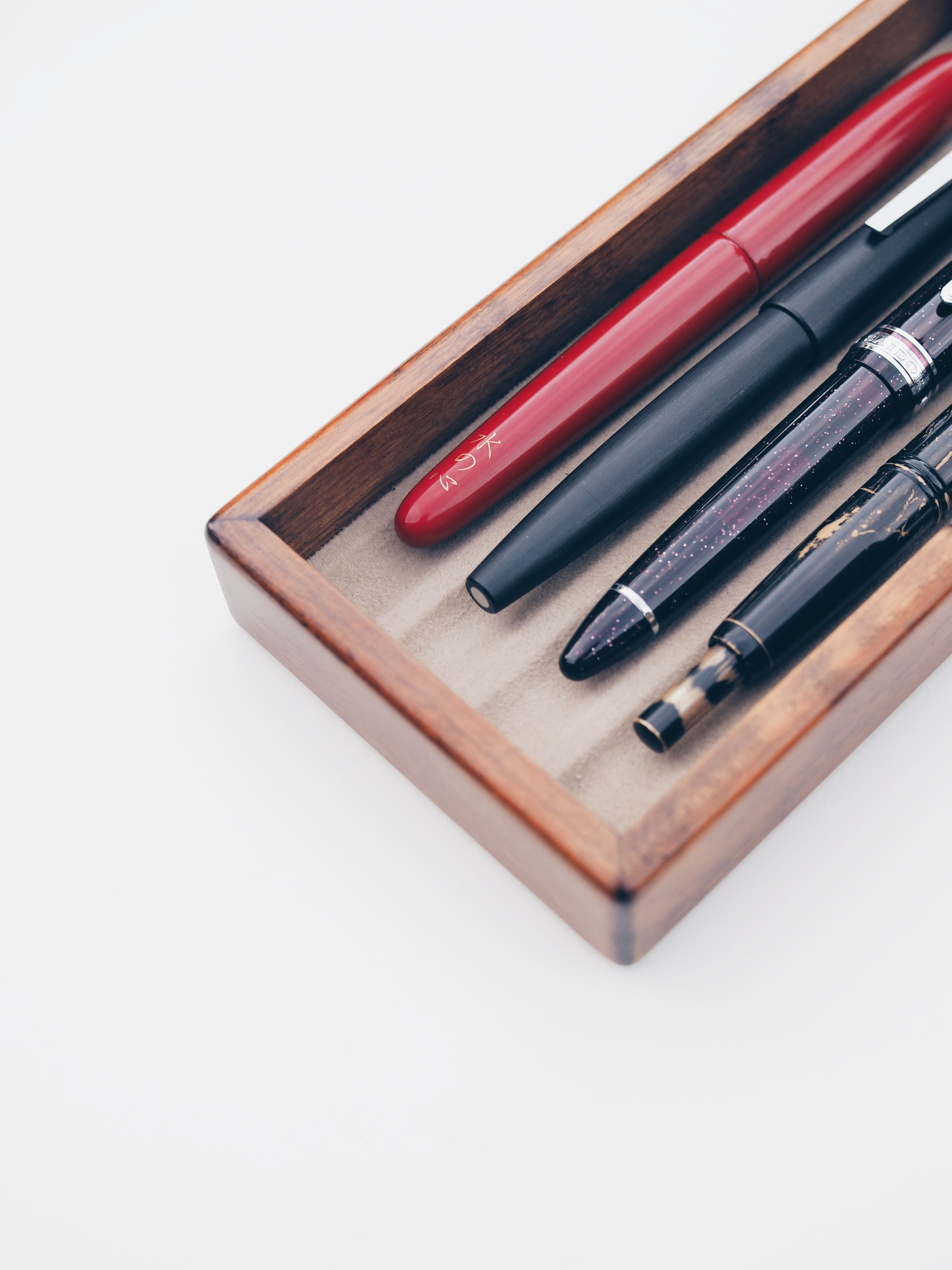
On my desk now sits a small Toyooka pen chest that holds eight pens. I doubt I'll ever feel the need to fill it, and I may even pare it down further. Whatever remains, I imagine one day passing them along to my children as heirlooms — humble and well-worn tools that quietly carry, in their own way, the lesson of enough.
✒︎
Writing Exercise:
If the essay resonated, here’s an exercise to take into your journal.
Awareness
As my allegory suggests, it took a long time to arrive at a Zen-like approach in these deep rabbit-hole-like hobbies. Fountain pens had exploded in choice, variety, and accessories that rewarded store-worthy collections. It took reflection, self-examination, and a few Marie Kondo sessions to begin seeing through the illusion that I needed more to be an enthusiast.
Hypothesis:
Journaling, practicing intention, and learning from those further along in their journey can help shape a philosophy of enough. By reducing the noise of consumerism, we soften cognitive dissonance and cultivate calm in a hobby that often rewards overconsumption. In my case, I arrived at balance by choosing tools that earn their place through use, patina, and meaning.
Envisioning our definition of enough can guide us toward a quiet, Zen-like contentment.
Method
With your journal and writing instrument at the ready:
Envision the Ideal Outcome: Imagine yourself ten years from now: what does enough look like in this hobby (or in another area of life where a collection may be unwieldy)?
Name What Matters: List three practices, experiences, or tools that bring the most contentment and meaning for you.
Gratitude Anchor: Write a few sentences reminding yourself of how lucky you are to have what you need already.
Envisage Release: This is optional. Imagine what might shift if you set down or passed along what no longer serves you, to better appreciate what remains.
Assessment and Insights
In the margins of a commonplace notebook, the same one where I copied passages from “Wash Your Bowls”, I once jotted down a line from Vivienne Westwood: “Buy less, choose well, make it last.”5
This advice, from a designer rooted in punk rebellion, yet deeply aware of fashion’s toll on the planet, has its own tension. Fashion is the second most polluting industry on earth6, and yet Westwood’s advice is sound: we do need clothes, and when we choose carefully, we can live more lightly.
It strikes me that her maxim and the President’s quiet lesson point to the same truth. Whether in a bowl, a jacket, or a single well-used pen, the invitation is the same: to see that enough is already at hand.
Thank you for reading. If this resonated, consider subscribing for future essays and practices.
Wil
New Pen Day or NPD: an ever popular type of post (even with its own flair) where Redditors share their first experiences with their new pens.
I had found out later from his Executive Assistant that the President had never offered his pen to anyone before. Perhaps it may be because he had made similar observations of his own and believed that his Duofold is in safe hands.
Books:
Norman Fischer, When You Greet Me I Bow: Notes and Reflections from a Life in Zen (Boston: Shambhala Publications, 2021), 53.
Norman Fischer, Hooked: Buddhist Writings on Greed, Desire, and the Urge to Consume (Boston: Shambhala Publications, 2011).
Web Sources:
Norman Fischer, “Wash Your Bowls,” The Sun Magazine, June 2005, https://www.thesunmagazine.org/articles/23952-wash-your-bowls.
Norman Fischer, “Koans 2005: Wash Your Bowls,” Everyday Zen Foundation, accessed September 17, 2025, https://everydayzen.org/teachings/koans-2005-wash-your-bowls/.
A Zen Koan / Kōan 公案 is a paradoxical story, question, or statement used in Zen practice to help one go beyond logical reasoning and directly touch intuitive insight. (See, for instance, Britannica, “Koan, in Zen Buddhism,” Merriam-Webster, and Understanding Buddhist Koans, Lion’s Roar.)
Vivienne Westwood, “Vivienne Westwood on Capitalism and Clothing: ‘Buy less, choose well, make it last,’” video, Guardian Live, YouTube video, 3:22, October 29, 2014.
Also at: https://www.viviennewestwood.com/en-ca/sustainability/
Stelios Andreadakis and Prince Owusu-Wiredu, “Fashion Footprint: How Clothes Are Destroying Our Planet and the Growing Impacts of Fast Fashion,” in Global Warming – A Concerning Component of Climate Change, ed. Vinay Kumar (London: IntechOpen, 2023), https://www.intechopen.com/chapters/1144940.
Hi. I was wondering why the word President was always in italics in this piece. Are you anticipating some FBI or Border Control agent scanning through your socials?