

On Heartbreak and Paper Time Machines
Reflections on an ancient-to-me journal entry about my first heartbreak. Bounded by an unshakeable longing to reach back in time to mend the cracks.

I slowly tilt my head and stare at the centre of my body. Everything appears okay. But inside, there is a dull and cold ache with a harrowing feeling of loss. The closest thing I can visualize is a vacuum in the shape of a small sphere, the size of a tennis ball. It is not unlike the same cold, dark, and silent vacuum in space that I've seen in movies, except I've never been in space. There it is, a small sphere of absence sitting neatly below my beating heart.
It was late August and early September in 1993. Everywhere I looked, people around me seemed to be floating from a heightened sense of being. The very same nervous and excited energy that was par for the course at the beginning of a new school year. Long hugs, words formed but unheard on inquiries about “How was your summer?” across busy hallways with muzak made up of the top hits from Duran Duran, Nirvana, and U2—the milieu of my high school. To everyone else, I appeared to be trudging along in a trance. But on the inside, I sat with my arms hugging my knees at the bottom of a deep, dark well, trying to make sense of my first heartbreak.

It has been more than three decades since the events described above. None of the words were actually penned into my “diary”1. Fortunately, I have kept these journals through multiple moves and many narrow escapes from the shredder, fireplace, and landfill. During this gut-wrenching and volatile period of my teenage years, what I had actually written, scrawled, or sometimes carved into my journal was my attempt to answer questions of "why?" to no one in particular.
"It pains me" has been my default, knee-jerk reaction when reading these entries. It is far too easy for the present me to dismiss all of these complex feelings from the past with a broad stroke, believing that I was inexperienced in life and unskilful at managing my emotions. However, the teenage me still has a lot of living left to do. Besides, how many of us in our adult years can claim we can safely navigate the complexities of relationships while skilfully extracting learnings, insights and other essential life lessons for our next attempt?
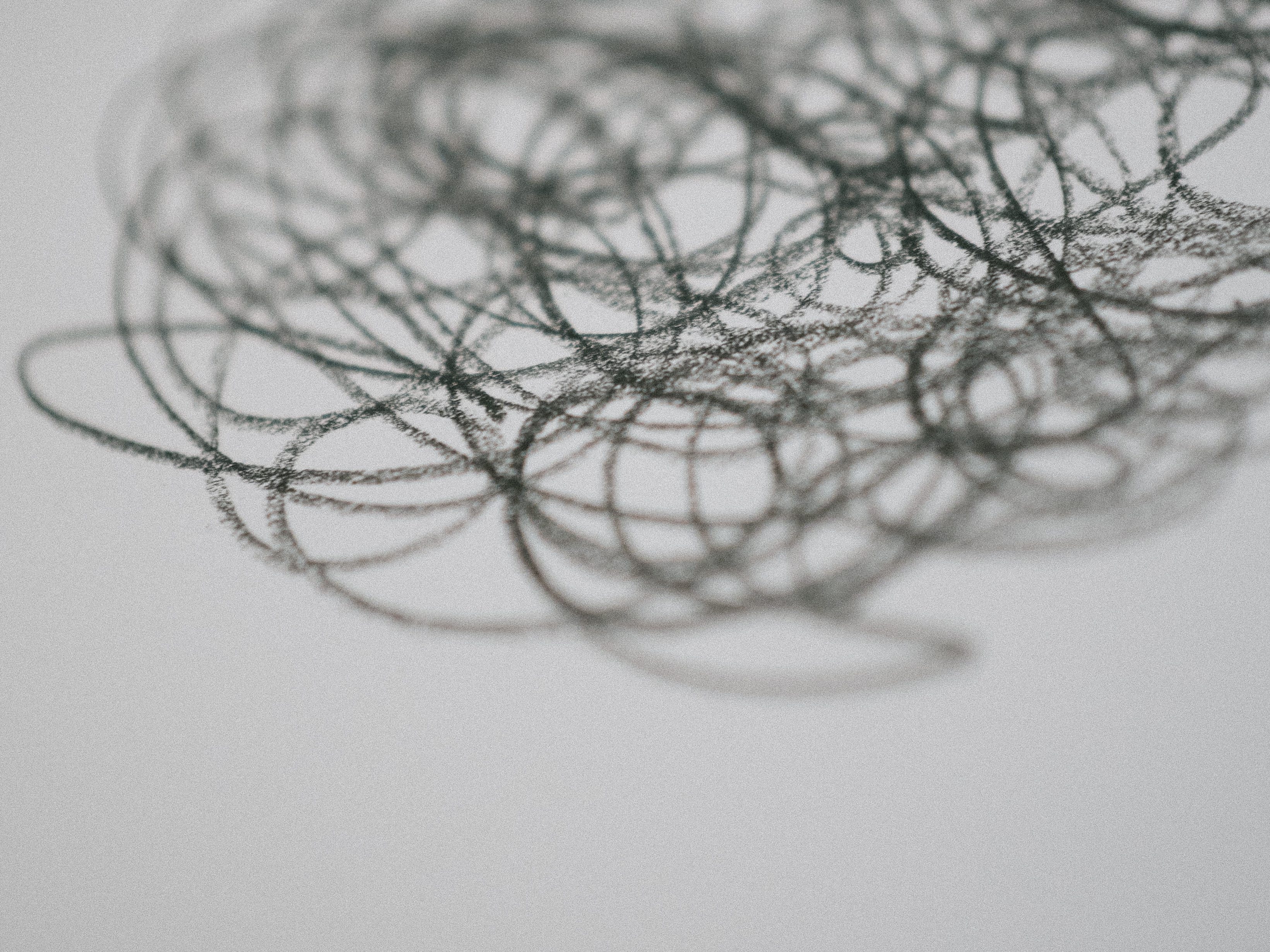
Contemporary research by Tasha Eurich2 suggests that I should have been asking myself the question of "what" in nature instead of "why" in my journal. This would have allowed me to stop this helpless and downward spiral of victimizing myself with questions of "Why me?" On the other hand, asking "what" type questions such as "What can I learn from this?" or "What can I do better" fosters a growth mindset. Ideally, setting myself up for a more ideal outcome next time around.
Holding this 30-plus-year-old personal relic of a notebook in my hand, I find myself leaning more towards the other side of science, where research3 suggests that adolescent brains are capable of much more volatile emotions. I believe my young and developing brain may not be capable of such amazing feats as rationalizing myself out of heartbreak and calmly navigating such volatile and emotional turmoil when I clearly lacked the experience, maturity, tools, and patina.
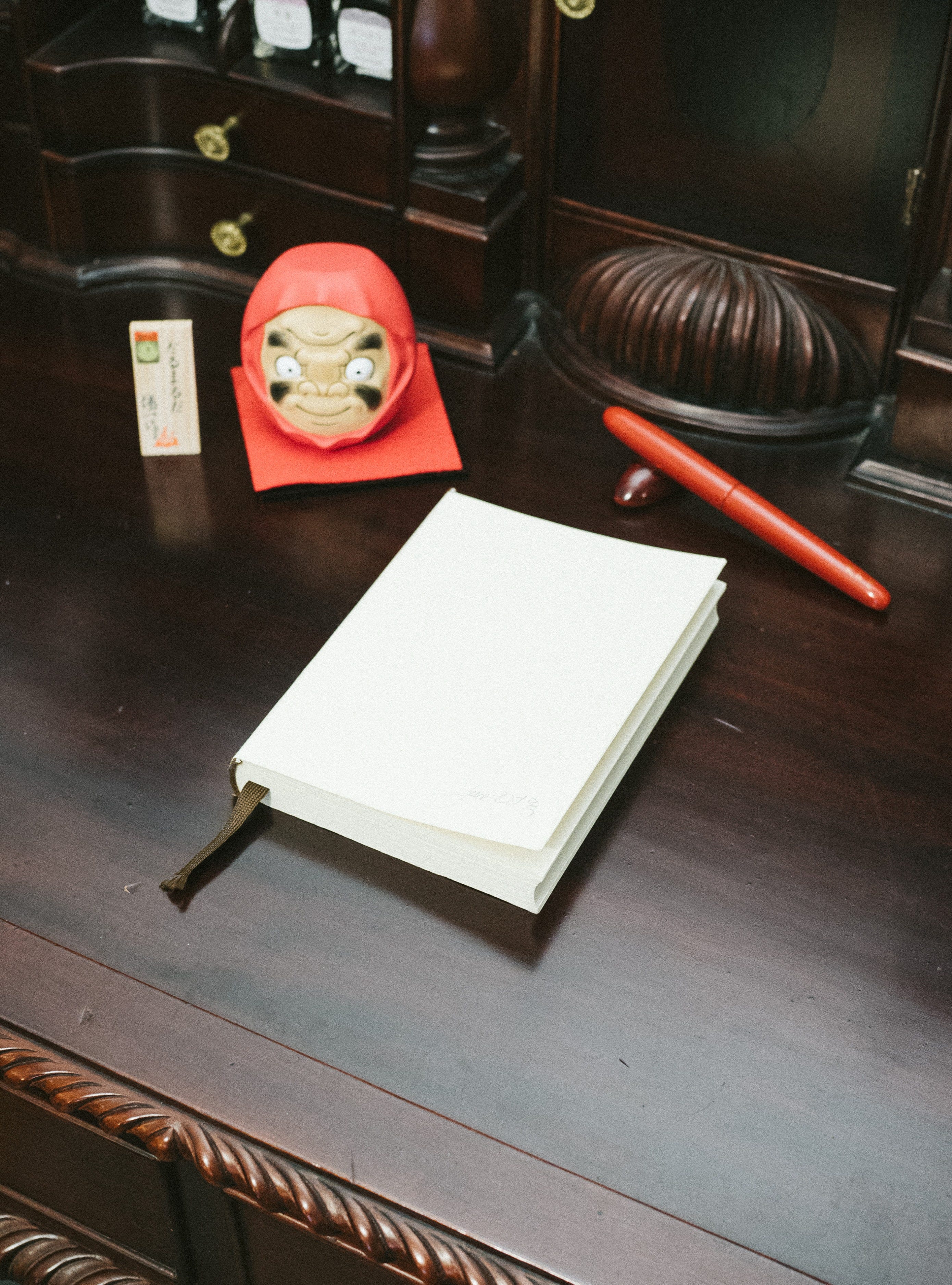
Upon further reflection, I am absolutely thankful that these wince-worthy pages served as a punching bag, or a release valve if you will, to allow me to safely unload excess emotions, frustration, and confusion. I cannot imagine the regret, mistakes, or collateral damage I would have caused if I had not discovered my habit of sitting in quiet solitude to work out my emotions with pen and paper.
My teenage self was quite verbose. Funnily enough, peppered in the entries were snippets where I clearly broke the fourth wall of journal writing. I frequently asked my future self and, hopefully, wiser self (my present self 30 years later) questions and commentary. It's as if mundane scribbles on paper can effortlessly ride the waves of time like a budget and malfunctioning time machine that only goes in one direction but not the other. Here's my teenage self asking me some of life's toughest questions when I still feel I have not experienced life enough to provide any sort of comfort to ease the pain. Oh, how I wish I was able to respond to ease the pain in some way, as I can feel faint echoes and hints of heartbreak through time.

I quickly snap back from my journal-induced reverie when a scream of "I am home!" echoes through the abode as my daughter triumphantly returns from a particularly nonchalant day at school. She will be turning 10 soon; if she is lucky, she still has a few years before experiencing her first heartbreak. I'd like to believe that as a result of connecting with my younger self through past journals, I am more empathetic toward the complexities of life as a teen.
When the day comes when my daughter returns home with a darker, sadness-tinged announcement of arriving home, and if she is willing and able to share with me her challenges in life, I'd be more than honoured to point back to these very pages with all of the gut-wrenching questions and scribbles. It may reveal to her that most of us have been there and experienced the same pain regardless of how much time has elapsed. And hope upon all hope, she can navigate her first heartbreak more skilfully and wisely than I ever did.
The Way of the Mirror is a passion project that brings together journal writers. I value transparency and journaling nerdism, from the tools I use to the steps in my writing process4. If this reflection sparked a moment of inspiration or introspection, consider supporting this work by subscribing. It truly means more than you know. Thank you for reading.
Wil
Journal Exercise
In every post, I include context, references, and a writing exercise for paid subscribers5.
Awareness
It was after learning about the design principle of the knowledge-management app Logseq that a slowburn hypothesis about journal writing was brought back to life. The app is centred around a core principle:
The relationship between pieces of information is more important than the information itself.
It challenges users to find value in novel ways to make new connections between pieces of information (known as a block). I see a resemblance and equate Logseq's blocks with past events or memories and the process of reflection at different times as a method for making new connections.
The mistake I was making, and possibly a common pitfall for other journal writers, is that we often assign too much importance to a particular memory or event. Imagine playback after playback of the memory, followed by feelings or an immediate reaction. This creates a sense of identity that we latch onto, ultimately confining us into the same patterns.
Hypothesis
Journal writing is a powerful tool for me to break free from predictable thought patterns, or limiting identities that I've assigned to myself. The hypothesis I'd love to continue exploring is that the relationships and connections between past events are more important than the events themselves.
We create space between an original experience and our interpretation of it (let those notebooks age majestically.)
We re-author our stories for growth and insight by challenging and breaking down old automatic loops tied to our identity. This means recognizing and saying “No” to thoughts like, “Because this happened, this is who I am, and this is how I must behave or react.”
We grow and gain insight by reinterpreting past events through new contexts, values, perspectives, or goals by making novel connections with fresh experiences.
Method
You will need your journal and a writing instrument. Optional: sticky notes if list-making is your superpower. Past journals or photo albums may also be helpful. With your tools at the ready:
Leaf through past journal entries, photo albums, or think back to past events.
Make a list of 3-5 events that you believe played an essential role in "defining" you. Alternatively, choose events that feel significant or serve as inflection points in your ongoing narrative. Here are some thought-starters:
Experiences that occur in cycles, such as relationships (in my case, I focused on my first heartbreak.)
Reaching particular goals, major milestones, or life stages.
Taking an unexpected detour.
From your list, select one event that resonates with you at this moment.
Take a deep breath, exhale and bring yourself back to that moment. It's important to remember that you are undertaking this not as your past self but as your current, wiser, and more experienced self.
Reflect and Write: Take your time writing as much or as little as you'd like about this experience.
Assessment and Insights
Did you find it easy or challenging to revisit past events?
Did you learn anything new or gain a different perspective when revisiting past memories by stepping outside your usual thought patterns?
The vast space, time, and experience between my latest reinterpretation and the original experience gave me a newfound appreciation for how vulnerable and ill-prepared I was in relationships. It was this appreciation that made it easy for me to empathize deeply with my younger self. The next time I catch myself wanting to be dismissive and wince when I re-read past journals, I will challenge myself to dig deeper and empathize instead.
I've come to realize that in my early adulthood, my understanding of my role in relationships was, at best, shallow, flawed, and self-centered. Armed with my current perspective, it is easy to see how this came to be. Growing up with Disney movies, rom-coms, and 80s love songs, I held onto some outdated ideas about relationships without knowing any better. Having these clear benchmarks to suggest growth gives me hope. And when I turn instead and look forward, I feel more confident and prepared, knowing there is still much work and learning ahead.
The term "diary" was much more pervasive at the time. It has since evolved into a more widely accepted and inclusive "journal" with fewer biases or suggested connotations, such as the age or gender of the writer.
Tasha Eurich, Insight: Why We're Not as Self-Aware as We Think, and How Seeing Ourselves Clearly Helps Us Succeed at Work and in Life (New York: Crown Business, 2017).
Laurence Steinberg, Age of Opportunity: Lessons from the New Science of Adolescence (New York: Houghton Mifflin Harcourt, 2014).
Ideation: Kitaboshi 9606 HB Pencil on Mnemosyne 179 notepad · Initial Draft: Sailor 1911L on Hohonichi A5 notebook · Revisions: Logseq · Editing: Friends and Grammarly · Photos: Olympus OM-D E-M5 Mark II, M.ZUIKO 25MM F1.8, Lightroom · All books mentioned were borrowed from the local library
Turning on the paywall was breaking the page layout and hiding comments and footnotes. I have disabled it for now.