

Music as Time Capsules
An exercise to create a personal soundtrack that anchors your memories and defines the chapters of your life

I'm feeling the effects of aging this week, particularly in the disconnect between how people around me react to my recollections of past experiences.
The theme for this week is music and its role throughout our lives. I realize that many people may not even know what a cassette tape is: an obsolete physical medium for sharing music. It has been a delightful part of my personal history, with its own distinctive culture and art encased in its plastic castle1. Suppose you are born after the year 2000. This week's reflection may satisfy a sense of curiosity about what music culture used to be like, or I should apologize in advance for my indulgent hyperbole about a bygone medium. But I digress, I am turning half a century old this year, and folks have been critical of me being long-winded. I sincerely hope you enjoy this look back at the various roles music plays in our lives and whether it can complement your journal writing practice.
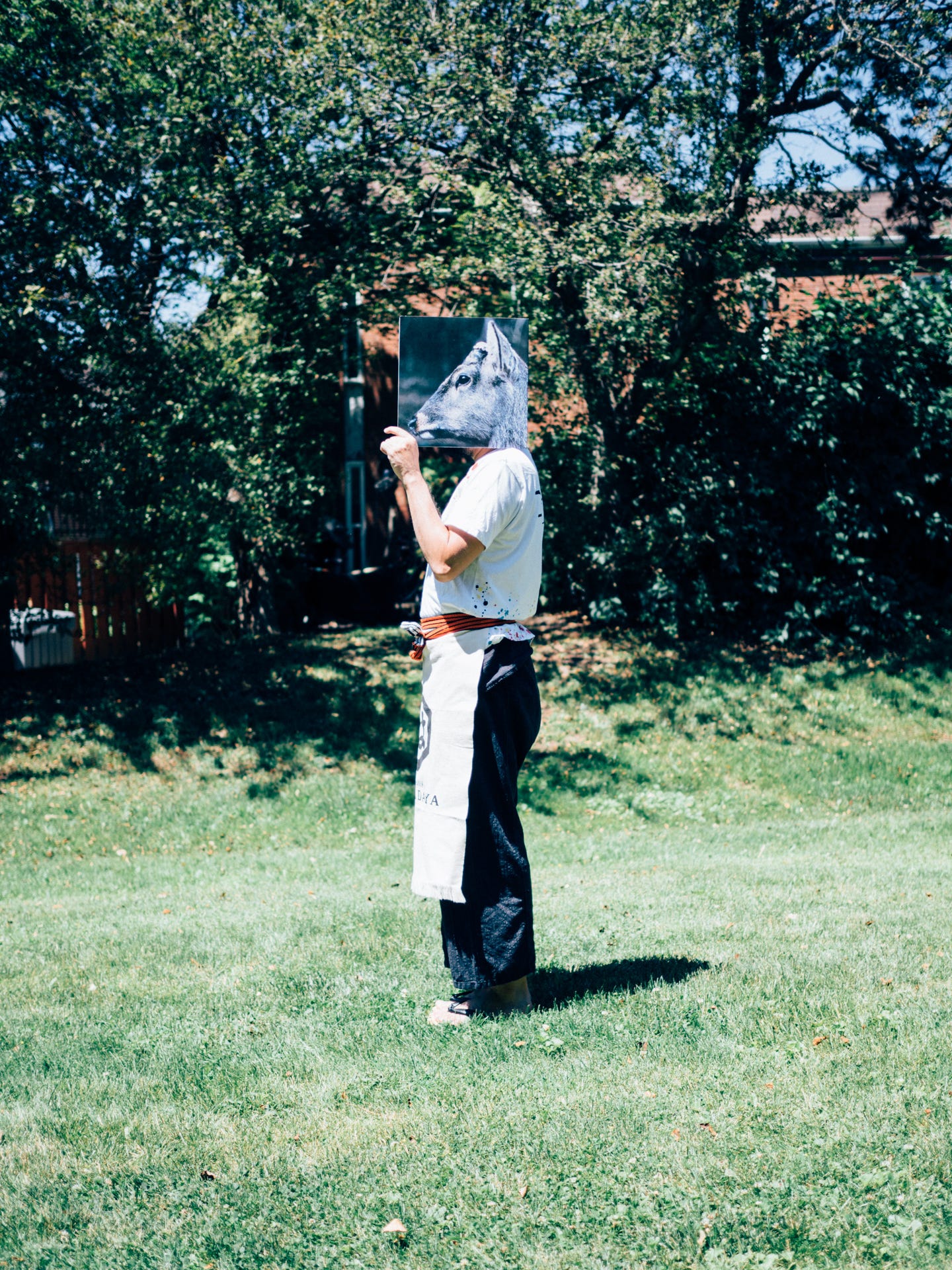
On most days, I feel a small jolt of excitement as I uncap my fountain pen each morning. Depending on my mood, I'll decide whether music will complement the session. When I consciously invite music into the ritual, it is not for the purpose of background ambiance; instead, it becomes an integral part of the reflection and writing experience.
I glide my finger along the spines of albums, considering each one before pulling it from the shelf. At other times, I might know exactly what I'm in the mood for and reach for it. The outcome is the same; I let the album take me to unexpected places and shape the writing experience.
The excitement of a new album release by your favourite artists
This morning, I received a rather welcoming notification from one of my favourite bands about the release of their latest album. Hammock is a musical duo that creates primarily instrumental music, blending elements of ambient, orchestral, electronic, and shoegaze genres. The pair has been at this since 2005, perfecting their lush soundscape. I find it challenging to describe their sound. As a fan and supporter, here is my comment on their Bandcamp page:
From the soundscapes of Nevertheless
I feel small, alive, and infinite, as if I'm lying beneath a vast sky of stars, each one a story being born or fading. Then I remember, I am not just watching. I am one of them, and someday, I too will return to the quiet light.
Actual listening is encouraged.
At times, I feel like I belong to a secret club where my favourite artists create music just for me, to accompany those pensive moments of quiet contemplation.
Music as timestamps to our personal histories
Great music transcends the present, with the uncanny ability to transport us through time, evoking nostalgia and a deep longing for moments that are gone forever. Like old journals and photo albums, distinctive sonic signatures anchor us to specific points in the past, calling us back to when the same album felt new and was in heavy rotation. But there is a fleeting fragility to this. When a song is overplayed, it dulls its allure and loosens its grip on that particular moment in history. This is why it is essential for our favourite artists to continue to create, or for us to seek out new music that resonates, so we can create fresh timestamps and new anchors for our future selves to return to.
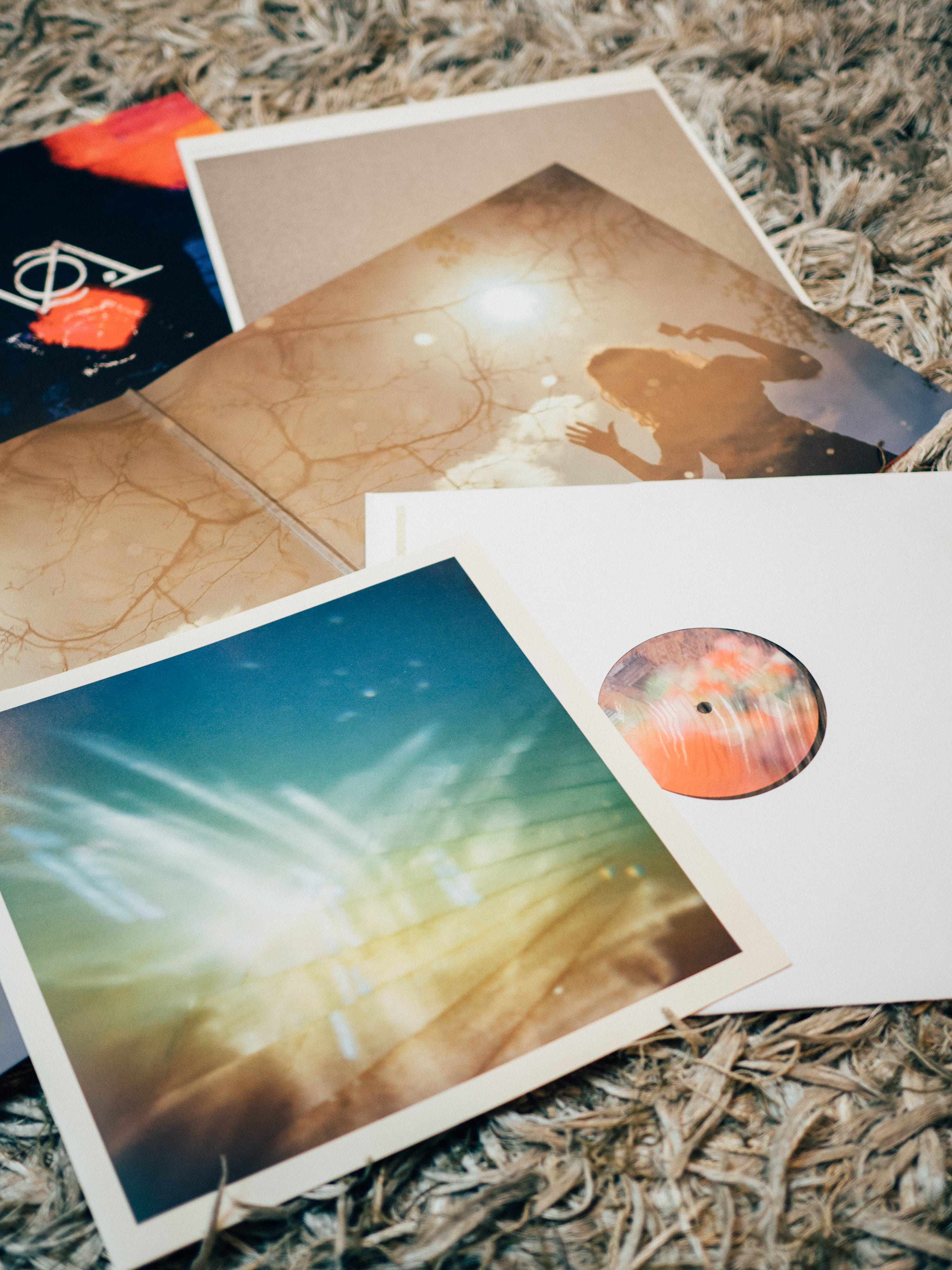
As Hammock continues to craft beautiful and ethereal soundscapes, their discography is a perfect companion to solitary, pensive journal writing sessions. These 14 albums serve as a precise timestamp of the past 20 years of my personal history. Each album is like a well-preserved time capsule, bringing distant, wistful memories back into focus.2
A personal soundtrack enriched by the limitations of physical media
As we age, our musical preferences evolve. Some songs have longevity, and they age with us gracefully. At other times, albums, artists, or even entire genres lose the magic they once held. Perhaps they captured only a fleeting version of who we were, unable to follow us into the present moment. If music reflects who we are in each chapter of our lives, it's worth pausing to note what a personal soundtrack would reveal about us.
Music of today often feels clinical, omnipresent, and boundless in its digital, bit-perfect, streaming format. It would be impossible for me to consider a soundtrack of my life without thinking of the subtle nuances of the limitations inherent in the physical media of my youth.
When I visit thrift shops, I'm delighted to find that the music section is always well-stocked. As I glide my finger along the spines methodically from row to row, I feel elated when a long-forgotten album comes into focus, much like the Hammock discography time capsule experience described earlier.
Upon getting home, I wipe down the cases and carefully load the media into the player. Pressing "down" on large physical buttons, eliciting a long-forgotten tactile memory. Despite these small preparations, I am rarely fully prepared for the rush of nostalgia that comes with the imperfections and limitations of each medium: the crushed trebles, meagre dynamic range, and the warble effect from wow and flutter of cassette tapes3, or the pops, distortions, and so-called "warmth" of records.
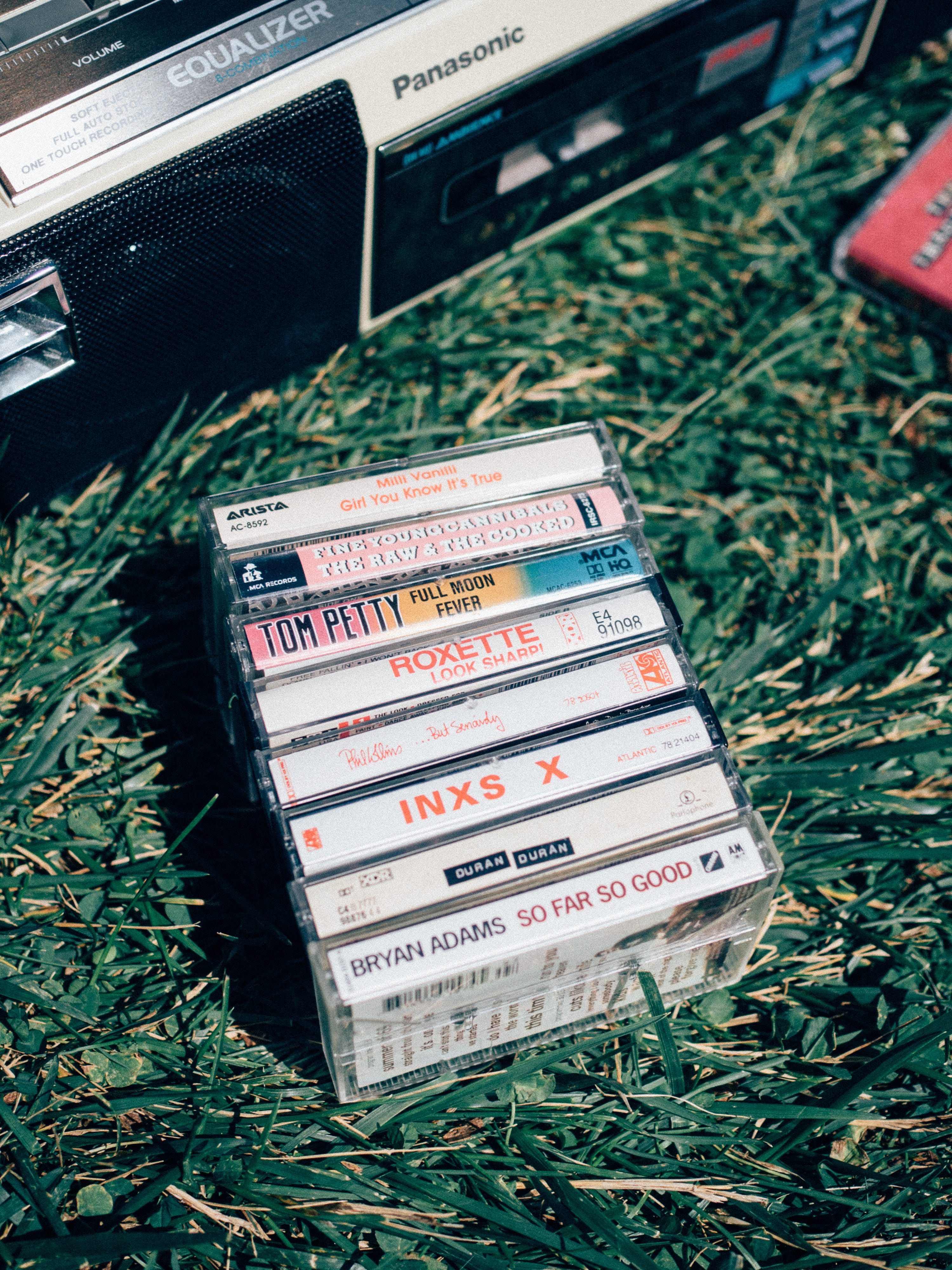
I am not romanticizing an inferior sound. Experiencing albums in their original context and period-correct medium, such as records or cassettes, does not sound any better in a technical sense. It is usually flawed, full of skips and hiss, takes up quite a bit of space and requires cleaning. Yet it feels tactile and charming, and because it mirrors the way many of us first experienced these albums, it deeply enriches the nostalgic experience.
The transient beauty of physical formats is a reminder that nothing lasts forever
Cassettes and records degrade over time with each play, carrying an ephemeral quality that modern digital music lack. Just like the fleeting moments of the cherry blossom season, it serves as a subtle reminder of the transient nature of beauty, precisely because of its impermanence. At any moment, my favorite cassette tape could be "eaten" by the tape deck, or the grooves of a record worn down by countless plays against the turntable stylus.
In my journaling practice, I've often found myself trying, but without success, to capture those spontaneous, luminous moments in life. No matter how hard I try, I know full well the magic of the moment can't truly be preserved or relived. In fact, I often feel like I am detracting from the experience when I catch myself reaching for a camera when I should immerse myself fully into the present moment. Over time, I've come to realize that flawed recollections or rough sketches may elicit nostalgia just as well as pixel-perfect photos or videos.
Drawing inspiration from an intriguing feature called "Humanize"
I was working on a midi percussion track when I was dabbling in music recording. There was a curious little label "Humanize" in the audio workstation software that I was wrestling with. Essentially, this feature introduces "imperfections" by nudging out the timing and variability in dynamics of notes played, like how all humans would with live instruments.
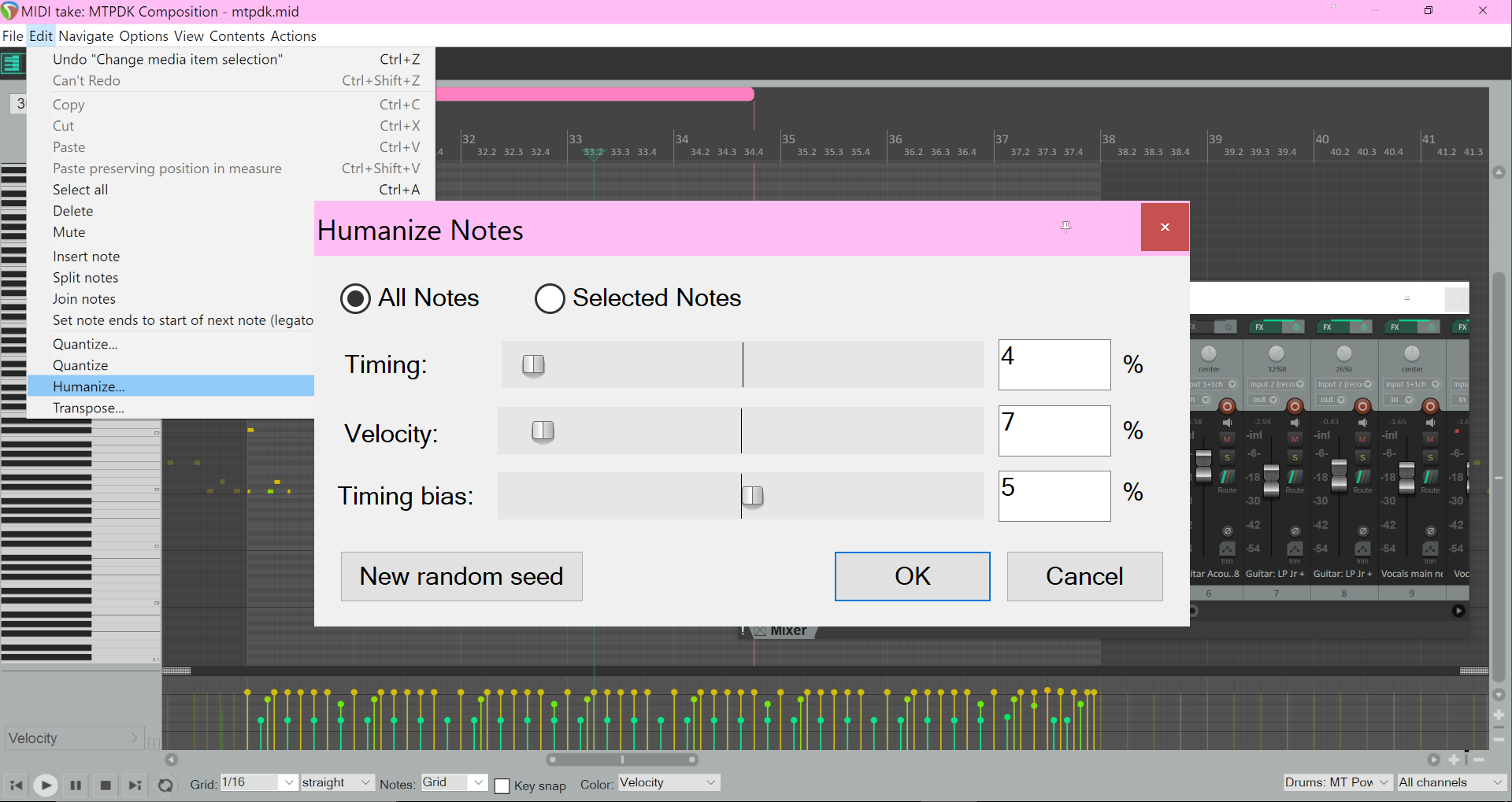
Great music isn't perfect rhythm and pitch. It's often a flawed expression with tension, humanity, and artifacts from imperfect recordings. When every note is perfectly quantized and every velocity identical, the result feels sterile. I find perfect music to be uninteresting. It's missing the subtle cues we seek in expression. I believe we are wired to pick up on tiny variations in timing, dynamics, and tone, the same signals we read in speech, facial expressions, and body language. These are the same imperfections that make music feel genuine, authentic, and alive.4
The Way of the Mirror is a passion project that brings together journal writers. I value transparency and journaling nerdism, from the tools I use to the steps in my writing process5. If this reflection sparked a moment of inspiration or introspection, consider supporting this work by subscribing. It truly means more than you know. Thank you for reading.
Wil
Writing Exercise:
In every post, I include context, references, and a writing exercise. I am doing this to help solve one of the top painpoints of journal writing and that is, "what should I write about?"6
Awareness
As a long-time fan of Murakami Haruki 村上春樹, I am fascinated by the integral role music plays in his work. It's an essential part of his writing process, made famous in interviews about music's ability to create rhythm and atmosphere without being too distracting7. Furthermore, his books are known for being chock-full of musical references. They don't simply serve as background muzak. They serve as a tone and mood-setting device, while also providing clues about the character's emotional state. With so many musical references in his work, down to the exact performance or recording, fans have lovingly curated playlists8 to accompany each of his works. Novel soundtracks, if you will.
Hypothesis:
Music anchors our memories, like bookends to essential chapters of our lives.
What would a personal soundtrack reveal about us?
Method
With your journal and writing instrument at the ready:
Your Soundtrack: Write a list of the most important songs (or albums) in your life so far. Aim for a list of 10-15.
Chapters in Time: For each entry on your list, recall a memory and give it a title for the chapter.
Selection for Deep Dive: Review the list. Is there one song or album that seems to tug at you more strongly?
Unlock the Time Capsule: Play that song or album and write a long-form journal entry by fully inhabiting that memory.
Recall and describe every detail, including your emotions, physical environment, and thoughts.
How does it feel to revisit that moment? Note any surprises or novel observations.
Optional Steps
Reframing the Chapter: With the context of who you are today, how might you interpret these memories differently than your younger self?
Silence and Space9: After finishing, sit for a moment in silence.
Notice what lingers after the music ends. Jot down any observations or feelings that arise from this moment of silence.
What You've Outgrown: Refer back to your list from step 2.
Are there artists, albums or genres that you've outgrown? Note why, what's missing or what you have grown into instead.
Close by thanking those songs before letting them go.
Assessment and Insights
I edited out my journal entry for this exercise at the final moment before publishing. I fear that it may be too self-indulgent while being irrelevant to my readers. This recall evoked a bittersweet sense of heartache from my time growing up in Hong Kong. I was able to connect the dots and rekindle my love for some long-forgotten music and films, which had an undercurrent of anemoia through snippets of second-hand experiences from subsequent recollection. I will be reminiscing about these rediscoveries for weeks to come: from Wong Kar Wai's Chungking Express 重慶森林 to music by Anzen Chitai 安全地帯.
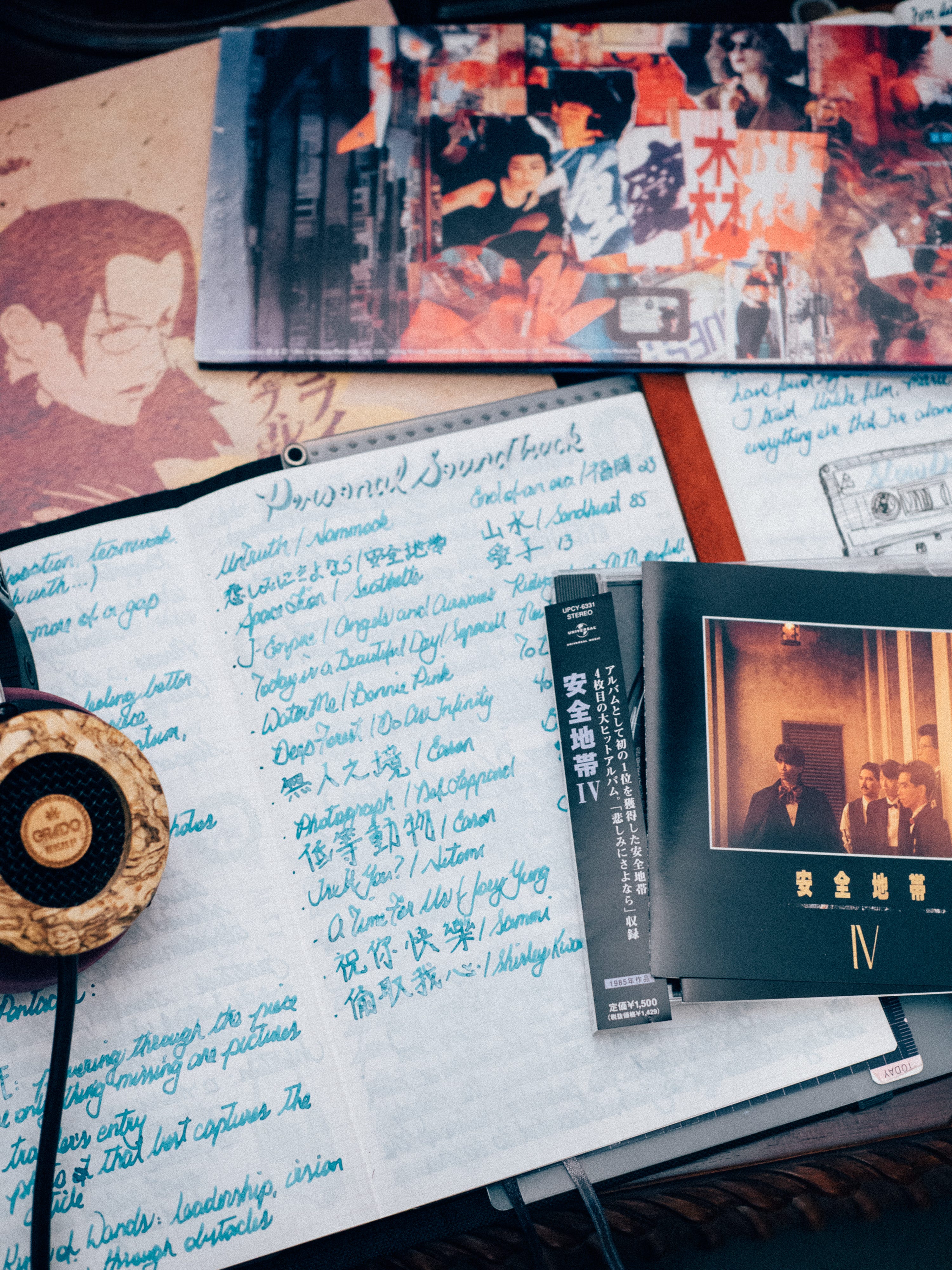
A Final Rediscovery
When I was young, music as an experience used to be the main event. Once I drop the stylus, I would direct all of my attention to the music and let it dictate the destination until the locked groove at the end of Side B.
More recently, on quieter evenings when the kids are in bed, I often attempt to replicate the same ritual. I feel like I belong to yet another secret club, where I appreciate the craft of my favourite musicians by listening to an album from start to finish. No multitasking, just listening.
Cassette tape cases are supposedly called Norelco boxes or simply, Norelcos.
Disclosure: I have no affiliation with the Hammock. I am simply a fan of their music and its transformation qualities to my writing practice.
Audio Engineering Society. n.d. “Wow and Flutter.” In AES Professional Audio Reference. Accessed July 18, 2025.
There are many fun stories and anecdotes of imperfections deliberately left in famous songs and albums.
SonicScoop. “10 Mistakes Intentionally Left in Classic Recordings.” SonicScoop. Accessed July 18, 2025.
Ideation: A Blackwing Pearl with 2025 Hobonichi HON · Initial Draft: Lamy 2000 with 2025 Hobonichi HON and Joplin · Editing: Grammarly · Photos: Pixel 7 and Olympus OM-D E-M5 Mark II, M.ZUIKO 25MM F1.8, Lightroom · All books mentioned were either my own or borrowed from the local library
A daily, recurring topic that surfaces on the subreddit of r/Journaling.
Haruki Murakami, interviewed by John Wray, “The Art of Fiction No. 182,” The Paris Review (Summer 2004), accessed July 18, 2025.
Counterpoint: Cal Newport argues in Digital Minimalism that audio devices from portable music players to streaming services are contributing to "solitude deprivation," filling every moment with curated noise and depriving us of the quiet our minds need to process life meaningfully.
Cal Newport, Digital Minimalism: Choosing a Focused Life in a Noisy World (New York: Portfolio/Penguin, 2019), 91–94.