

Lost in Suntory Time
Lessons on the wealth of memories and living well at the Yamazaki Distillery — ロスト・イン・サントリー・タイム

I wanted to read this aloud, a small way to share it with anyone looking for a break from their screen or a different way to connect with the piece. I hope you enjoy it.
I’ve been up for too many hours for it to still be morning. Hunger pangs on the regular, but pleasantly buzzed, and I wouldn’t want to be anywhere else.
— Hastily scrawled entry from an old travel journal.
At the Suntory Yamazaki Distillery
My partner and I were on our way to Kyoto from Osaka, and we found openings at the Yamazaki Distillery tour. It was a morning session as the distillery was closing early for National Foundation Day.


This was a time before Jim Murray — a prominent and controversial writer of whiskies — had placed Japan on the map of connoisseurs. He had awarded a prestigious whisky of the year award to Suntory in 2015.
Since then, the Japanese whisky industry has not been the same — demand shot up, supply shortages, surge pricing, and the eventual shift to more bottles without age statements.1
There was a time when I wasn’t all that familiar with whisky. This changed when I was sipping coffee at a 3-seater coffee bar — Coffee Ten Irukaya (珈琲店海豚屋) near Inokashira Park. I first heard of this shop from an article on CNN Travel, citing a device-free and artisanal coffee experience. I should have known that the interior was inspired and modelled after Scottish whisky distilleries. The proprietor of the establishment asked if I was in the mood for some Japanese whisky, which he quickly procured. In the name of omotenashi (Japanese hospitality)2, he offered an impromptu whisky flight experience that I’ll never forget. It was in this tiny coffee bar that I realized even a few minutes spent noticing can help us anchor memories worth savouring for years — decades to come.


Back at the Yamazaki Distillery.
At the end of the tour, after the gift shop and first round of drinks, we were presented with a majestic locale known as the Whisky Library, which also served as the second tasting bar. The library is in name only, and bottles of exotic whiskies are not loaned out. However, drams of the world’s most desirable whiskies could be sampled for a reasonable fee.


The tasting area is in a solarium, complementing the sipping experience with views of the magnificent site upon which the distillery was built. I sat down to enjoy a selection of Japanese whiskies that I would never dream of having. As other guests mingled about, we met the writer of the CNN article, who alerted us to Coffee Ten Irukaya — how poetic!
Too much of a good thing can often end in disaster. I took a breather to examine and soak up the vibes of the whisky library. Seemingly endless cabinets of amber-hued whisky, neatly catalogued and labelled.

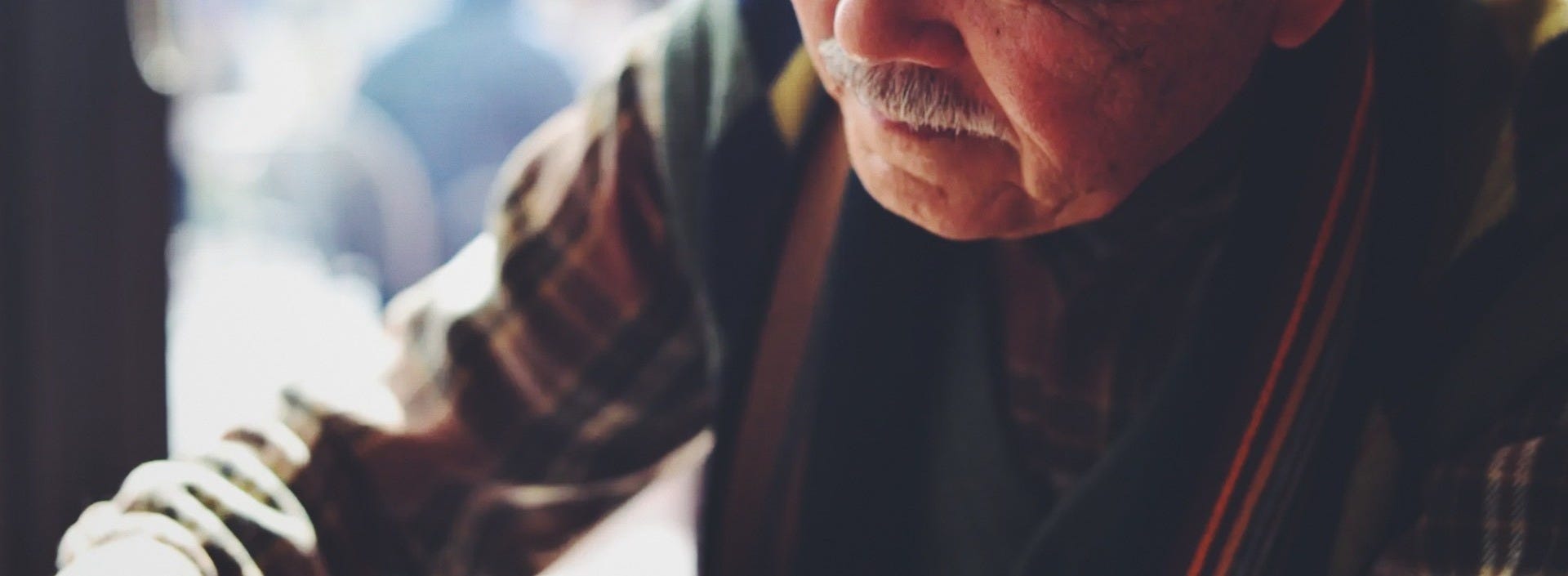
Upon returning to my partner, I noticed an elderly man sitting quietly and sipping his dram at a corner table in solitude. I took a chance and asked if I could sit with him. It may have been the whisky talking.
The Kakubin Lesson at the Whisky Library
The scene: a solarium fragrant with warm oak and faint smoke. Light catches dust motes that drift like tiny spirits siphoning off their share of the beverage. A faint heron call could be heard.
WL: Is that okay? (I point to the chair opposite him.) /「そこいいですか?」
Ojisan: Please (hand extended and palm up, an almost imperceptible nod of permission) 「どうぞ。」
Then, leaning forward with a hint of mischief.
Ojisan: What’s your favourite whisky?「好きなウイスキーは何ですか?」
I rack my brain—all-time favourite—or current? I fumble for a Nikka whisky name. My fingers drum on the whisky glass.
Ojisan: For me, Kakubin is my favourite. (Even though you didn’t ask) /「俺は、角瓶が大好き。」
He nods slowly, satisfaction radiating from him like the final panel of a manga reveal.
I excused myself, cut back to the bar, and ordered two drams of Kakubin. The bartender, in their starched uniform, poured perfect drinks with practiced hands. She asks in return:
Bartender: How is Sensei today? /「今日 先生はどんな感じですか?」
The ladies smile at my confusion as if I were the punchline to their inside joke. On the way back to Sensei, I asked my partner to join our table, as our conversation was getting lost in translation.
It turns out that Sensei had recently retired from the distillery. He may have been a distiller, trained employees, or both during his lifelong career at Suntory. He is now a staple at the whisky library and known to hang out and quietly sip his Kakubin.
Kakubin is a budget whisky. Widely available at convenience stores and sold for ¥700 or ¥900 ($6 USD or $8 CAD). It’s a blend of Yamazaki, Hakushu, and Chita distilleries, often used as a mixer for cocktails such as the Kaku Highball.
Sensei lifts his glass; the corners of his mouth hint at a smile. I take a sip of my own. The scent and flavour of the whisky rises — subtle sweetness, smooth, mellow, citrus, and a hint of spice. At that moment, I realize that for Sensei, contentment is found in what’s often overlooked. I passed my glass to my partner, and she nodded in agreement.
I learn that Kakubin is Sensei’s everyday whisky. Once in a while, he’ll pour something special, maybe a Yamazaki 18. When the rare becomes routine, we no longer taste anything.
We continued our chat well into last call. That was a special day for both of us as we enjoyed some top-shelf drams. We also exchanged contact info with promises to write. I would come to revisit these moments time and time again.
Just Write
As I get older, I find myself unlearning more, decoupling actions from outcomes. Journaling is simpler this way: jotting down fleeting ideas, sketches or feelings into a pocket notebook, then building on them later.
We don’t need fancy stationery, beautiful handwriting, or decorations that the hobby is now known for. All of that can come later. For now, simply write.
Moments captured in our handwriting anchor us. Capturing vignettes of life unfolding is enough to remind us that we’ve truly lived — even in the mundane. Especially in the mundane.
Without them, memories lose their lustre and fade. Recalling the past, often imperfectly, lets us embody the experience anew. This is the reason why journaling is authentic, real, and human. When we have lived, matured and distanced ourselves from memories, we can then cast past events in a new light. It’s a reward so subtle that it often goes unnoticed, even by long-time journal writers.
Journaling as Memory Dividend
Memories, unlike possessions or achievements, have immeasurable value: they grow richer, more vivid, and more meaningful, ageing gracefully like many of the finer things in life.
“The amazing thing about memories is how they can compound over time, just like a stock.” — Morgan Housel in The Art of Spending Money.
Bill Perkins, in Die With Zero, calls this the “memory dividend” — the lasting returns we receive from experiences long after they occur. Every conversation, journey, or quiet moment adds to a treasury of memories that continues to provide joy, insight, and meaning throughout life.
Recalling experiences helps amplify feelings of contentment. When we remember, the sentiment compounds in ways that become exponential. Economists and financial writers have tapped into an idea already enjoyed by journal writers for a long time, and gave it a name in financial lingo.
Some of the best personal finance books aren’t really about money at all. It’s about helping folks uncover the kind of life that brings them contentment.
Memories as Reconstructions
There was a point in my journaling practice where I was particularly obsessed with accuracy.
I was sitting behind a one-way mirror, silently observing participants in a design research study. A colleague whom I respect deeply is on the team as our design researcher. We were chatting between sessions about my notebook and journal practice. She informed me that she specialized in neuroscience, kindly schooling me on how memory works without the didactic nature of university lectures. Admittedly, one of the perks of corporate life was learning from brilliant people who are generous with knowledge.
Unlike popular but often misunderstood mental models, memory is a reconstruction and not a playback. Memory is not opening up a saved file or hitting play on my music player. It’s much more akin to a live jazz improvisation, or my children’s rickety school play.
I had begun to realize the beauty of the creative nature of memories. Every time I remember without referencing the source material, the memory shifts or deviates just a bit, perhaps, with a bit more lyricism or punctum.
This fuzzy recreation has become, by far, one of the greatest joys of my journaling practice. This flavour of journaling is easy, simple, and deeply rewarding.
I suspect it’s not that different than folks who go to the gym, meditate or maintain a long-standing yoga practice. It’s enjoyable, but it’s not always fun. There are peaks and valleys, but that’s life. Those of us who choose to keep our journals may end up with snapshots of many moments from our past, sometimes with meaning, lessons or ideas on how to move forward just a little more skilfully with intention. It leaves behind traces of a life well-lived for those closest to us, with intention and on our own terms.
Another Scene: Reflecting on Sensei at Yamazaki
A small tug pulls me back to the Whisky Library, where I meet that memory again as a slightly different version of myself.
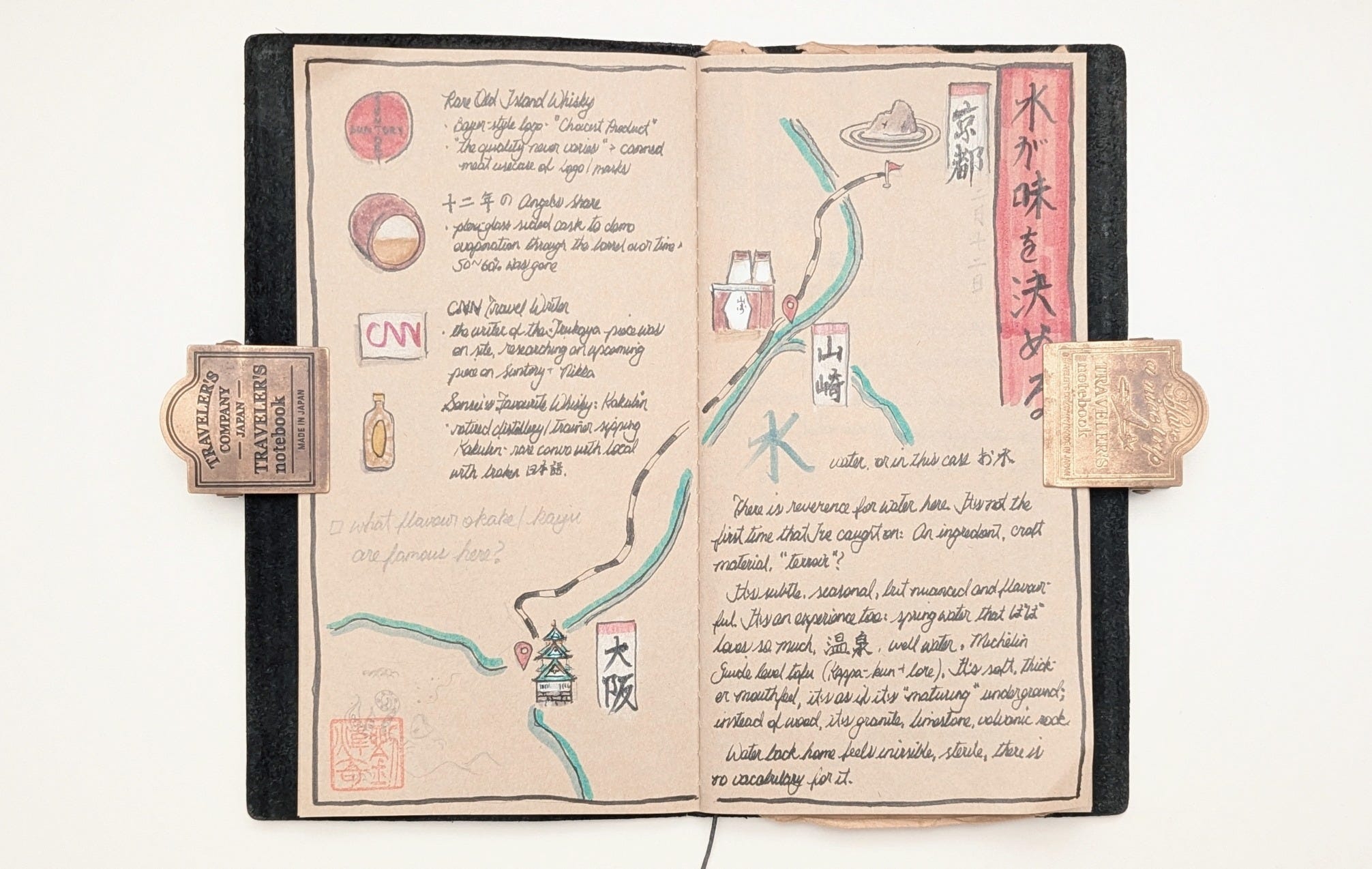
When I first toured the distillery, I was captivated by the casks, the novelty of witnessing the effects of angel’s share at work, bold age statements, and the allure of exotic bottles. When I return, with journals and photos beside me, Sensei’s lesson that was generously offered to me has compounded quietly for years.
Through fuzzy reconstructions, journaling reveals the past more clearly, letting us see and reflect on what we once missed.
The humble Kakubin—a drink often overlooked—carries wisdom. Whether it’s beginner’s mind3 (shoshin, 初心), the proverbial “comparison is the thief of joy” or a celebration of moderation and restraint, the lesson has always been there.
It turns out that memory is the invisible wealth that compounds over our lifetime. The reward is subtle at first, almost too quiet to name, but it is ours to cultivate. Now, go out and make some memories.
An Invitation
I wrote this essay partly because many friends have told me how much they’d love to sit and write in a journal. Almost every time, I hear the same challenges: not enough time, too tired, or frustration with how they write.
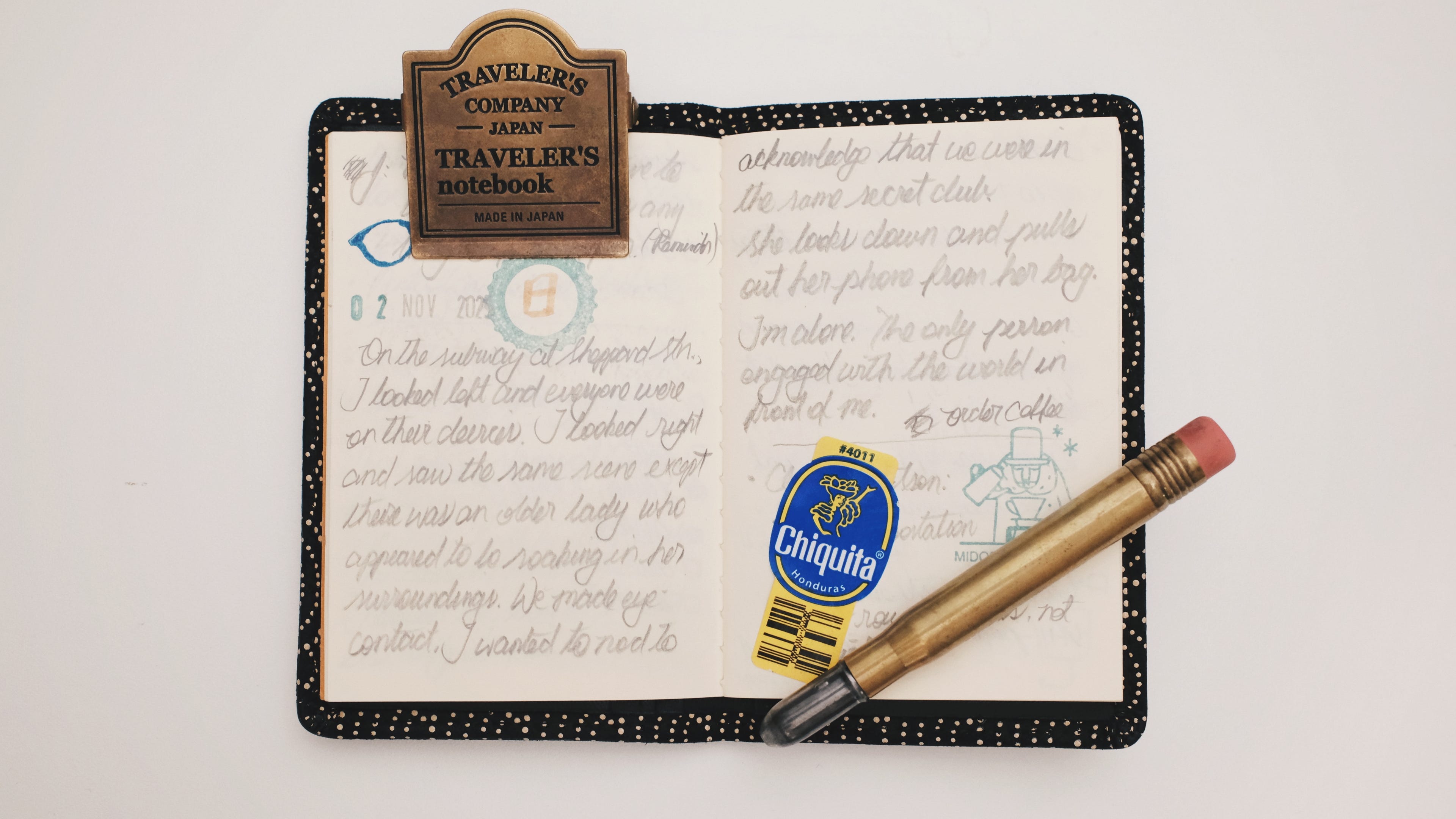
I’m always a little shy about sharing pages from my notebooks. The meaningful entries often lack the aesthetic to be Gram-worthy as they are personal, reflective and mostly just handwritten pages. But I want to double down on a simple message:
Just write. Like I did while waiting for the subway above, hoping to catch the attention of another commuter instead of their device.
It’s quick. I pulled out my pocket notebook and felt the texture of the page through my pencil as I jotted a few lines.
Leave the rest to time. There’s no outcome, no expectation. Maybe the next time I see this note, I’ll be drawn to the allure of devices or continue to be engaged by the world in front of me.
My invitation is simple: keep a notebook and a writing instrument with you. Jot down one thing today. It might feel a bit silly, but it’s fun. You’ll notice, observe, think, and engage your senses with the world around you. Don’t have a notebook? Fold a sheet of paper and keep it in your pocket. No pencil? I’ll happily mail you some of my favourites if you’re in Canada (until I run out).
If you try this, take note of what you write and how it feels when you revisit it. You might be surprised how a few lines — mundane, ordinary, fleeting — can reveal so much later on. If you do give it a try, I’d love for us to share how it went — even a few lines can become a small revelation or joy.
✒︎
Thank you for reading. If you enjoyed this, consider subscribing for upcoming essays on journal writing.
Wil
There was a time when whisky drinkers in Japan casually enjoyed offerings from Suntory and Nikka, many with an age statement of 12 years or more. The maturation process meant waiting for the spirit to interact with the cask, where it gains its mellow, complex, and coloured properties. As global demand exploded, distilleries began releasing NAS (No Age Statement) whiskies, allowing them to bottle earlier and meet eager hands sooner.
Omotenashi (おもてなし) is the Japanese concept of selfless hospitality, which goes beyond mere customer service to anticipate and meet the needs of guests from the heart. It is characterized by sincerity, attention to detail, and a genuine desire to make a guest feel comfortable and welcome without expecting anything in return.
Beginner’s mind (shoshin, 初心), the practice of approaching each moment with freshness, openness, and lack of preconception—as if encountering it for the very first time.
I really enjoyed being immersed in the memories of your trip from years ago! The way you described the story felt like I was watching the conversation play out scene by scene.
I have a nighttime routine of writing in the 5-year Hobonichi techo - no particular structure, no template, just writing down what happened that day, whatever comes to mind. It takes just a few minutes to compile the mundane moments and I can't wait to read them back as I continue to fill it in the years to come. You're right that at the core of it, pen and paper is all you need to keep a journaling practice.
"We don’t need fancy stationery, beautiful handwriting, or decorations that the hobby is now known for. All of that can come later. For now, simply write."
I read (and listen to) this as I am on my way to buy my first travellers at an exorbitant price.
I treasure the journals I write whenever we go back to Japan. There are so many memory triggers riddled within the pages, and I enjoy going back to them and sharing with my partner and kids. "Remember when you did this?" "Mama used to always go here." They always begin great discussions.