

Covet Zero: Confronting Over-Consumerism in a Finite World
An elusive practice of writing and reflection to quiet our insatiable wants.

Over-consumerism is a judgy topic. I don’t pretend to have all the answers, but I hope these reflections spark your own questions about what truly matters — and what we can let go of.
"Are cities really bursting and overflowing with stuff?" My daughter asked.
I responded with an even, steady, and confident answer. "No, it's AI-generated. It symbolizes the amount of things many of us are buying without thinking too much about it".
Later in the documentary, my daughter asked, "Are beaches really covered by clothing?" I gave a terse "Yes," unsettled by what I was seeing and no longer as steadfast as before.
“Buy Now: The Shopping Conspiracy” — from documentary to personal challenge
At the end of 2024, we sat down as a family (little ones included) and intentionally chose to watch Buy Now: The Shopping Conspiracy instead of our usual lineup of family-friendly movies. Even after more than half a year and much deliberate reflection, I still find myself returning to these thoughts. As an aspiring but unsuccessful minimalist, I've written extensively in my journal about my struggles with holding myself accountable in a resource-limited world, one that is both motivated and somewhat reliant on over-consumerism. And I still feel I have much more work to do.
Since the release of the documentary, a great deal has already been said in reviews, and I don't believe I have much else to add. What I can share is the profound impact that the film had on my 7 and 9-year-old kids at the time, who were just beginning to think more critically about the complexities and the cycle of consumerism. After the film, I was glad the kids were able to tease out a few core themes when we chatted at dinner time:
Where does stuff (resources) come from, and where do they go when we are done with them? Why should they care about this?
They began to question the idea of limits in a seemingly limitless world that many want us to believe. This was particularly interesting to me, as I suspect that even adult consumers rarely consider the full life cycle of products from cradle to grave, especially when we are caught in a consuming cycle.
The girls also questioned the amount of stuff already in their lives. They arrived at a similar insight to that of famed minimalists such as Fumio Sasaki1, that every item in their possession is also a chore or a task on a to-do list.
I was mindful and didn't want to impose too many of my own ideals about consumerism and wanting to be more accountable in their young minds. By the end of our discussions over several meals, I was surprised to see the same bittersweet tension in them as they experienced the push and pull between the thrill of buying something and the guilt of contributing to climate change.

By the end of this Buy Now! documentary experience, the girls arrived at the following insight through discussion. They are certain that they want to be accountable by minimizing their own contribution to the problem of insatiable desire for more and the growing problem of waste. At the risk of sounding like I am virtue signalling on their behalf, they naturally arrived at their own plans, which I am also quite proud of:
Their clothes will continue to be hand-me-downs from friends and family. We are thankful for the community that we are a part of.
For their upcoming birthdays, they created GoFundMe campaigns, allowing friends the option to celebrate in a way that is meaningful to them through lessons and courses based on their passions, rather than material gifts.
If there is anything that they covet, it would have to come from one of two annual events: birthdays or holidays.
Unlike many New Year's resolutions, our newfound enthusiasm for reducing consumerism did not fizzle out, and it had a lasting impact.
To be or to have: Reflecting on my own consumerist journey
In my own writing practice, I reflected back to my youth and how my relationship with things in my life has evolved. When I was young, the narrative around aspirations was still largely about who I wanted to be. There were clear "roles" in my ambitions: I'd like to be (occupation) so that I could solve (these particular) problems. Whether it was a musician, a film director, or an architect, there was an ingrained desire to create something for others.
Anecdotally, my aspirations have shifted from roles and services toward ownership and acquisitions. I wonder whether this reflects the evolution of our society over the past few decades, driven by increasingly sophisticated marketing tools, or if it's simply the natural progression that comes with ageing.
As I look back on my journals, I recall a time when I reached peak consumerism, and I was writing more about the things I coveted rather than the roles I wanted to fulfill. A simple thought experiment or journal prompt to explore is this: If I could travel back in time and meet my younger self, the one envisioning their aspirational future, would I feel proud or disappointed with who I am today?
Inspired to do better with my own consumptive habits
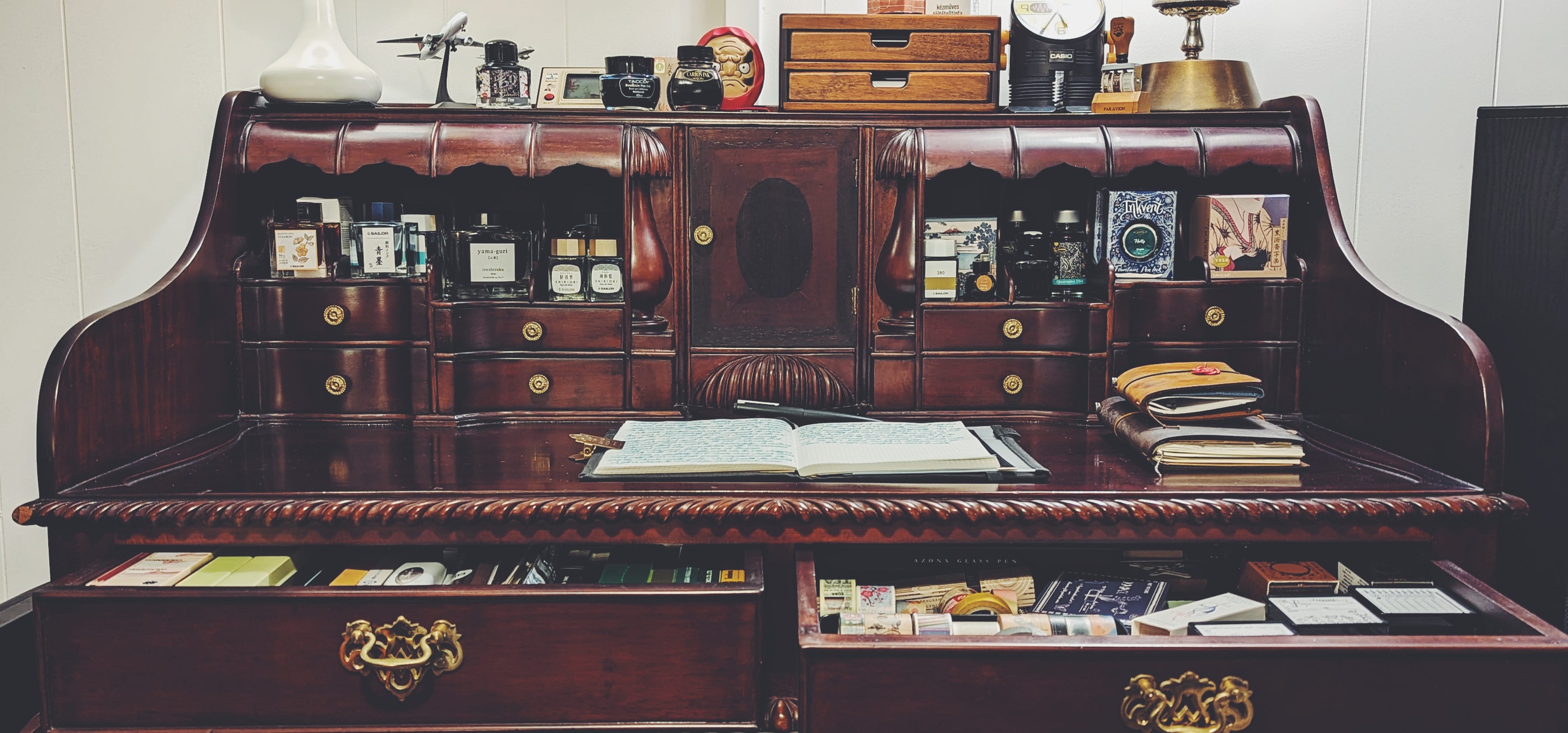
Over time, my primary leisure activity, journaling, has evolved into a more consumptive nature. Like many hobbies, a large part of journal writing for some may have less to do with writing itself, but rather with "spreads" - aesthetically beautiful pages filled with purchased supplies, stationery, and accessories. Creating and curating these pages can be an expensive endeavour: from luxurious fountain pens with exotic nibs, limited-edition inks on beautiful notebooks accompanied by designer stickers, washi tape, and a growing list of other accessories.
"LE" everything
"Limited edition" or "LE" used to be a moniker of restrained and dignified small production rooted in craft and artisanal values. Scarcity was inherent in the process because that was all the craftsman or artist could produce. It used to mean rare opportunities to support artists for self-published and numbered prints or zines, a true limited run for rare or unique materials, or commemoration tied to milestones.
In the world of journaling and stationery (and most likely many niche or specialized hobbies), it feels as though there are more LEs than regular production items. It has become one of the many tactics used by companies to encourage us to buy more of the same items we already own. The formerly rare LE is now a regular event with expected cadence, where consumers' agency to buy has largely been eroded and shifted to brand's whim of what to release next.
The global stationery products market size was valued at USD 158.39 billion in 2024. The market is projected to grow from USD 165.87 billion in 2025 to USD 238.46 billion by 2032, exhibiting a CAGR of 5.32%2. Here are some other market approximations for reference.
The Normalization of Collections
There is a general consensus in the r/fountainpens Subreddit (and adjacent hobbies) that having an extensive collection of fountain pens, notebooks, and inks is considered okay, normal, and often celebrated. Occasionally, lone, brave Redditors may chime in with a sobering post about being in the hobby for a long time and having only one or two pens and a single bottle of ink, serving as a gentle reminder that we can enjoy this great hobby without excessive consumption. Posts such as these are few and far between, but they're very welcoming, and I adore them. It's a signal that informs me that I am not alone in my quest to enjoy this hobby while being accountable.
Journaling and what matters most: Making memories
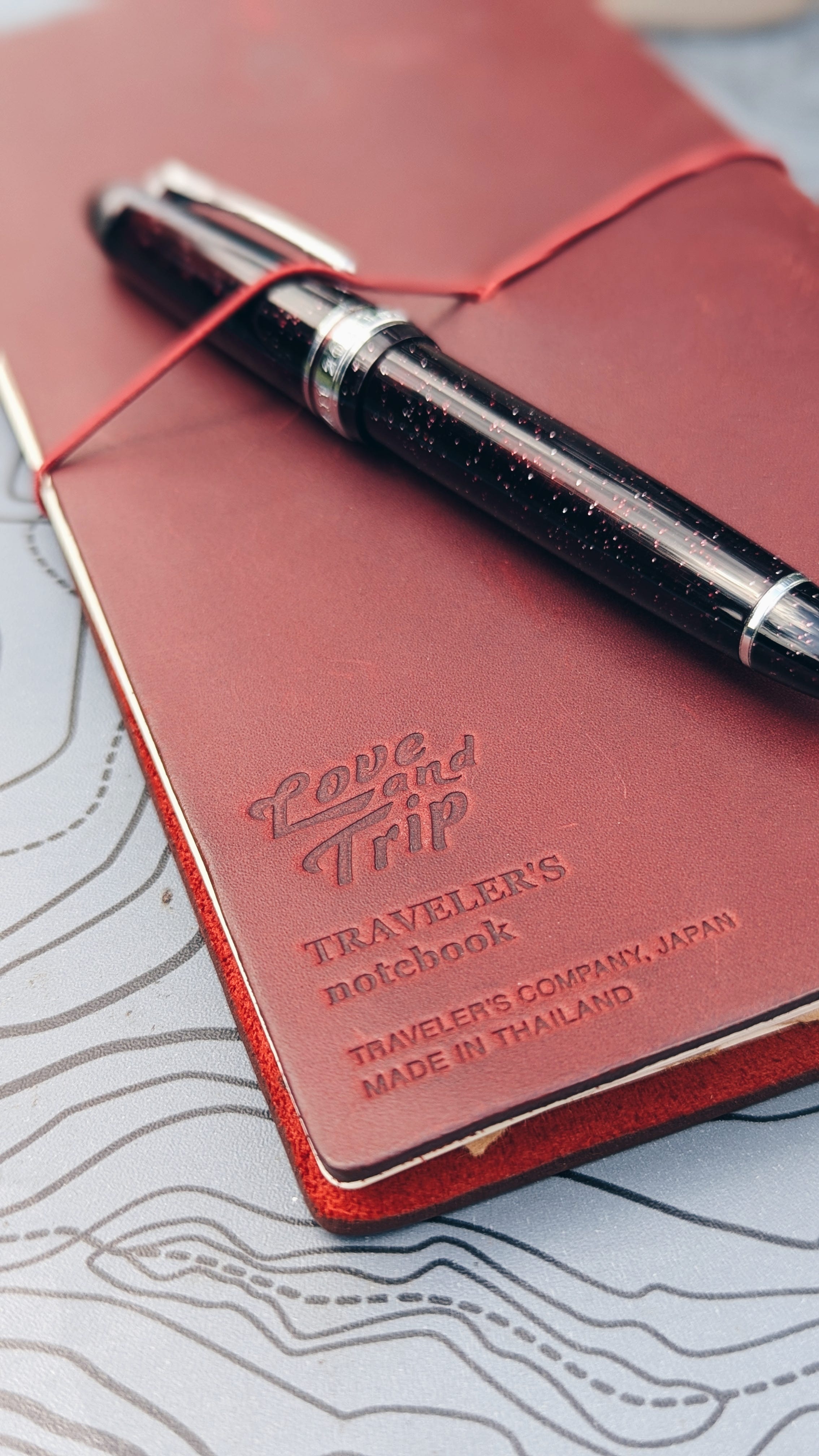
Instead of being cooped up at the writing desk in the basement, I am writing and editing this entry outside in the sun while camping with family. There is a lot of irony. The pen in my hand is a "limited edition" Sailor, and the notebook is also a "limited edition" from the Traveler's Company.
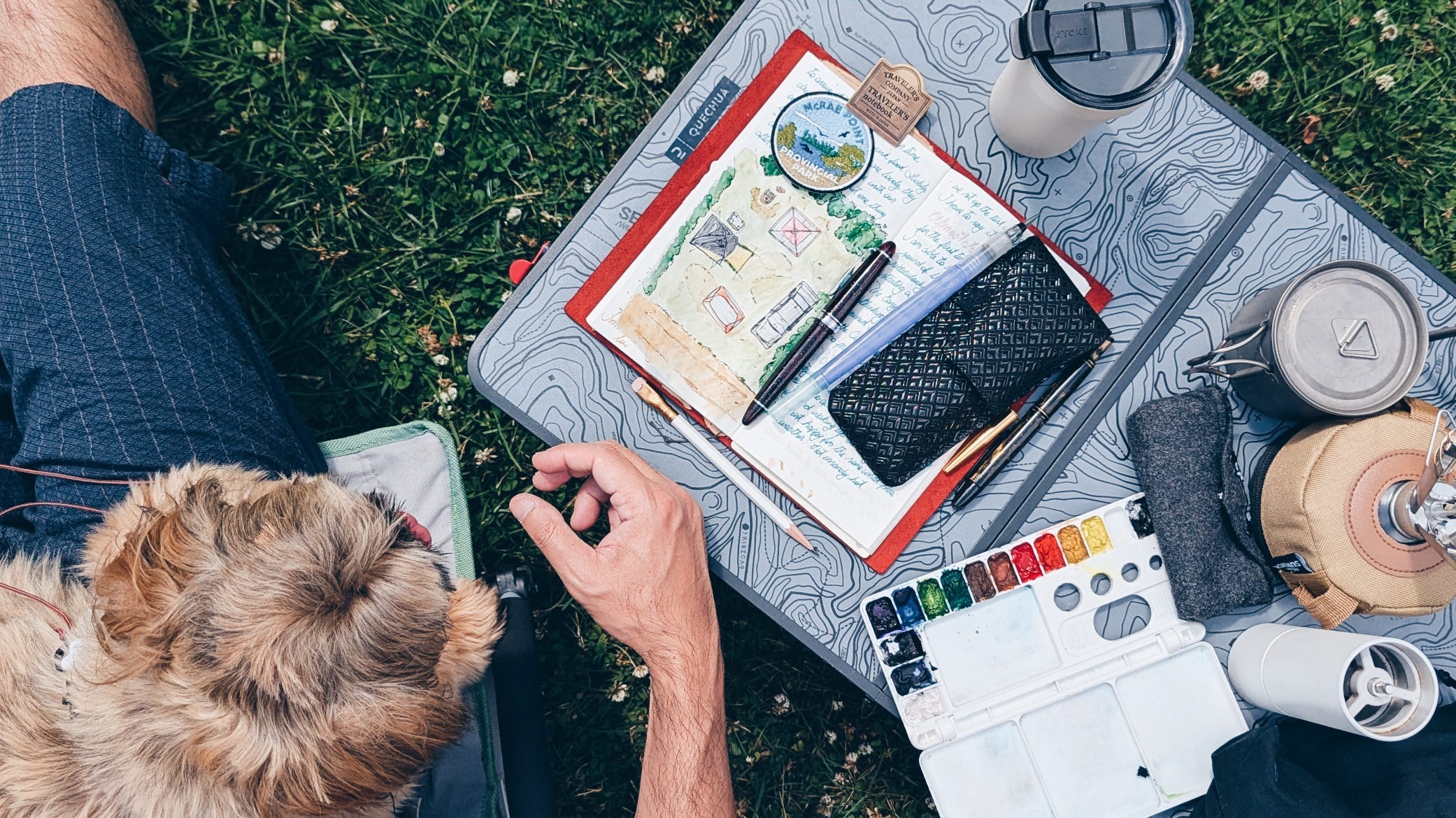
As a result of my reflections, the pull to live a more gentle path and decumulate feels stronger than ever. I instinctively feel in my bones that what truly matters is the mundane act of putting pen to paper and being fortunate enough to be surrounded by loved ones, allowing me to create beautiful memories to write about.
The Way of the Mirror is a passion project that brings together journal writers. I value transparency and journaling nerdism, from the tools I use to the steps in my writing process3. If this reflection sparked a moment of inspiration or introspection, consider supporting this work by subscribing. It truly means more than you know. Thank you for reading.
Wil
Writing Exercise:
In every post, I include context, references, and a writing exercise. I am doing this to help solve one of the top painpoints of journal writing and that is, "what should I write about?"4
Awareness
Journaling about stationery over-consumerism could be the answer to stationery over-consumerism. For as long as I've journaled, the act of writing has been my reprieve from the sense of ennui and disappointment caused by the hedonic treadmill.
Journaling resets the balance in my relationship with stationery by prioritizing the act of writing as the ultimate goal and diminishing the emphasis on stuff.
By better understanding my thoughts and emotions regarding rabbit holes and the typical buying cycle, I am more aware of when my attention is being hijacked by desire and craving. Many others have arrived at similar insights, using tools such as a Wishlist Parking Lot or a 30-Day Vault to delay impulse purchases and wait for them to subside. In my own practice, these exercises not only successfully delayed purchases but mitigated some entirely, thereby saving time, money, and improving mental well-being.
Hypothesis
Journaling is a powerful ally that helps us become aware, understand, interrupt, and eventually reduce our desire or actual consumption.
Method:
Pick any of the following exercises based on your style of reflection and writing. What's important is a sense of curiosity to learn more about ourselves, gather insights, and achieve ideal outcomes. It should never feel too much like a chore.
1. Awareness: Triggers in your daily writing practice
I begin each day with a brief writing exercise that expresses gratitude and sets my intention for the day. If I ever find myself distracted by the allure of coveted items, I make a note of it by adding an optional third section labelled Distractions. Once it's captured, I move on with the rest of the day knowing that I can unpack it later should I wish to do so.
2. Understand: Distraction Long-Form
Later in the day or in my evening writing ritual, if the item remains a distraction, I long-form journal about it with the following prompts:
Name the distraction
Triggers: How did I first encounter this? Why now?
Themes: stress, boredom, collection, aesthetic allure
Promises: Why do I want this? What is the ideal outcome with this item?
Gaps: What I want to satisfy, what hole do I want to fill?
Social Context: What, if anything, am I hoping to signal outwardly (whether it is an identity or status)?
Marketing Tactics: What, if any, are the concepts from behavioural economics at play? Do I feel like I have true agency in this purchase decision?
Counterbalance: Can I accomplish the same goals or arrive at the same outcome without acting on this impulse to buy? Can existing items be repurposed? Can it be thrifted, borrowed, or DIY?
Envisioning: I follow this item from cradle to grave, noticing how it enters and leaves my life. After unboxing, do I use, carry, or display it? Does it demand care, get used up, replaced, or become an heirloom? Will I replace it when something newer or better comes along?
3. Interrupt: Distraction Log
In a Bullet Journal style list, carry over highlights from your long-form insights with the following.
A bullet or status checkbox: should you decide to track your distractions:
☐ Outstanding as a distraction and coveted
☑ Purchased
☒ Mitigated, resisted, bullets dodged, or repurposed something. Personalize this label as it's always worth celebrating not buying something.
Essential Information: Date, item, and cost
Insights: Carry over any insights from long-form. Themes work well here
Notes: to expand on status and/or outcome
Unlock Date (optional): Should you consider this distraction log as a 30-day vault for coveted items to cool off
4: Covet Zero: The Bought and Un-bought Reflections
At the end of the month, reflect, clean up, and carry over any remaining items in the Distraction Log. I am reluctant to provide too many instructions here, as reflection can be deeply personal. Folks could really nerd out on a BuJo-style "Money Saved" running total, while others can be sentimental and reflect deeply on heirloom-worthy items with their own anniversary dates and journal entries for years to come.
What's most important is to take the time needed to reflect and learn. This exercise is powerful because it allows hidden themes and insights to emerge. Some thought-starters on reflections:
Look back at past Distraction Logs (it doesn't have to be the most recent month) and consider common themes in items bought, un-bought, and money saved. Make a note on any insights or surprises.
For items bought:
Did the experience live up to your anticipation? Why or why not? Are you able to stop the cycle of future purchases, or do you anticipate having to buy a similar item again?
If the item truly brought you contentment, take a moment to express gratitude, as our planet is finite in its resources. Hypothesize on the qualities that make the item special to learn more about yourself.
Do you anticipate the item to have longevity? Consider adding a reminder or an anniversary to your calendar.
I've also created an Appreciation Log for the items that are timeless and bring true contentment. This serves as a reminder that I am already living a life of abundance and I am grateful for them.
Assessment and Insights
I am reluctant to share my own personal insights from my writing practice.
I have a hypothesis about an experiential gap between knowledge and a deep, embodied knowing that can only be complete by wrestling with ideas through lived experiences.
I suspect that my own insights are only meaningful to me because of the results of my reflection, and they would be meaningless to others. We each have to put in our own effort to arrive at this sacred space where one can see through hype, marketing tactics, dark patterns and reach covet zero. I savour moments when I feel a deep sense of gratitude and appreciation for the things that have already made their way into our lives.
As a result of my attempt at covet zero, I get the sense that I know myself much better than before. I value time-honoured, handmade crafts by artisans made from quality materials that I could maintain myself. They often develop a beautiful patina and improve over time with use, and I suspect that they will become heirlooms with their own stories for generations to come. When I approach purchase consideration from this perspective, many of the distractions drop off quickly. I often laugh at myself when looking back at old Distractions Logs, realizing I've wanted things that are wince-inducing and downright silly.
Fumio Sasaki, Goodbye, Things: The New Japanese Minimalism, trans. Eriko Sugita (New York: W. W. Norton & Company, 2017), 200.
“Stationery Products Market Size, Share & Growth Report [2024–2032],” Fortune Business Insights, accessed July 8, 2025, https://www.fortunebusinessinsights.com/stationery-products-market-104633.
Ideation: A well-worn Blackwing pencil on 2025 Hobonichi HON · Initial Draft: Joplin · Revisions: Sailor 1911L on prints outs · Editing: Grammarly, Substack ● Photos: Pixel 7 and VSCO
A daily, recurring topic that surfaces on the subreddit of r/Journaling.
Really enjoyed this post! I've been reading Goodbye Things and while I don't think minimalism is a virtue in itself, it is a great reminder that every object we invite into our lives becomes another chore to maintain. I love stationery but find it hard to navigate that sweet spot of trying different items that elevate the analog practice of journaling and collecting things to impress or hoard.